
Best Places to See Plum Blossoms : Central Kyoto City
Rakuchu, the central area of Kyoto, has many famous plum blossom spots. These include Kitano Tenmangu Shrine, well-known in the Kansai region, as well as the Kyoto Imperial Palace Park with over 100 plum trees, Nijo Castle, and Umekoji Park.
This area has many of Kyoto’s best places to see plum blossoms.
Kitano Tenmangu Shrine (Kamigyo Ward): mid-February to mid-March
If we talk about the most famous plum blossom spot not only in Kyoto but also in Kansai, it is Kitano Tenmangu Shrine.
Together with Jonangu Shrine, it is one of the top two plum blossom spots in Kyoto.
Sugawara no Michizane, the enshrined deity of Kitano Tenmangu, is said to have loved plum blossoms very much, so many plum trees are planted in the shrine grounds. This makes it a well-known place to see plum blossoms.
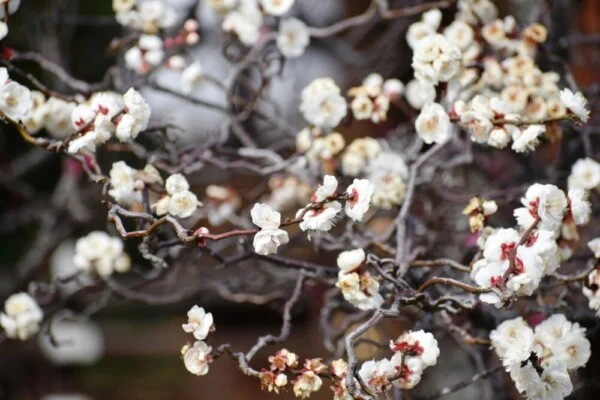
Around New Year’s, early-blooming plum blossoms such as Unryubai start to bloom, and Kyoto enters the plum blossom season early.
By around late January, the early-blooming plum blossoms at Kitano Tenmangu Shrine reach their best viewing time.
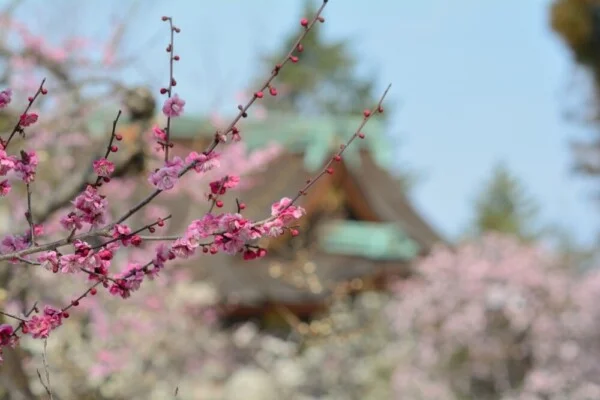
The main plum blossom area at Kitano Tenmangu Shrine, the Plum Garden, opens around the beginning of February.
From then on, Kitano Tenmangu Shrine enters the full plum blossom season.
The Plum Blossom Festival is held every February 25
February 25 is the death anniversary of Sugawara no Michizane, the enshrined deity of Kitano Tenmangu Shrine, so the Plum Blossom Festival is held on that day.
In most years, in addition to the shrine ritual, a large outdoor tea gathering called nodate is also held.
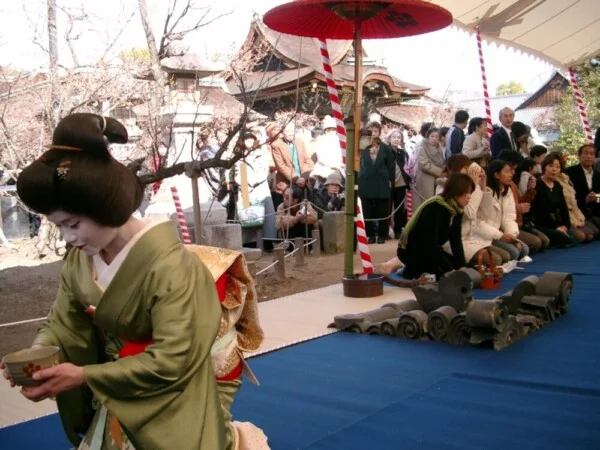
The “Nodate Grand Tea Gathering” at Kitano Tenmangu Shrine is very popular because it is a tea event where you can drink tea prepared by geiko and maiko from Kamishichiken, a Kyoto hanamachi (geisha district).
Tickets for the tea service are usually distributed on a first-come, first-served basis from around late January (offering fee: 3,000 yen).
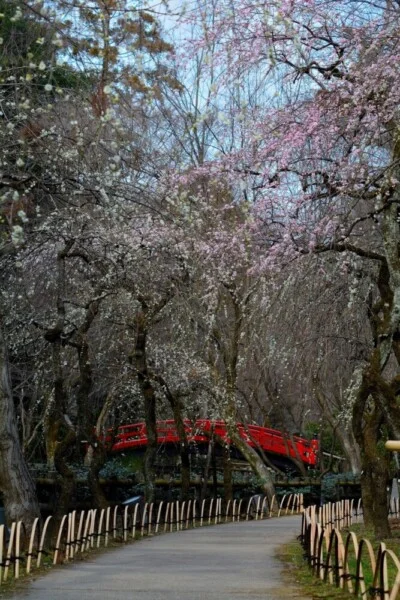
At Kitano Tenmangu Shrine, plum blossoms bloom not only in the Plum Garden, but all around the shrine grounds.
Among them, the plum grove at “Odoi,” which is open for an admission fee together with the Plum Garden, is especially impressive.
In recent years, Kitano Tenmangu has become very popular as an autumn leaves spot, but its plum blossoms are just as beautiful.
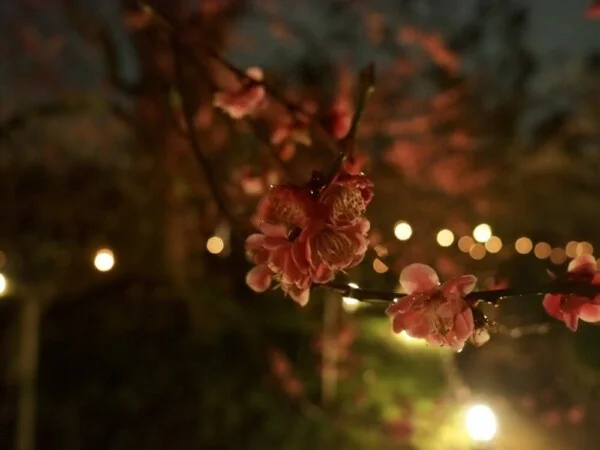
Plum blossoms at Kitano Tenmangu Shrine usually start to look best around mid-February, and they usually peak in early March.
During the peak season, there is a rare plum blossom light-up at night.
In 2026, it is expected to be held on Fridays, Saturdays, and Sundays from mid-February to mid-March.
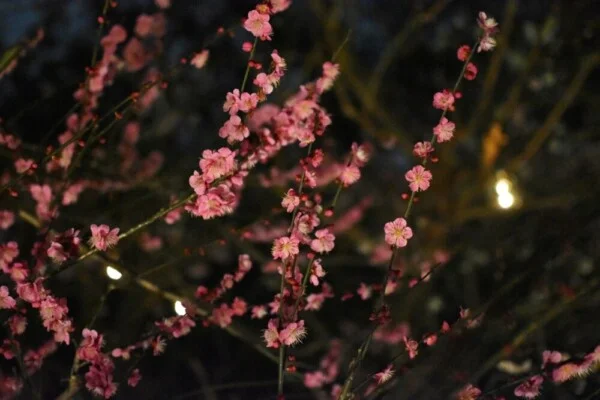
Plum blossoms are gently lit by candles placed in glass holders.
Together with the sweet fragrance of the plum blossoms, you can enjoy a magical moment.
It is a breathtaking view you can only experience at Kitano Tenmangu Shrine, even in Kyoto.
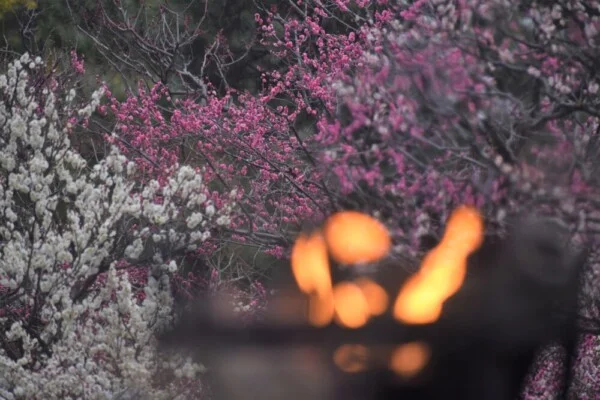
Kitano Tenmangu Shrine “Plum Garden (Baien)”
- Open period: Sun, Feb 1, 2026 to around late March
- Hours: 9:00–16:00 (last entry 15:40)
- Light-up days: open until 20:00 (last entry 19:40)
- Admission:
- Adults (junior high school age and up): 1,200 yen
- Children: 600 yen
Kyoto Gyoen (Kyoto Imperial Palace Park) (Kamigyo Ward): early to mid-March
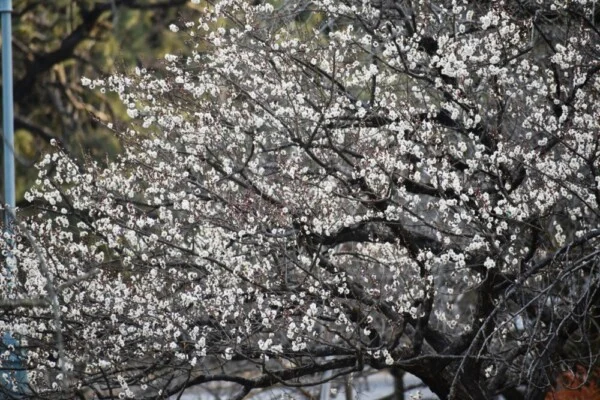
Plum blossoms bloom in many places across the large park
Kyoto Gyoen is a relaxing park for Kyoto residents. From around late January, plum blossoms start to bloom here and there inside the park.
The first to bloom is a red plum tree located on the north side of the Demizu no Ogawa stream.
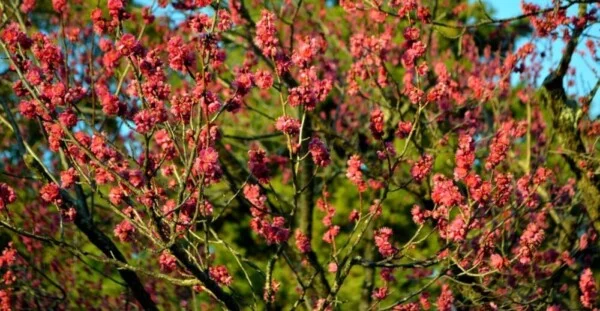
In the southwest area of Kyoto Gyoen, there is a plum grove with about 200 trees. When February begins, the early-blooming plum blossoms start to open.
Most of the main plum trees begin to bloom in March, and they are usually at their best from early to mid-March.
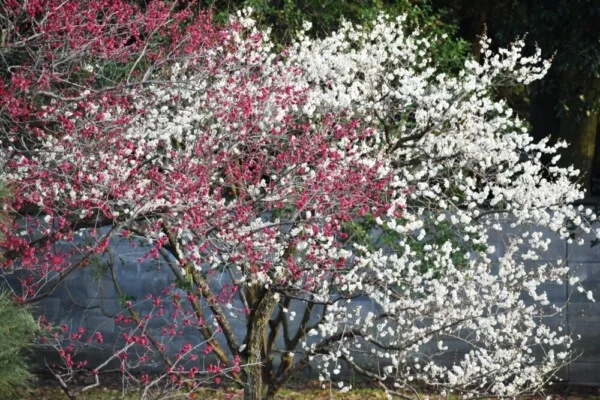
A plum grove with 200 trees in the heart of Kyoto
At the Kyoto Gyoen plum grove, the plum blossoms usually start to look best only after March begins.
Bloom timing varies a lot from tree to tree, so they do not peak all at once. Because of that, you can enjoy the blossoms for a longer period—this is a special feature of Kyoto Gyoen’s plum grove.
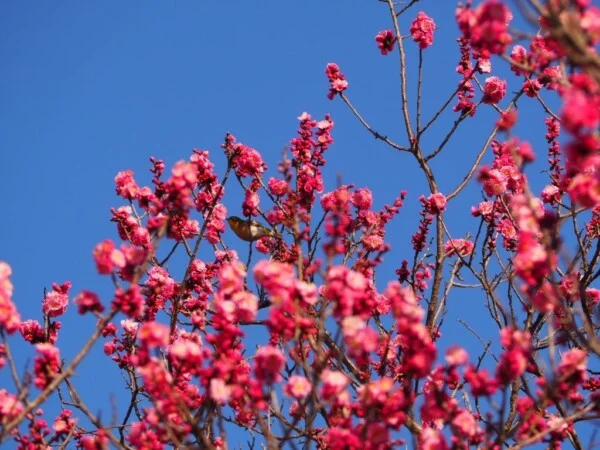
The plum grove in Kyoto Gyoen usually reaches its peak around mid-March.
Many birds such as Japanese white-eyes and brown-eared bulbuls gather to sip nectar.
In Kyoto Gyoen, people come not only to view plum blossoms, but also to enjoy birdwatching.
Around the same time, the peach grove with about 70 trees just south of the plum grove also begins to bloom.
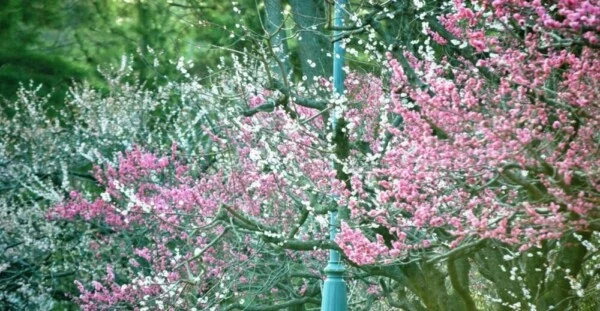
In late March, Kyoto is starting to shift its main focus to cherry blossoms, but the later-blooming plum grove in Kyoto Gyoen usually still has many flowers left.
Like falling cherry blossoms, the ground in the plum grove can be covered in red and white petals, which is also beautiful.
Around this time, the peach grove just to the south reaches full bloom.
Seeing plum blossoms and peach blossoms together is a special joy you can enjoy only at Kyoto Gyoen.
Plum blossoms at the Kyoto Imperial Palace
At the Kyoto Imperial Palace inside Kyoto Gyoen, there are not many, but plum blossoms also bloom there.
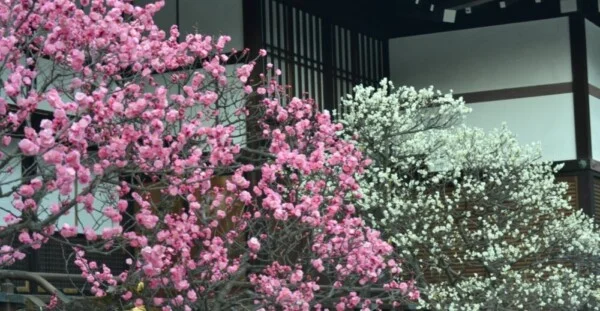
When it comes to plum blossom highlights inside the Kyoto Imperial Palace, the red and white plum trees in front of the Shishinden are the best.
Before year-round public visits started, there were very few chances to see the palace’s plum blossoms.
Now you can see them anytime without a reservation, which is really nice.
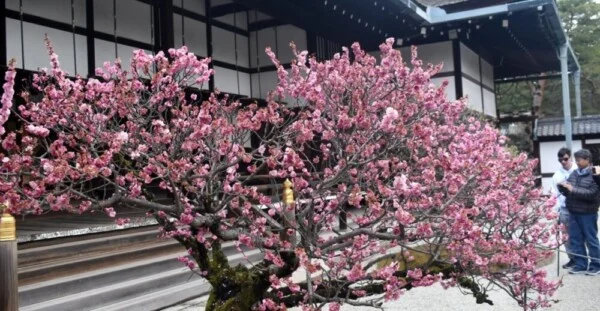
Kyoto Gyoen Information
- Opening hours: Open during the day; you can enter anytime
- Admission: Free / open access inside the park
- Address: Kyoto Gyoen, Kamigyo Ward, Kyoto City
- Access:
- Near Subway “Marutamachi” Station
- Near Subway “Imadegawa” Station
Kyoto Imperial Palace Information
- Visiting hours: 9:00–15:50 (final exit 16:30)
- Closed: Mondays (if Monday is a holiday, closed the next Tuesday)
- Admission: Free
- TEL: 075-211-1215
- Address: 1 Kyoto Gyoen, Kamigyo Ward, Kyoto City
- Access: About a 5-minute walk from Subway “Imadegawa” Station
Plum Trivia ①
“Sakon no Ume” became “Sakon no Sakura”

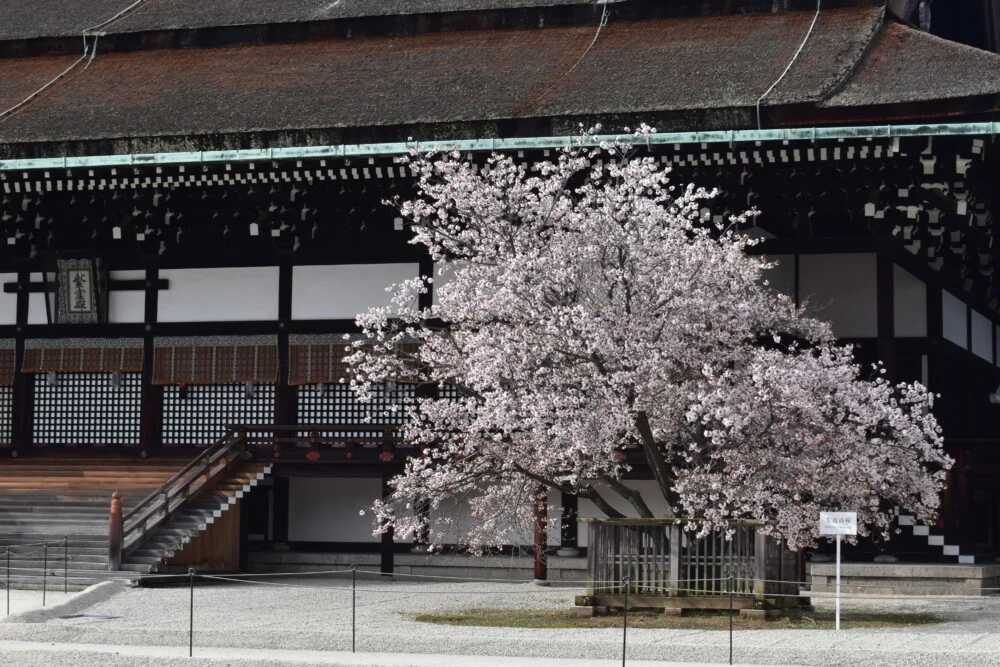
In front of the Shishinden, the main hall of the Kyoto Imperial Palace, there are two famous trees: “Sakon no Sakura” (the cherry tree) and “Ukon no Tachibana” (the tachibana orange tree).
The cherry tree is on the left side when viewed from the Shishinden. But if you stand in front and face the hall, the cherry tree is on your right.
This very important spot is planted with cherry blossoms, Japan’s most loved flower, together with tachibana, which is a symbol of good luck and long life.
However, at the beginning of Heian-kyo, it was not a cherry tree. It was a plum tree, so it was called “Sakon no Ume.”
According to Kojidan (a story collection from the early Kamakura period):
- The “cherry tree of the South Court” was originally a plum tree, planted when Emperor Kanmu moved the capital to Heian-kyo in 794.
- In the Jowa era, it withered, and Emperor Ninmyo replanted it.
- It later burned in the palace fire in 960 (Tentoku 4).
- When the palace was rebuilt, a cherry tree was planted instead, said to be from Yoshino.
- The tachibana tree, on the other hand, was said to have been there naturally from the start.
So, a plum tree stood there from 794, but after the 960 fire and rebuilding, it was changed to a cherry tree.
Some also link this change to the end of official missions to Tang China in 894, when Japanese-style culture spread—so the tree in front of the hall shifted from Chinese plum to Japanese cherry, symbolizing a change in people’s taste.
Today, a beautiful wild cherry tree still stands in front of the Shishinden, usually best from late March to April.
Nijo Castle (Nakagyo Ward): early to mid-March
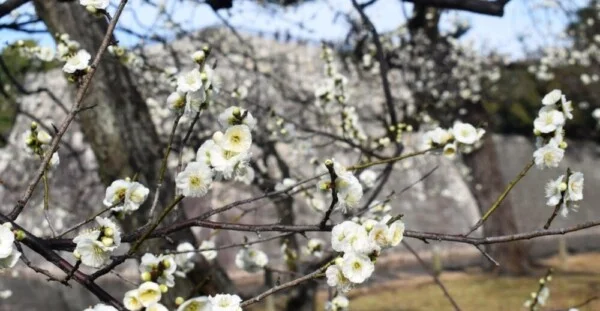
A plum grove looks great with beautiful stone walls in the background
At Nijo Castle, there is a plum grove on the south side of the castle keep base, across the inner moat. It has about 50 varieties and 130 plum trees.
Today, Nijo Castle is one of Kyoto’s well-known plum blossom spots, but the plum grove was developed in 1954, so its history is not very long.
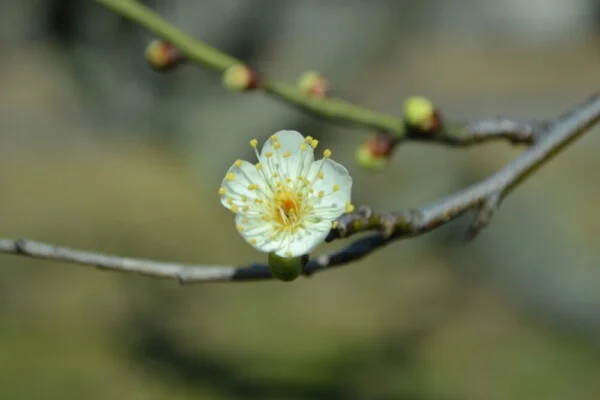
When February begins, a few plum blossoms start to bloom in the Nijo Castle plum grove, but it is best to visit from March, when they are at their best.
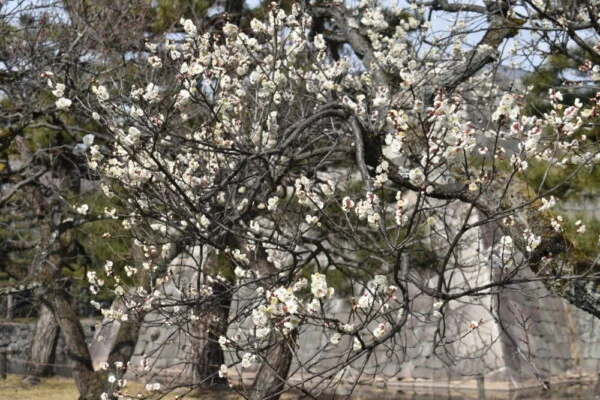
The best point for plum blossoms at Nijo Castle is that you can see them with the castle keep base in the background.
The castle tower that once looked over Kyoto was destroyed by a lightning fire in 1750, so it no longer exists. However, the detailed stone walls are impressive and well worth seeing on their own.
Visitor Information
- Hours: 8:45–17:00 (last admission 16:00)
- Admission:
- Adults: 800 yen (Ninomaru Palace: +500 yen)
- Junior/Senior high school students: 400 yen
- Elementary school students: 300 yen
- Address: 541 Nijojo-cho, Nakagyo Ward, Kyoto (Nijo-dori, Horikawa Nishi-iru)
- Access: Right near Subway “Nijojo-mae” Station
Umekoji Park (Shimogyo Ward): late January to late February
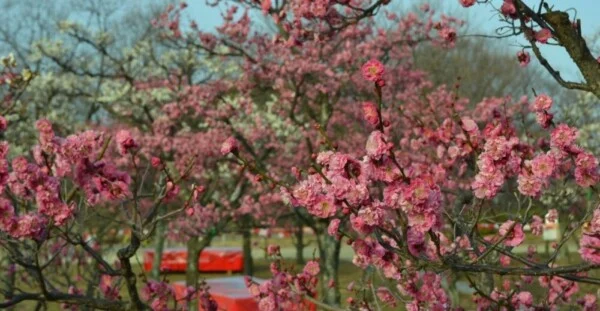
Kyoto’s earliest-blooming plum spot with many varieties
The place name “Umekoji” is said to come from a road in Heian-kyo, which was believed to have had plum trees planted along it.
However, it is not certain whether plum trees were actually planted there at that time.
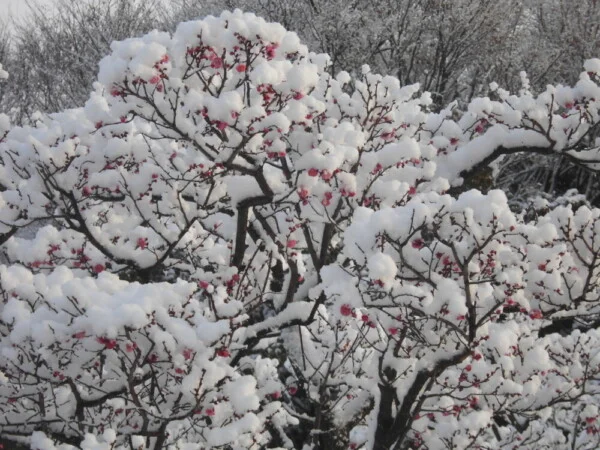
In the plum grove in the southeast area of Umekoji Park, there are 14 varieties and 150 plum trees.
It was created in 2000 to celebrate the 120th anniversary of Shimogyo Ward.
So it is a relatively new plum blossom spot, with just over 20 years of history.
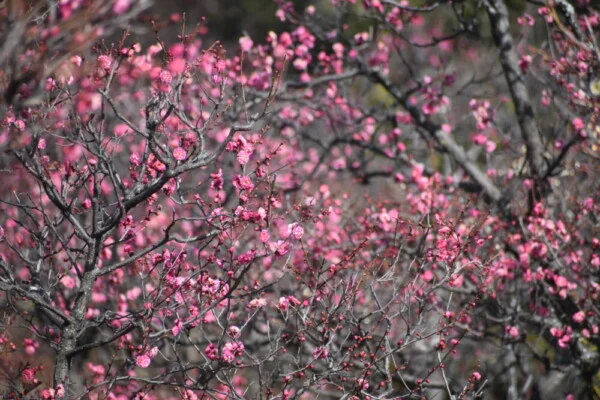
On weekends and public holidays, it can get fairly crowded, partly because it is an outdoor spot.
In the past, this area had many warehouses because it was close to a freight station and markets. But in recent years, more and more apartment buildings have been built.
It is a popular area for families with children.
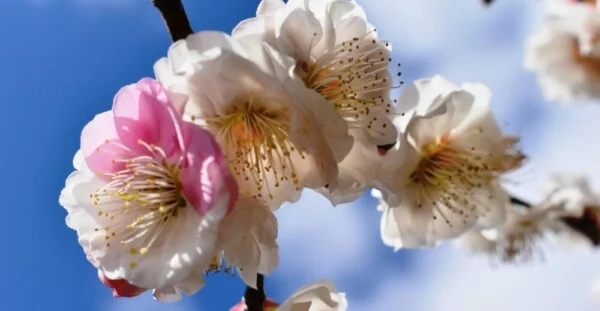
In both the north and south plum groves, a variety you should look for is “Kasugano.”
It is a rare type that blooms with both red and white flowers mixed together, and it is highly recommended.
Park Information
- Opening hours: Open during the day; you can enter anytime
- Admission: Free / open access inside the park
- TEL: 075-352-2500
- Address: 56-3 Kankiji-cho, Shimogyo Ward, Kyoto
- Access: Right near JR “Umekoji-Kyotonishi” Station
Shimogamo Shrine (Sakyo Ward): late February to mid-March
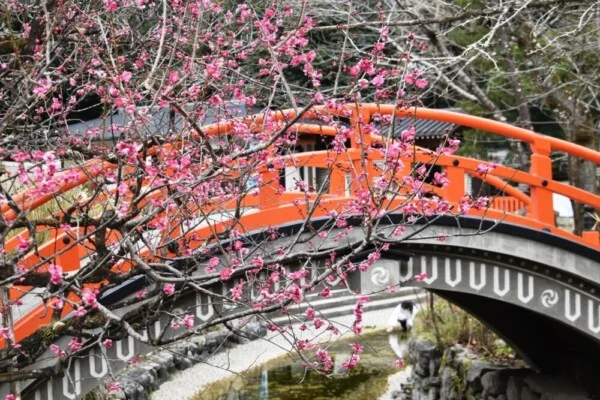
“Korin’s Plum” said to be the model for a famous painting
When people talk about Shimogamo Shrine, they often mention “Korin’s plum.”
Ogata Korin, a founder of the Rinpa school, painted Red and White Plum Blossoms (a folding screen). It is not only his masterpiece, but also one of the most famous works in Japanese painting.
It is said that the plum trees by the Mitarai River at Shimogamo Shrine were used as the model for this painting.
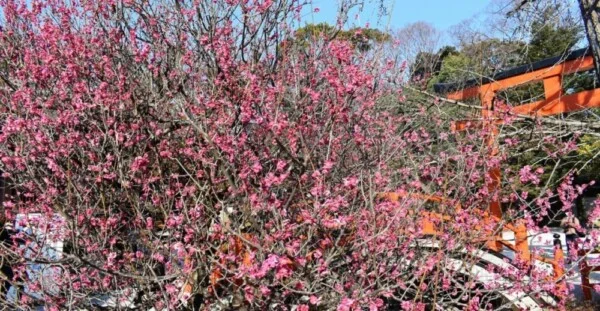
Usually, “Korin’s plum” at Shimogamo Shrine starts blooming around mid-February, and it reaches its best viewing time in March.
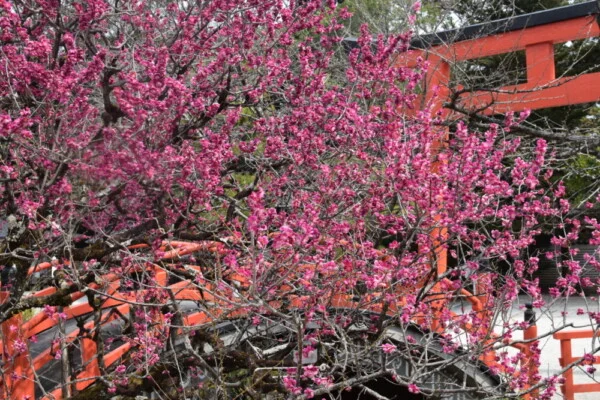
Red plum blossoms that stand out against vermilion buildings
“Korin’s plum” is popular not only because it is said to be the model for a famous painting.
Nearby, you can see vermilion-colored structures such as the Soribashi (arched bridge), torii gate, and romon gate. The bright red plum blossoms create a beautiful contrast.
You can enjoy a very photogenic view.
“Korin’s plum” usually stays at its best until around mid-March.
It has also been selected as a World Cultural Heritage site, and almost all shrine buildings in the grounds are designated as Important Cultural Properties or National Treasures.
Every year on March 3, when “Korin’s plum” is usually at its best, the “Nagashi-bina” ritual is held.
Visitor Information
- Visiting hours: 6:30–17:00
- Tadasu no Mori forest: open during the day; enter anytime
- Admission: Free (open access on the shrine grounds)
- TEL: 075-781-0010
- Address: 59 Shimogamo Izumikawa-cho, Sakyo Ward, Kyoto
- Access: About a 10-minute walk from Keihan “Demachiyanagi” Station
Conclusion
Throughout the year, plum blossoms are the next most popular after cherry blossoms and autumn leaves. However, compared with cherry blossoms and autumn leaves, there is not much information about plum blossoms.
But MK Taxi sightseeing drivers have a lot of knowledge about plum blossoms, too.
We introduced five places this time, but each driver also has their own personal recommendations.
They can guide you not only in Kyoto, but across the Kansai region as well.
With an MK sightseeing charter taxi, you can enjoy Kyoto’s plum blossoms to the fullest.
Why not try a different kind of Kyoto trip with a professional guide and driver?
For sightseeing in Kyoto, leave it to MK’s chartered sightseeing taxi.
Your private driver is a Kyoto expert who handles both transport and guiding.
