
Best Places to See Plum Blossoms: Northern Kyoto area
Among Kyoto’s four seasons, plum blossoms are very popular, after spring cherry blossoms and autumn leaves.
Plum blossoms brighten early spring, and their beauty and scent have attracted visitors to Kyoto for a long time.
However, unlike cherry blossoms and autumn leaves, Kyoto is in the off-season from February to March, so it is not very crowded.
Many people who know Kyoto well say that plum blossoms are better than cherry blossoms if you want a calm and slow flower-viewing trip.
Now, here are some recommended plum blossom spots.
Kyoto Prefectural Botanical Garden (Sakyo Ward) | Mid-February to Mid-March
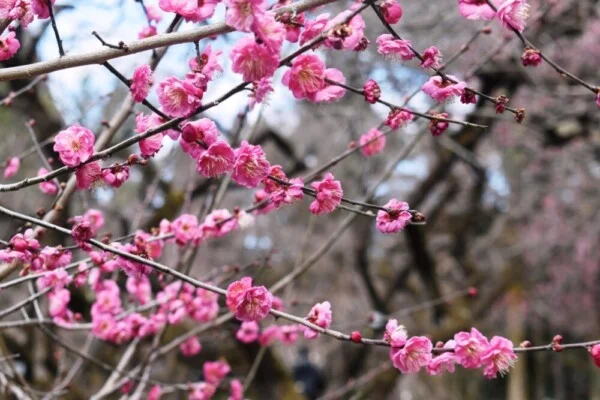
Plum Grove: 60 varieties, 150 trees
Kyoto Prefectural Botanical Garden is one of the largest botanical gardens in Japan. It has 150 plum trees, but more than 60 varieties—more than Kitano Tenmangu Shrine.
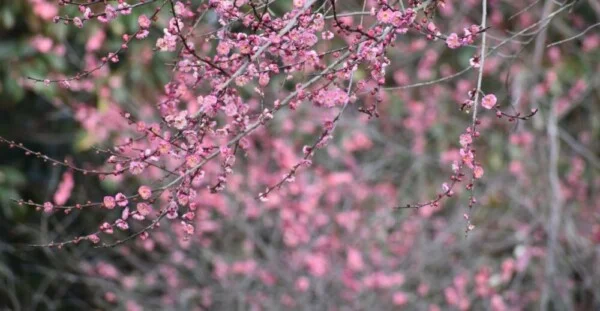
Starting in January, early-blooming plum blossoms—such as Yaekan-ko, Osakazuki, Michishirube, Toji, and Tamabotan—begin to bloom one after another.
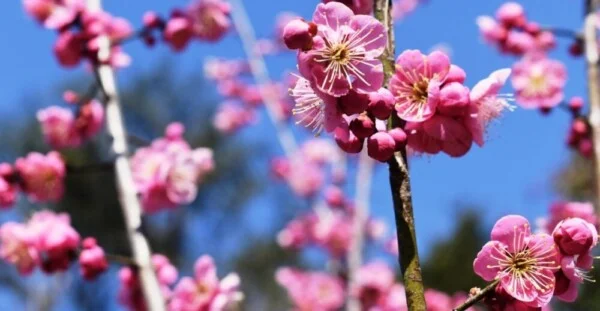
As a botanical garden, it is very helpful that every tree has its variety name written on a sign.
Some signs also explain the features, so it’s fun to look closely and compare things like the flower color, how the flowers grow, and the shape of the branches.
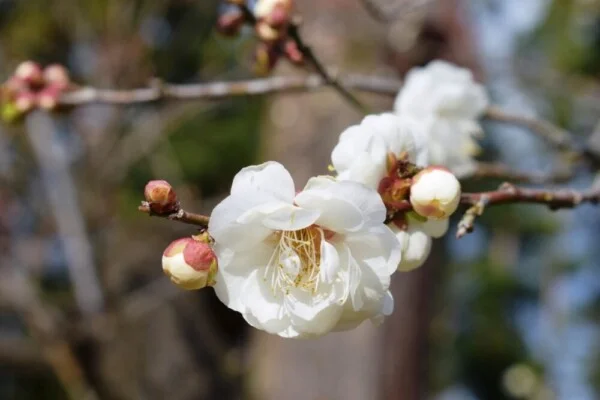
In a typical year, by mid-February, the early-blooming plums in the grove are at their best time to see. Varieties such as Kagoshima-beni, Koshu-koume, Mikaikou, Fujibotan, and Yokihi also start to bloom one after another.
In Kyoto Prefectural Botanical Garden, plum trees are not only in the main plum grove. There is also a group of plum trees near the Wild Garden in front of the Kitayama Gate. This area is also highly recommended.
When you enter from the Kitayama Gate, which connects directly to Subway Kitayama Station, you can smell the sweet scent of plum blossoms.
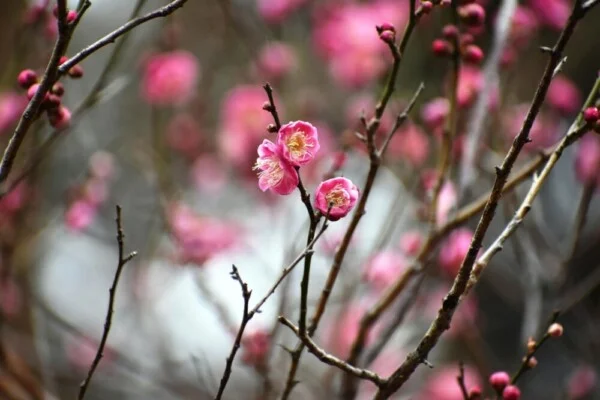
In the plum grove at Kyoto Prefectural Botanical Garden, early-blooming varieties are mostly on the southeast side, and late-blooming varieties are mostly on the northwest side.
In a typical year, when March begins, the northwest side also reaches its best time to see, after the southeast side.
Some early plums are still blooming, and late varieties such as Dairi and Gekkyuden start to open one after another, so early March is the most colorful time.
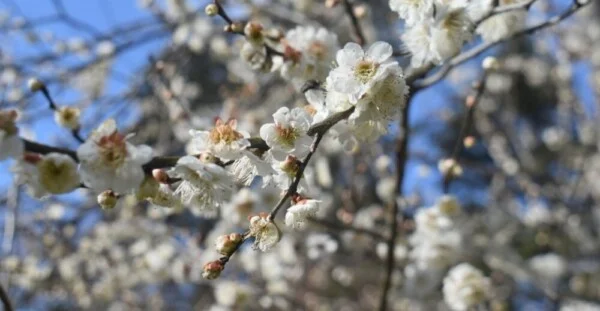
Visitor Information
- Closed: Dec 28 – Jan 4
- Hours: 9:00–17:00 (last entry ends at 16:00)
- Admission:
- Adults: 500 yen
- High school students: 250 yen
- Junior high and younger: Free
Greenhouse admission included
- TEL: 075-701-0141
- Address: Shimogamo Hanagi-cho, Sakyo Ward, Kyoto City
- Access: Right next to Subway “Kitayama” Station
Takaragaike Park (Sakyo Ward) | Late February to Mid-March
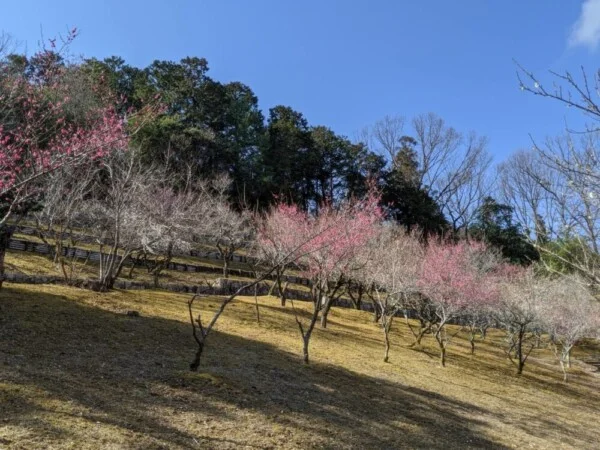
A large park centered around Takaragaike Pond
Takaragaike Park spreads out behind “Myo” and “Ho,” which are known as part of the Gozan Okuribi (Kyoto’s bonfire event). The park has a plum grove with about 200 trees.
The park is large and centered around Takaragaike Pond. The plum grove is mainly in the southwest area of the park.
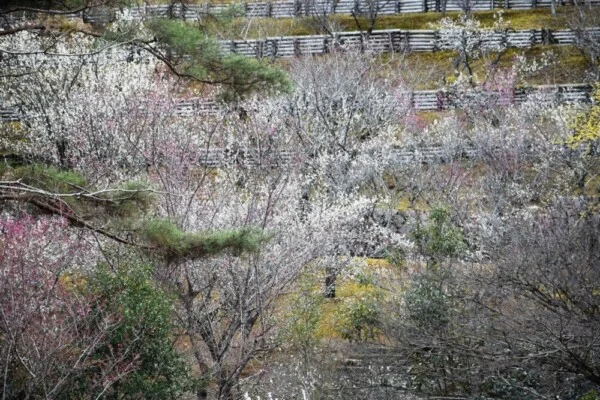
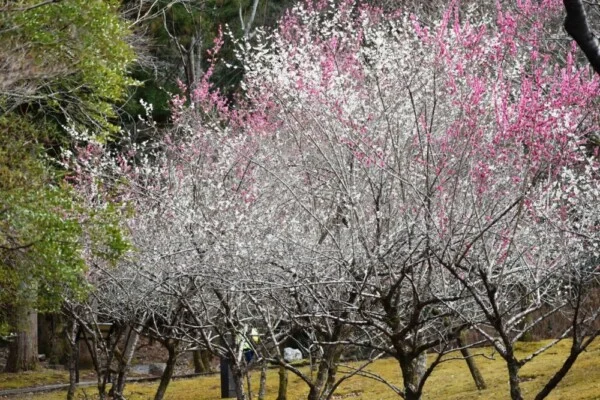
On the slope toward Matsugasaki Higashiyama, the land is leveled in terraces, and about 200 plum trees red and white are planted there.
They are usually at their best from late February to mid-March.
About Takaragaike Park
Takaragaike Park is a large park of about 7.6 hectares, centered around Takaragaike Pond, which is about 1.8 km around.
The pond was built in the Edo period as a reservoir to supply water to rice fields.
Only a small amount of river water flows into the pond. Its main water source is spring water.
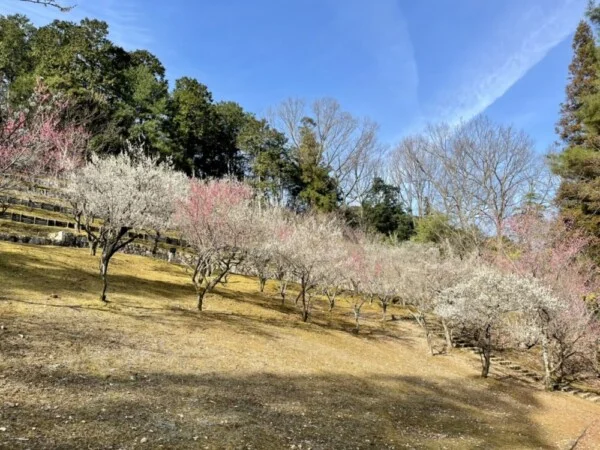
The park has areas such as a plum grove, a cherry forest, and an iris garden. You can also enjoy Kobano-mitsuba azalea, fresh green leaves, and autumn colors, so there are beautiful views in every season.
Visitor Information
- Hours: Open during the day (anytime)
- Admission: Free
- Access: Very close to Subway “Kokusaikaikan-mae” Station
Conclusion
Throughout the year, plum blossoms are the next most popular after cherry blossoms and autumn leaves. However, compared with cherry blossoms and autumn leaves, there is not much information about plum blossoms.
But MK Taxi sightseeing drivers have a lot of knowledge about plum blossoms, too.
We introduced two places this time, but each driver also has their own personal recommendations.
They can guide you not only in Kyoto, but across the Kansai region as well.
With an MK sightseeing charter taxi, you can enjoy Kyoto’s plum blossoms to the fullest.
Why not try a different kind of Kyoto trip with a professional guide and driver?
For sightseeing in Kyoto, leave it to MK’s chartered sightseeing taxi.
Your private driver is a Kyoto expert who handles both transport and guiding.
