
Best Places to See Plum Blossoms Saga Arashiyama area
Among Kyoto’s four seasons, plum blossoms are very popular, after spring cherry blossoms and autumn leaves.
Plum blossoms brighten early spring, and their beauty and scent have attracted visitors to Kyoto for a long time.
However, unlike cherry blossoms and autumn leaves, Kyoto is in the off-season from February to March, so it is not very crowded.
Many people who know Kyoto well say that plum blossoms are better than cherry blossoms if you want a calm and slow flower-viewing trip.
Now, here are some recommended plum blossom spots.
Tenryu-ji Temple (Ukyo Ward) | Early to mid-March
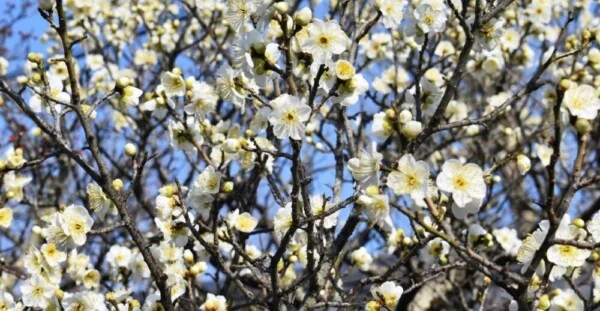
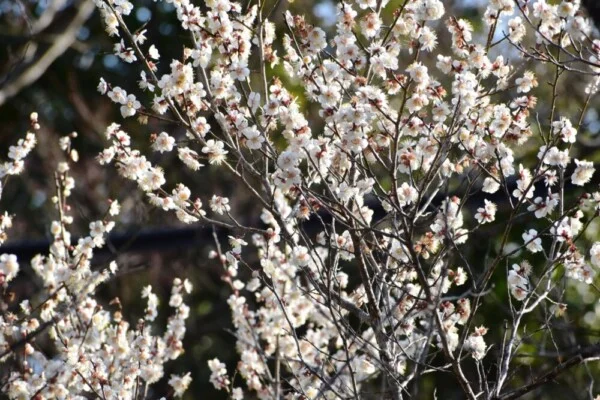
Beautiful white plum blossoms along the approach
In the front garden near Tenryu-ji’s parking area, the white plum trees along the approach start to bloom from mid-February.
Several white plum trees are planted between the area in front of the sub-temple Kogen-ji and around the front of Jisai-in. They look similar, but their bloom times vary slightly.
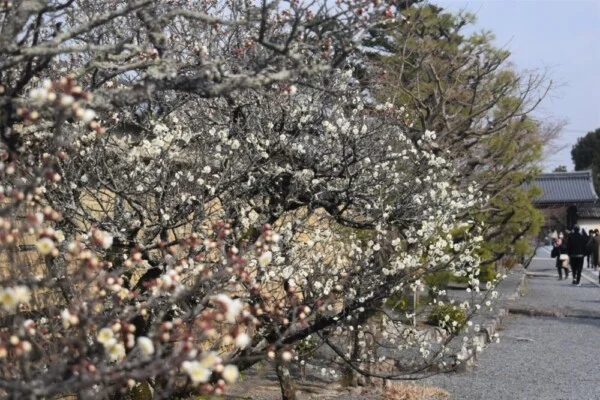
The front garden is a free area of the temple grounds, so no admission fee is needed.
The white plum blossoms usually reach their best season in March.
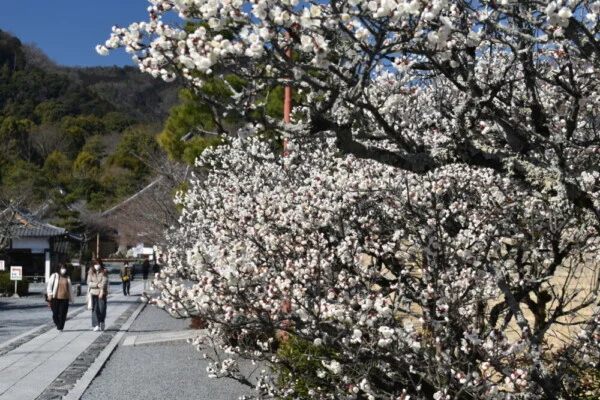
In the ticketed area, the Sogenchi Garden, you can also see plum blossoms, including weeping plums.
Beautiful plum trees bloom around the Hyakka-en area and in front of the Tahoden Hall. A special highlight is the Kureha Shidare weeping plum, planted in front of Tahoden as the “Ukon plum” and “Sakon plum.”
You can also enjoy other early spring flowers at the same time, such as camellias and Japanese pieris, which makes this place even more recommended.
Visitor Information
Hours: 8:30–17:00 (Mar 21–Oct 20: until 17:30)
Front garden: Open during the daytime (any time)
Admission: High school students and above ¥500 / Elementary & junior high students ¥300 / Preschool children free
Front garden: Free area (no ticket needed)
TEL: 075-881-1235
Address: 68 Sagatenryu-ji Susukinobaba-cho, Ukyo-ku, Kyoto
Access: Right near Randen “Arashiyama” Station
About a 13-minute walk from JR “Saga-Arashiyama” Station
About a 15-minute walk from Hankyu “Arashiyama” Station
The front garden is a free area.
Daikaku-ji Temple & Osawa Pond (Ukyo Ward) | Mid to late March
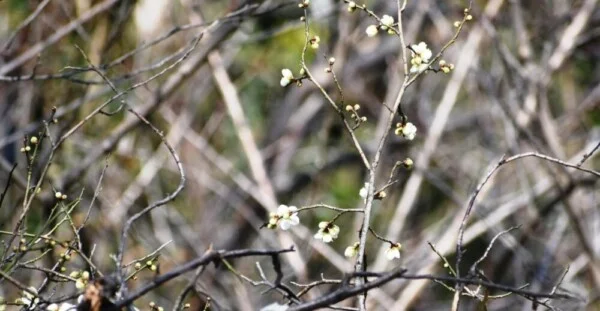
A hidden plum grove with about 150 trees
A hidden plum grove with about 150 trees
Not many people know this, but there is a plum grove with about 150 trees on the north side of Osawa Pond at Daikaku-ji Temple.
Osawa Pond is famous for cherry blossoms in spring, but few people visit for the plum blossoms before the cherry season.
Here is a recommendation of Daikaku-ji as a hidden plum spot.
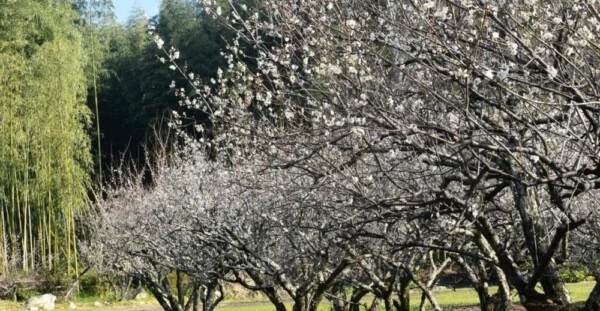
The plum grove usually reaches its best season around mid-March.
You can also enjoy a picture-perfect view with the Tahoto Pagoda in the background.
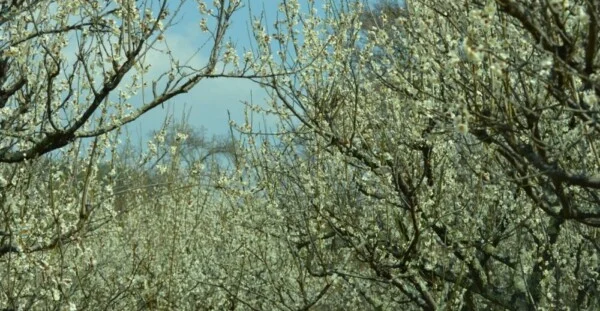
Even in Kyoto, it is rare to see about 150 plum trees blooming together in one place.
But not many people come here for the plums, so it is a recommended hidden spot.
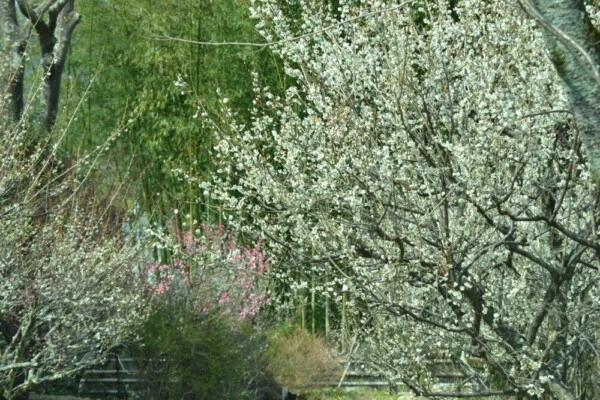
Just a little further in, there is also a bamboo grove, so you can enjoy a view of **bamboo and plum blossoms** together.
In fact, there are not many places where you can see both at the same time.
Visitor Information
Hours: 9:00–17:00 (last entry 16:30)
Admission (Temple buildings area): Adults ¥500 / Elementary–High school students ¥300
Admission (Osawa Pond area): Adults ¥300 / Elementary–High school students ¥100
The plum grove is in the Osawa Pond area.
TEL: 075-871-0071
Address: 4 Saga Osawa-cho, Ukyo-ku, Kyoto
Access: About a 20-minute walk from JR “Saga-Arashiyama” Station
Kameyama Park (Ukyo Ward) | Late February to early March
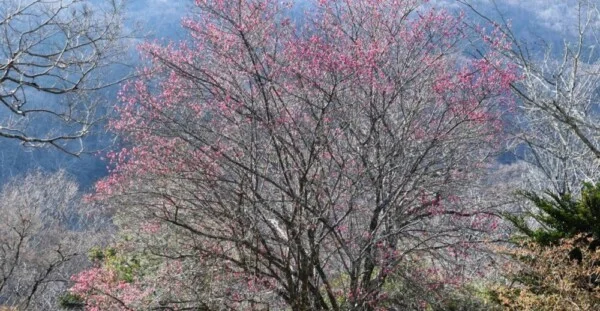
Plum blossoms popular with Chinese tourists too
Kameyama Park stretches from the hillside of Mt. Kameyama down to the Oi River. Every year around mid-January, red and white plum blossoms start to bloom in different areas of the park.
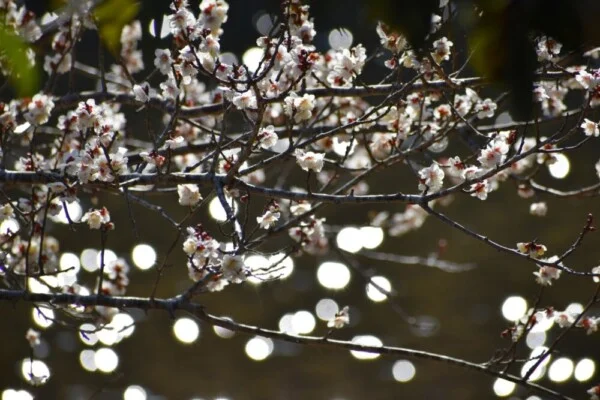
In Kameyama Park, you can find more plum trees on the southeastern slope of the park.
It is around the area where you go up the stairs from the Oi River entrance.
Near the Hozukyo Viewpoint on the west side, there are almost no plum trees.
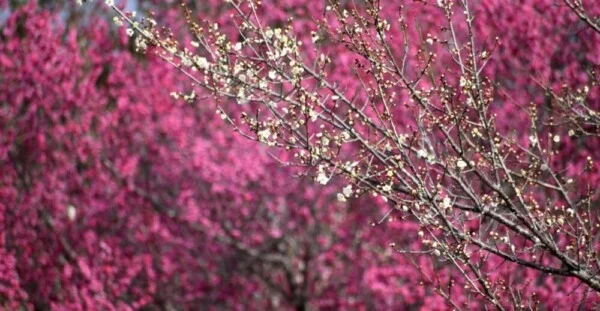
Plum blossoms are very popular in China, along with peonies. In Taiwan, plum blossoms are also chosen as the national flower.
Because many visitors know this flower, before COVID-19 spread, you could often see tourists from China and Taiwan taking photos in front of plum blossoms.
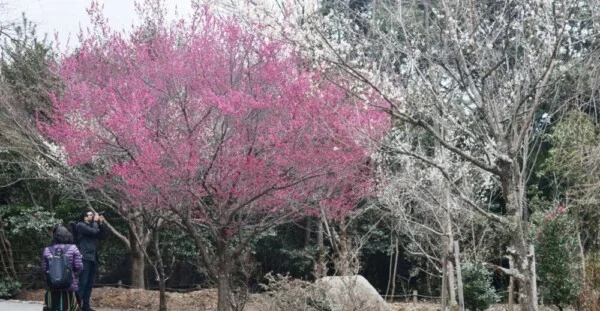
One thing you should not miss in Kameyama Park is the “Zhou Enlai Memorial Poem Monument.”
When Zhou Enlai was young and studying in Kyoto, he wrote a poem called “Arashiyama in the Rain” before returning to China, and the poem is carved on this stone monument.
This monument was built after the 1978 Treaty of Peace and Friendship between Japan and China, to honor the late Zhou Enlai, who worked for Japan–China friendship.
Even today, many Chinese tourists visiting Kyoto come to see it.
Conclusion
Throughout the year, plum blossoms are the next most popular after cherry blossoms and autumn leaves. However, compared with cherry blossoms and autumn leaves, there is not much information about plum blossoms.
But MK Taxi sightseeing drivers have a lot of knowledge about plum blossoms, too.
We introduced four places this time, but each driver also has their own personal recommendations.
They can guide you not only in Kyoto, but across the Kansai region as well.
With an MK sightseeing charter taxi, you can enjoy Kyoto’s plum blossoms to the fullest.
Why not try a different kind of Kyoto trip with a professional guide and driver?
