

Best Places to See Plum Blossoms Uji area
Among Kyoto’s four seasons, plum blossoms are very popular, after spring cherry blossoms and autumn leaves.
Plum blossoms brighten early spring, and their beauty and scent have attracted visitors to Kyoto for a long time.
However, unlike cherry blossoms and autumn leaves, Kyoto is in the off-season from February to March, so it is not very crowded.
Many people who know Kyoto well say that plum blossoms are better than cherry blossoms if you want a calm and slow flower-viewing trip.
Now, here are some recommended plum blossom spots.
Recommended Plum Blossom Spots in Kyoto Uji Area
In southern Kyoto and the Uji area, there are plum blossom spots that are different from those in Kyoto city.
For example, Aodani Plum Grove has about 10,000 plum trees, the largest number in Kyoto. You can see beautiful views here that you cannot see anywhere else. There are many great places to enjoy plum blossoms in Uji.
Aodani Plum Grove (Joyo City) | Late February – Mid March
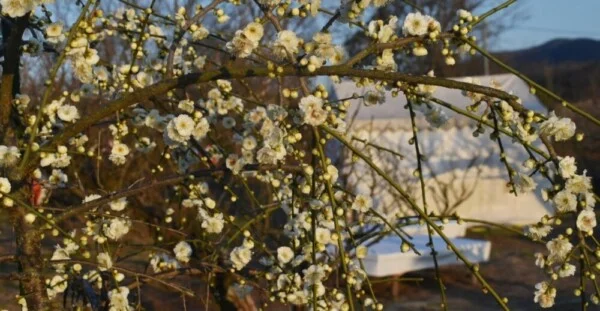
Aodani Plum Grove has about 10,000 plum trees spread over a large area
Located in the southern part of Joyo City, it is the largest plum grove in Kyoto Prefecture.
Unlike other plum spots in Kyoto that are for religion or tourism, this grove is mainly a fruit farm for growing plums.
About 50 plum farmers work here.
The Plum Festival Full of Food, Events, and Attractions
With the slogan “Spring Starts from Joyo,” Aodani Plum Grove holds a Plum Festival every year from late February to mid-March. Many visitors come to enjoy the plum blossoms.
In 2026, it will be held from Saturday, February 28 to Sunday, March 15.
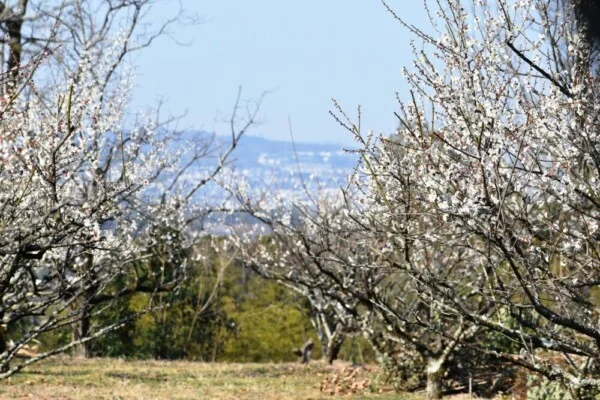
In addition to foods such as plum udon, plum products like pickled plums, plum wine, and plum extract are also planned to be sold.
The highlight in 2024 was a monkey show.
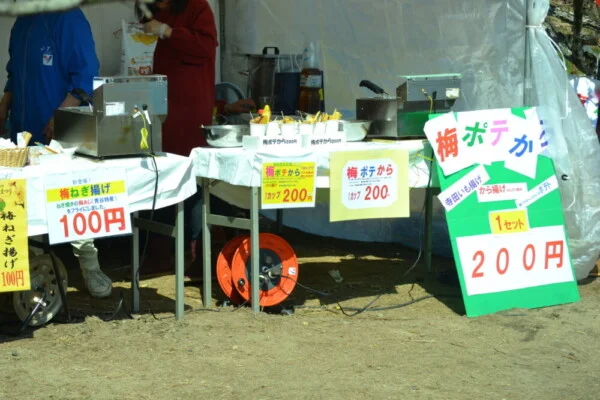
Plum groves are spread across the Aodani area, but the main venue is located at the northeastern end.
Besides local stalls, there are events such as traditional picture storytelling.
It is also recommended for families, and it becomes very lively on weekends.
The plum grove looks like a fruit farm. The trees are even in height and are relatively low.
When you walk around the town, local people may tell you their recommended plum spots, which is part of the charm.
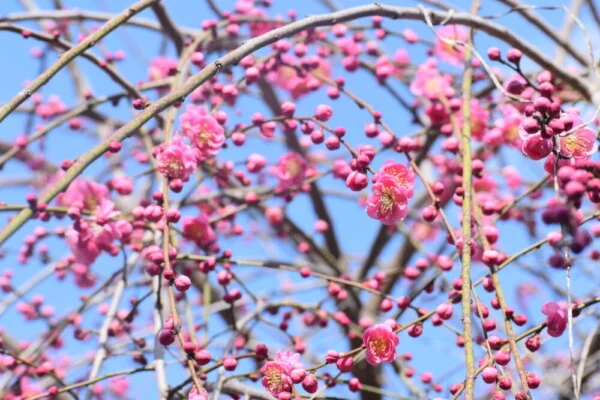
While walking and looking at the plum blossoms, someone may call out, “Come see the plum trees at our place.”
Even if they are not plum farmers, everyone seems to have plum trees they are proud of.
They may also tell you how to enjoy plum blossoms, such as, “The most beautiful time is when they are half in bloom, with flowers and buds about equal.”
This is a special charm you can only experience at Aodani Plum Grove, and not at other plum spots.
About Aodani Plum Grove
It has been known as a famous plum spot since the Kamakura period. About 10,000 plum trees are grown on 20 hectares of hills in the southern part of Joyo City.
It is the largest plum grove in Kyoto Prefecture, far larger than Kitano Tenmangu Shrine, which has about 1,500 trees and ranks second in the prefecture.
About 160 tons of plums are produced each year and processed into products such as pickled plums and plum wine.
Plum Festival Information
• Event Period: Feb 28 – Mar 15, 2026
• Hours: 10:00–15:00
• Admission: Free
• Address: Nakayama, Joyo City
• Access: 20-minute walk from JR “Yamashiro-Aodani” Station
Mimuroto-ji Temple (Uji City) | Early to Mid March
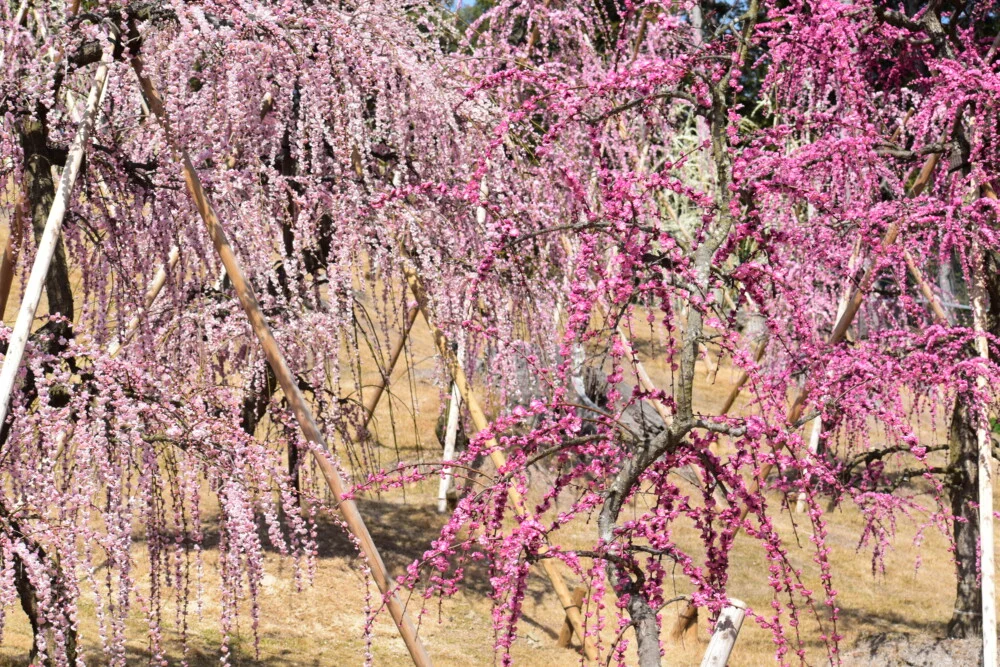
The “Weeping Plum Garden,” opened in 2022, is a major highlight
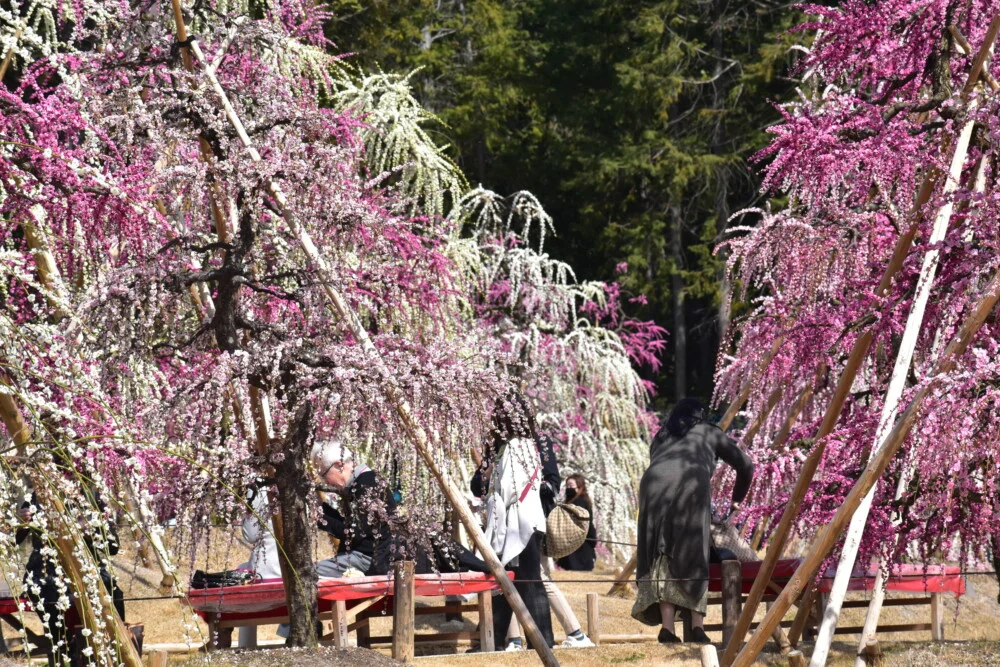
Compared to regular plum trees, weeping plums have more volume and look more impressive, even with just one tree.
Mimuroto-ji has as many as 250 weeping plum trees, so the garden is very impressive.
Even Jonangu Shrine has only about 150 weeping plum trees.
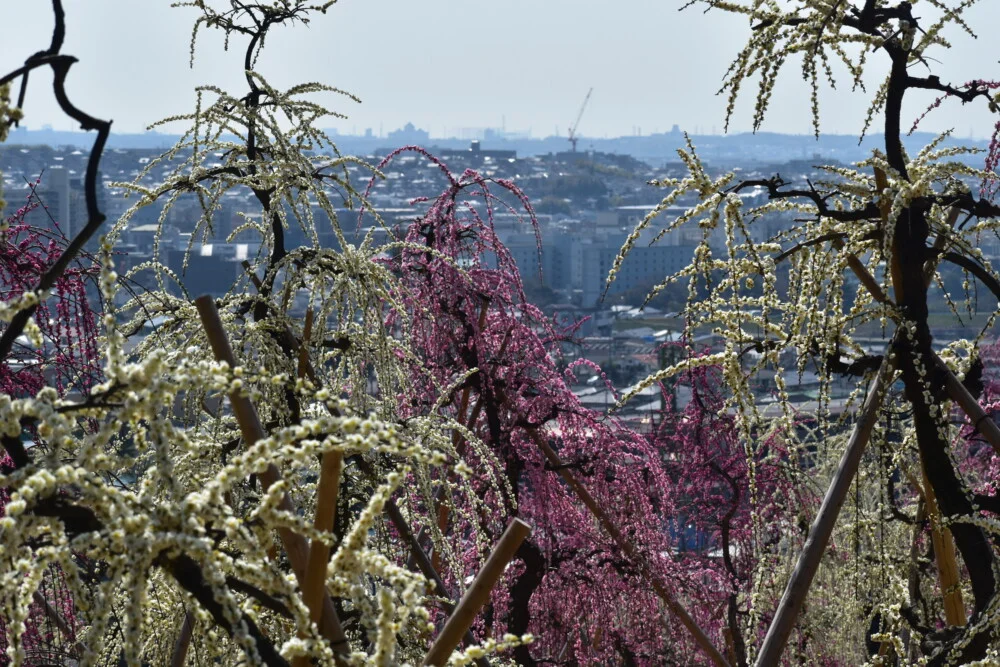
A Weeping Plum Garden with a Beautiful View
The charm of Mimuroto-ji’s weeping plum garden is not only its size.
The wonderful view from the garden is also a highlight.
Located on a ridge on higher ground, the garden offers a wide view of southern Kyoto.
You can see the townscape spreading out beyond the weeping plum trees, creating a stunning scene.
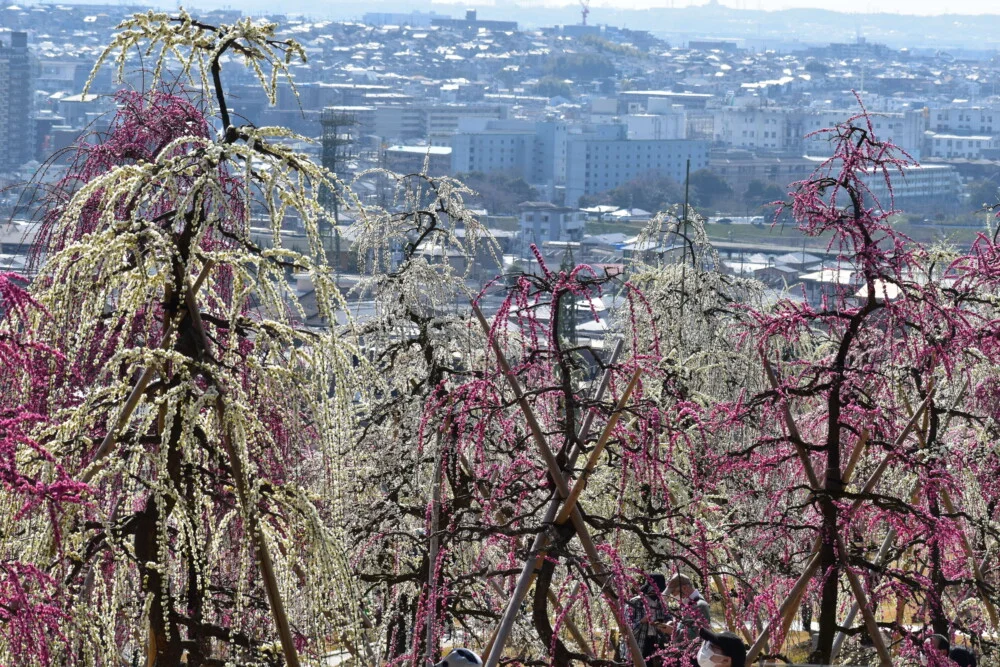
In Kyoto, there are no other plum spots where you can enjoy such a beautiful view.
The weeping plum garden opened only in 2022, and compared with famous places like Kitano Tenmangu and Jonangu Shrine, it is still less well known.
However, the scenery you can enjoy at Mimuroto-ji’s weeping plum garden is in no way inferior to those famous spots.
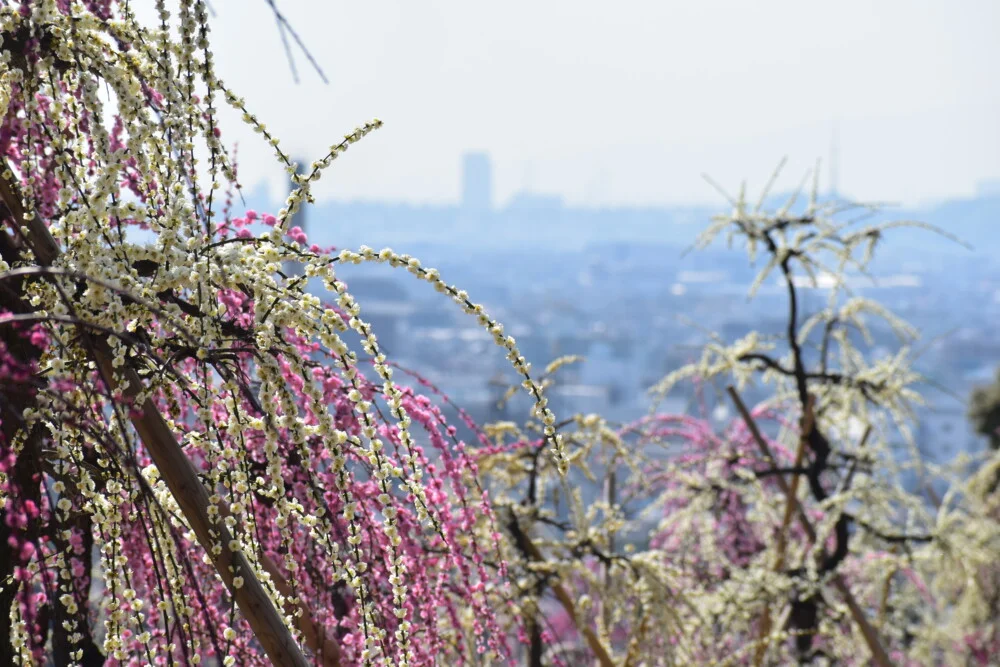
The weeping plum trees at Mimuroto-ji are still young.
They will continue to grow in the coming years.
When they mature, what kind of scenery will we be able to see?
It is something to truly look forward to.
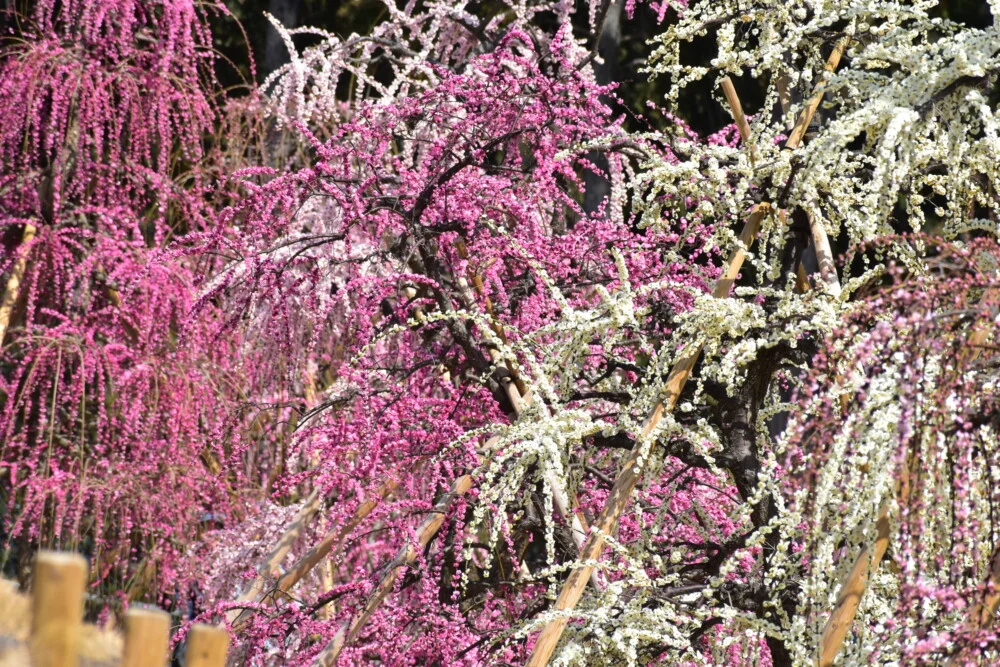
It may not be long before Mimuroto-ji’s weeping plum garden becomes one of Kyoto’s top plum viewing spots, attracting many visitors.
While it is still not widely known, you can enjoy the weeping plums in a relaxed atmosphere.
Mimuroto-ji is especially recommended as a plum blossom spot in 2026.
Mimuroto-ji Weeping Plum Garden Information
• Open Period: Feb 14 – Mar 22, 2026
• Hours: 8:30–15:10
• Admission:
o Adults: 1,000 yen
o Children: 500 yen
• TEL: 0774-21-2067
• Address: 21 Shigadani, Todo, Uji City
• Access:
o 15-minute walk from Keihan “Mimuroto” Station
o 30-minute walk from JR “Uji” Station
Uji City Botanical Park (Uji City) | Late February to Mid March
Colorful Plum Blossoms Brighten the Spring Zone
At Uji City Botanical Park, where many kinds of flowers bloom throughout the year, early-blooming plum trees such as Kankobai start to reach their best viewing season around February each year.
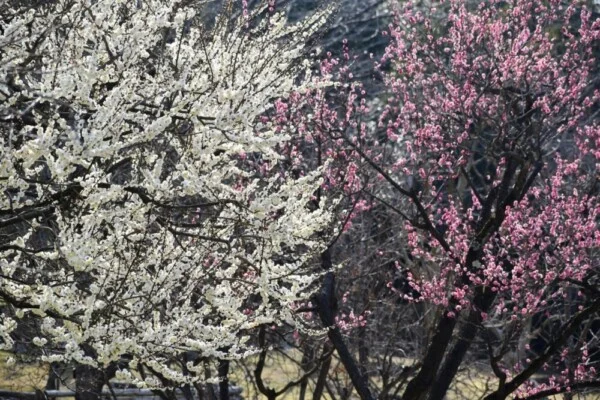
The plum trees are planted around the “Spring Zone” in the southern part of the park.
However, they are not planted in one large group. They bloom in different spots throughout the area.
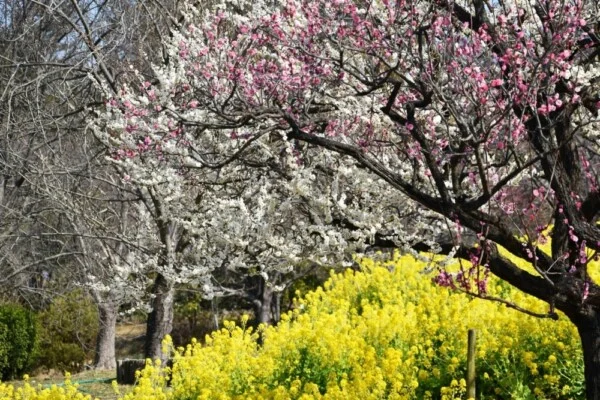
You can also enjoy the rare sight of yellow canola flowers blooming together with red and white plum blossoms in early spring, a view not often seen elsewhere.
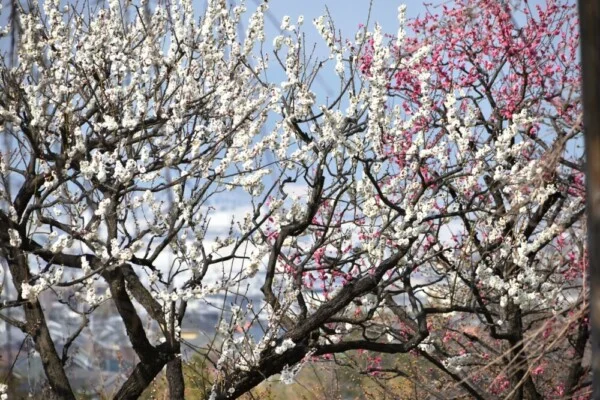
Uji City Botanical Park was built by developing a hillside, so it is located at a higher elevation.
From the upper areas of the park, you can see wide plains spreading out beyond the plum trees.
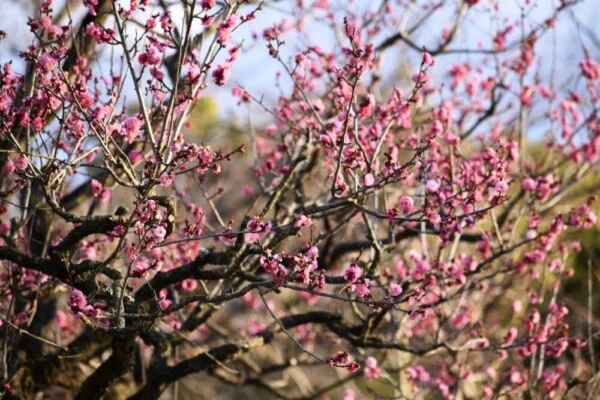
By late February each year, after the early-blooming Kankobai, many different kinds of plum trees begin to reach their best viewing season.
Visitor Information
• Closed: Monday (or the next day if Monday is a public holiday)
• Hours: 9:00–17:00 (last entry at 16:00)
• Admission:
o Adults: 600 yen
o Children: 300 yen
o Preschool children: Free
• TEL: 0774-39-9387
• Address: 25-1 Hachikenyadani, Hirono-cho, Uji, Kyoto
• Access:
o Bus from JR “Uji” Station
o Bus from Kintetsu “Okubo” Station
Conclusion
Throughout the year, plum blossoms are the next most popular after cherry blossoms and autumn leaves. However, compared with cherry blossoms and autumn leaves, there is not much information about plum blossoms.
But MK Taxi sightseeing drivers have a lot of knowledge about plum blossoms, too.
We introduced three places this time, but each driver also has their own personal recommendations.
They can guide you not only in Kyoto, but across the Kansai region as well.
With an MK sightseeing charter taxi, you can enjoy Kyoto’s plum blossoms to the fullest.
Why not try a different kind of Kyoto trip with a professional guide and driver?
For sightseeing in Kyoto, leave it to MK’s chartered sightseeing taxi.
Your private driver is a Kyoto expert who handles both transport and guiding.
