
Kitano Tenmangu’s plum garden is the best in Kyoto!
Not only in Kyoto—when people talk about famous plum spots, many think of Tenjin Shrines (Tenmangu Shrines).
The enshrined deity, Sugawara no Michizane, is known for loving plum blossoms.
There are said to be about 12,000 Tenjin Shrines across Japan, and the main shrine is Kitano Tenmangu Shrine in Kyoto.
Inside the grounds are 1,500 plum trees of 50 types. They are among Japan’s most popular and most beautiful.
Here’s a look at the charm of the plum blossoms at Kitano Tenmangu Shrine.
In 2026, the plum garden is planned to open around early February.
Kitano Tenmangu Shrine and plum blossoms
Plum blossoms loved by Michizane
Michizane loved plum blossoms more than cherry blossoms.
Sugawara no Michizane, the deity of Kitano Tenmangu Shrine, is well known for loving plum blossoms.
Many legends about him appeared after his death, but his love of plum blossoms is not a later-made story.
In fact, he left many Japanese poems (waka) and Chinese-style poems about plum blossoms.
In Japan, it is well known that plum blossoms were once more popular than cherry blossoms.
But in Michizane’s time, when people said “flowers,” they already meant cherry blossoms.
In the Jōwa era, when Michizane was born, the “Sakon no Ume” plum tree in front of the Shishinden hall at the Kyoto Imperial Palace had already been replaced by the “Sakon no Sakura” cherry tree.
Also, in the Kokin Wakashū, completed soon after Michizane’s death in 905, there are 75 poems about cherry blossoms but only 22 about plum blossoms.
So the trend had already shifted to cherry blossoms, but Michizane continued to love plum blossoms.
Kitano Tenmangu Shrine: a famous plum spot since old times
In Kyoto, when people talk about a famous place for plum blossoms, many think first of Kitano Tenmangu Shrine.
Kitano Tenmangu Shrine was built 44 years after Sugawara no Michizane died. Because the deity loved plum blossoms, the shrine’s crest is also a plum blossom.
For a long time, many plum trees have been planted in the shrine grounds.
Tenmangu Shrines across Japan are also famous for plum blossoms
At Tenmangu Shrines that enshrine Sugawara no Michizane, plum trees are usually planted.
Among them, Dazaifu Tenmangu Shrine (Fukuoka), Hofu Tenmangu Shrine (Yamaguchi), and Kameido Tenjin Shrine (Tokyo) are well-known plum viewing spots nationwide.
All across Japan, Sugawara no Michizane—the deity of Tenmangu Shrines—is often worshiped together with plum blossoms.
Since he loved plum blossoms so much, he would surely be happy about this.
Plum blossoms at Kitano Tenmangu Shrine
The best time to see the plum blossoms at Kitano Tenmangu Shrine is from mid-February to mid-March
The bloom season here lasts a long time, so it’s a great place to visit
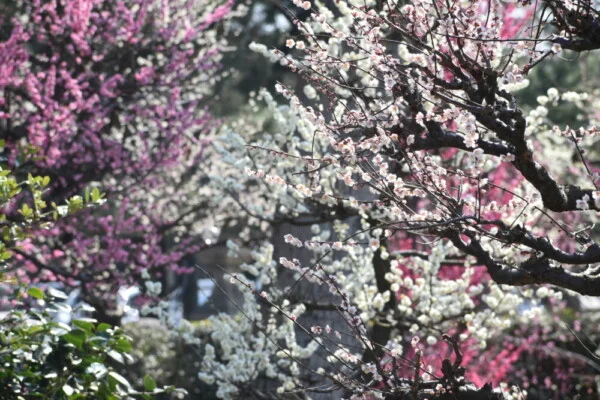
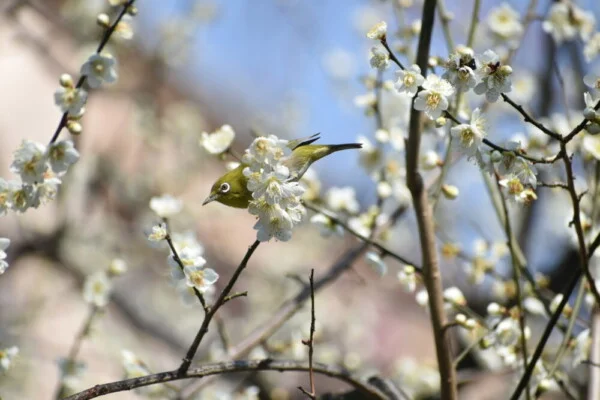
Kitano Tenmangu Shrine has many different types of plum trees, so the bloom season lasts a long time.
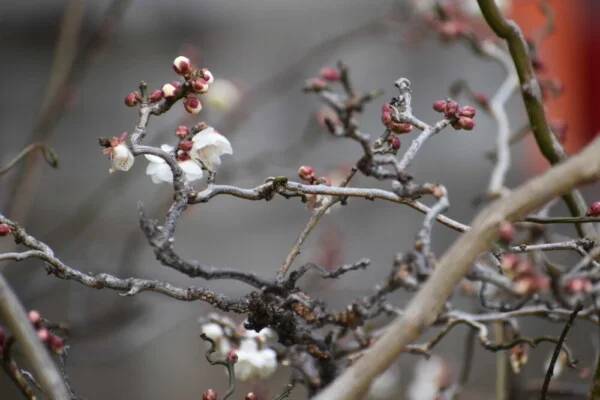
- Early-blooming plums (early types): late January to mid-February
- Main bloom (average types): mid-February to early March
- Late-blooming plums (late types): late February to late March
Across the shrine grounds, many plum blossoms are in bloom at the same time from mid-February to mid-March.
The peak is usually around late February to early March.
Even outside these main dates:
some very early plums can bloom from early January, and some late plums can bloom until late March.
The plum garden usually opens during the best season, typically from early February to around mid-March.
However, the dates above are only a guide.
Plum blossoms often shift more than cherry blossoms. Depending on the year, they can bloom about two weeks earlier or later.
Early-blooming plums start from the end of the year
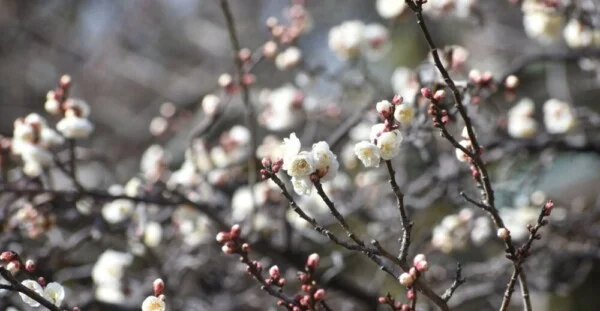
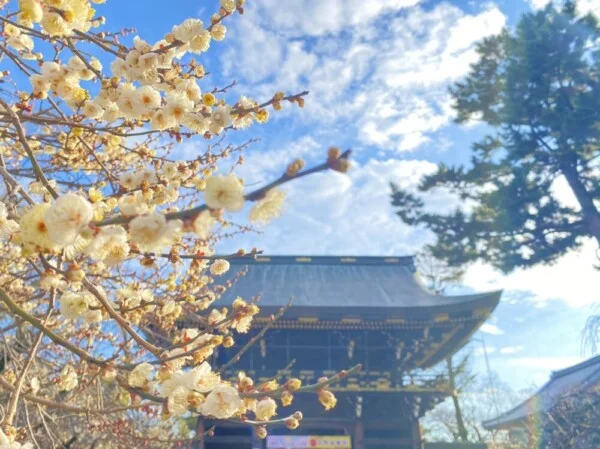
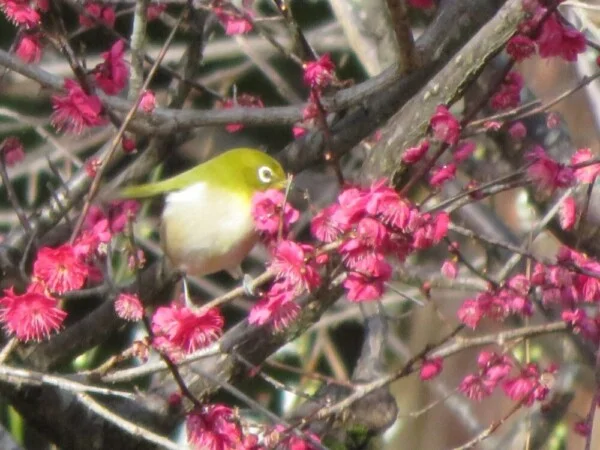
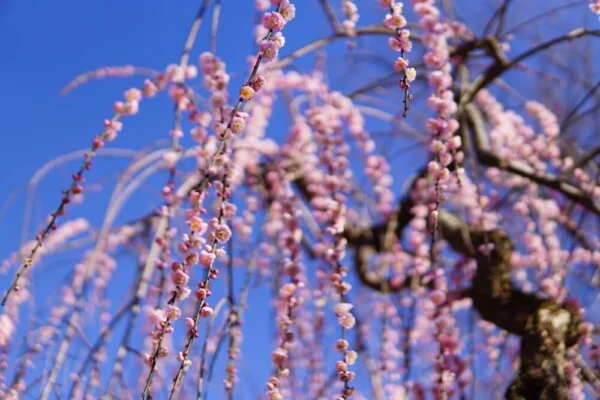
At Kitano Tenmangu Shrine, early-blooming plums such as Unryu-ume (in front of the Romatsu-sha) and Kanko-ume (in front of the Ema Hall) start to bloom after the New Year, bringing an early sign of spring to Kyoto.
In many years, they begin blooming in December.
When the blossoms open, the Kyoto Shimbun newspaper often runs an article like “Plum blossoms have bloomed at Kitano Tenmangu Shrine.”
In years when blooming is very early, the autumn leaves on the grounds may still be at their best.
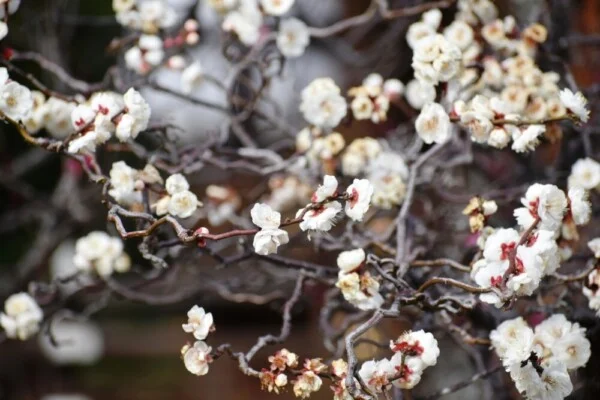
In February, the plum garden opens and the season starts in full
From February, the paid plum garden at Kitano Tenmangu Shrine opens to visitors, and the plum season begins in full.
In recent years, the garden sometimes opens already in January, even if the blossoms are not yet at their best.
In 2025, the Kitano Tenmangu Plum Garden is planned to open on January 25.
The closing date may change depending on how the flowers bloom, but it usually stays open until late March.
Recent opening periods of the Kitano Tenmangu Plum Garden
| Year | Opened | Closed |
| 2022 | Jan 28 | Mar 21 |
| 2023 | Jan 28 | Mar 19 |
| 2024 | Feb 1 | Mar 17 |
| 2025 | Jan 25 | Mar 30 |
Snow and plum blossoms at Kitano Tenmangu Shrine
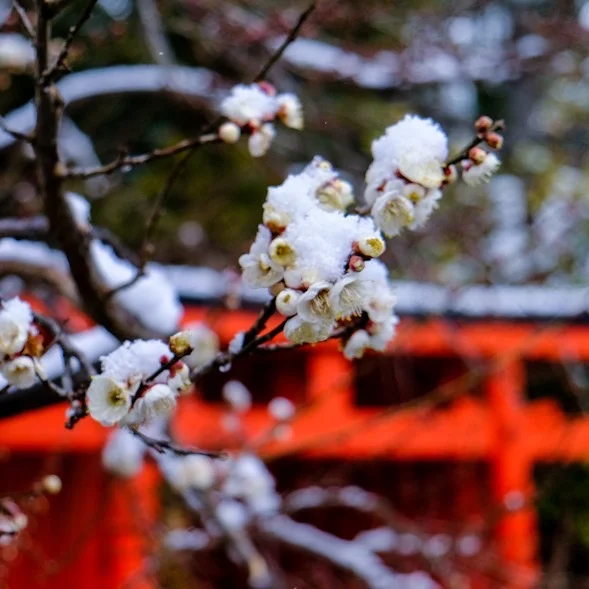
Plum blossoms bloom in early spring when it is still cold, so you can sometimes see plum blossoms covered with snow.
In Kyoto, the farther north you go, the easier it is for snow to fall.
So even if there is no snow around Kyoto Station or the Shijō area, snow may still lie on the ground north of Imadegawa Street, such as at Kitano Tenmangu Shrine.
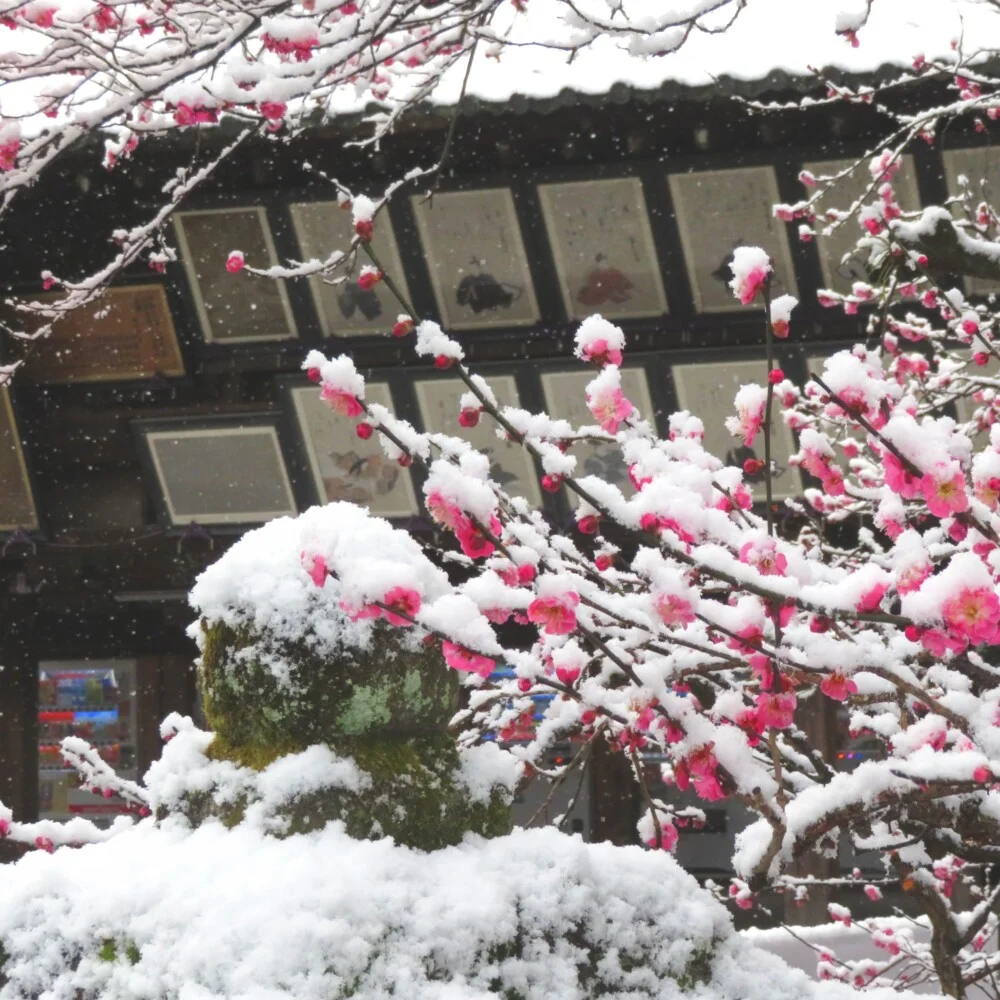
At Kitano Tenmangu Shrine, if you go early in the morning, you may see this “snow and plum” view a few times a year.
But the snow often melts by around noon, so chances are not very many.
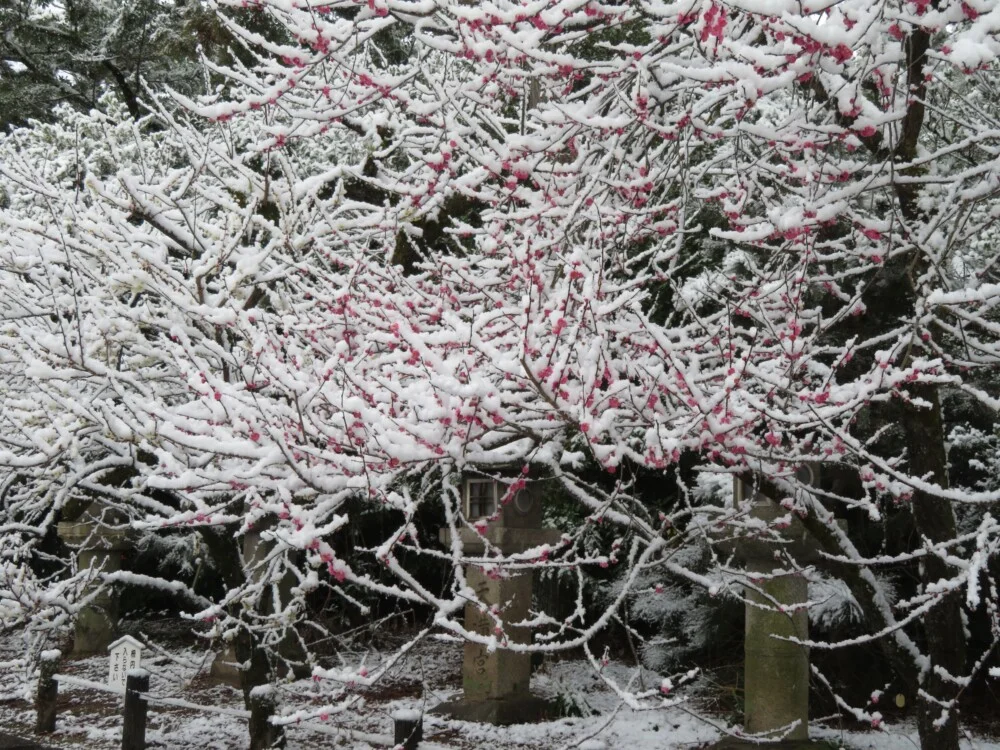
When snow piles up, both red and white plum trees can be covered in white snow, so everything looks almost all white.
Through gaps in the snow, you can see small flashes of red or white plum blossoms.
The “Nade-ushi” statues around the grounds of Kitano Tenmangu Shrine also look cold on snowy days.
Odoi Plum Grove
Odoi: a famous spot for plum blossoms and autumn leaves
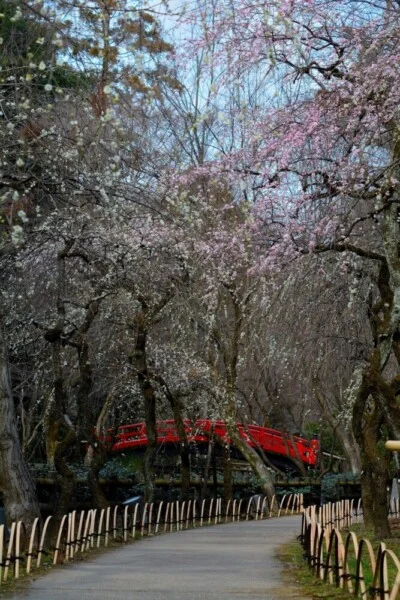
The plum garden at Kitano Tenmangu Shrine spreads not only on the west side of the approach path, but also into the Odoi area.
On the south side of the Odoi area, many plum trees are planted together with maple trees.
The Odoi area at Kitano Tenmangu Shrine lies just west of the shrine grounds, along the east side of the Kamiyagawa River (also called the Tenjin River), which runs north to south.
Near the bottom of the small valley cut by the river, a plum grove spreads out. The bright red drum bridge looks beautiful with red and white plum blossoms.
A rare plum light-up is also recommended
At Kitano Tenmangu Shrine, you can enjoy “night plums.”
In March, the plum blossoms at Kitano Tenmangu Shrine reach full bloom.
In the plum garden, many types of plums bloom, and the garden is also open at night. The special light-up, like “night cherry blossoms” but for plums, is called “night plums,” and it’s highly recommended.
The plum garden light-up started in 2018. It was popular, so it has been held every year since then.
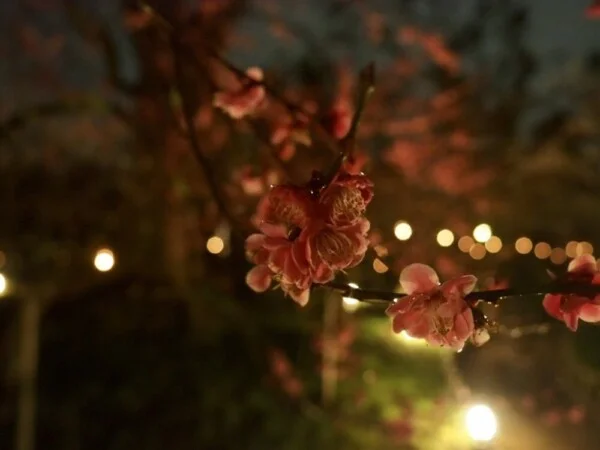
The light-up dates for the plum garden at Kitano Tenmangu Shrine can change depending on how the plum blossoms bloom, but it is usually from late February to around mid-March.
In 2021, when the blossoms were early, the schedule was moved earlier and the event ended on Sunday, March 7.
So if you plan to go, please check the latest information each year.
Plum Garden Light-up (Info for 2025)
| Item | Details |
| Dates | Fri / Sat / Sun from Feb 14, 2025 (Fri) to Mar 9, 2025 (Sun) |
| Hours | Until 8:00 pm (last entry 7:40 pm) |
| Fee | Adults (junior high and older): 1,200 yen; Children: 600 yen |
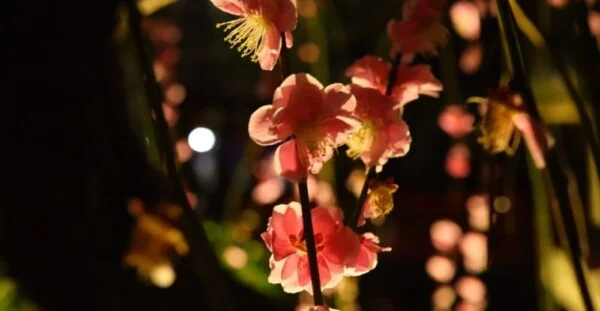
Plum blossoms glowing in candlelight
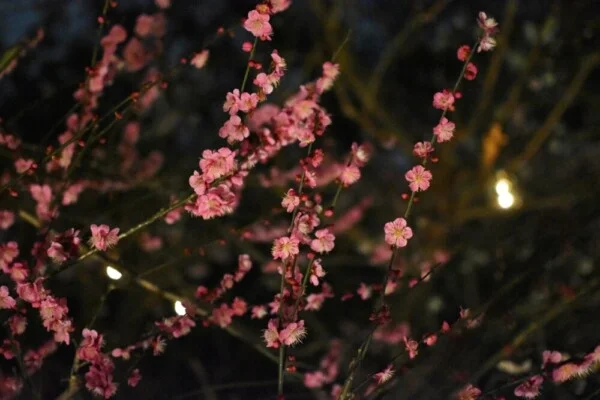
The light-up at the plum garden of Kitano Tenmangu Shrine starts around sunset, and the last entry is 7:40 pm.
Unlike many other light-ups, it is lit mainly by candles.
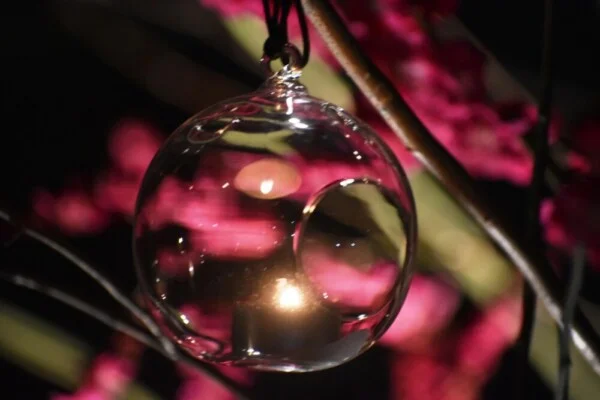
Candles in glass holders, hanging above, softly light up the plum blossoms in full bloom.
Together with the sweet plum scent, you can enjoy a dreamy moment.
It is usually not very crowded, so you can enjoy a different kind of beauty from cherry or autumn-leaf light-ups.
But it is already a cold season, and it’s night, so please dress very warmly.
Enjoy the tea shop inside the plum garden
Entry fee includes tea and sweets
Inside the plum garden, there is a tea shop run by Oimatsu, located near the East Gate of Kitano Tenmangu Shrine.
The garden entry fee includes tea and sweets from the tea shop.
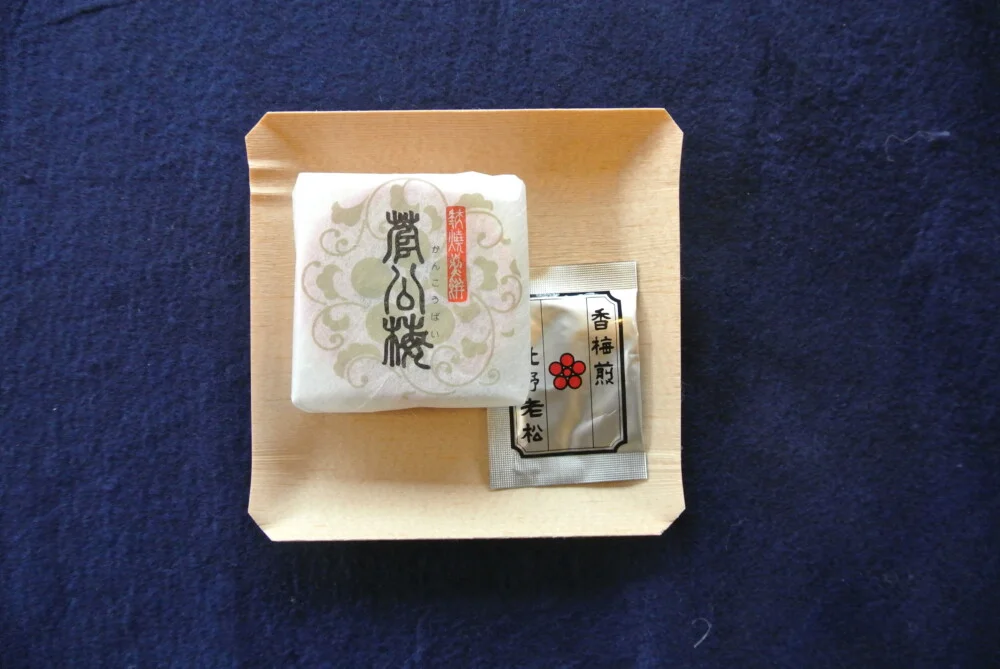
When you give the voucher at the tea shop, you receive a tea called “Kobaisen” and a Japanese sweet called “Kanko-ume.”
For the tea, you use a cup provided at the shop and pour hot water from a pot yourself.
Kobaisen is tea made with gyokuro (green tea), plus plum paste and kelp.
Kanko-ume is a fuyaki rice cracker, and you get two pieces, one red and one white.
You drink the tea while eating the lightly sweet-and-sour cracker.
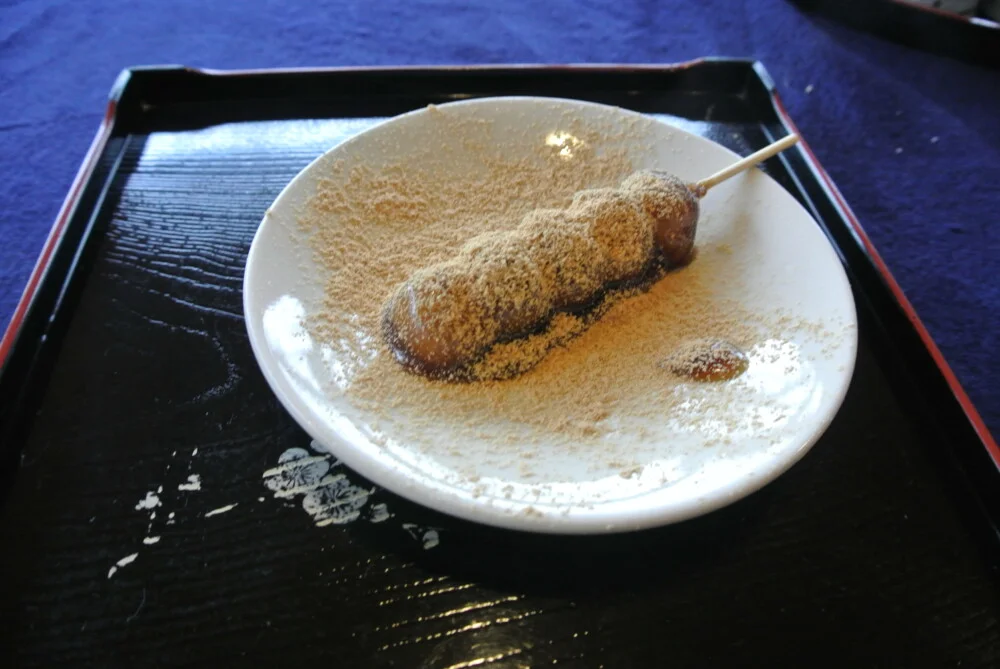
They also sell many snacks, like dango
At the Oimatsu tea shop, they also sell other sweets, such as Shichiken dango.
Enjoy your favorite snack while looking out over the plum garden.
It will be a rich and relaxing time.
About Kitano Tenmangu Shrine
The deity of Kitano Tenmangu Shrine is Sugawara no Michizane, who is very popular as the “god of learning.”
There are said to be about 12,000 Tenmangu Shrines (or Tenjin Shrines) across Japan, and the main shrine among them is Kitano Tenmangu Shrine in Kyoto.
From around the Edo period, Kitano Tenmangu Shrine became widely worshiped as a shrine of learning, linked to Sugawara no Michizane, who was also famous as a scholar.
Even today, many students from all over Japan—especially exam takers and school trip groups—come to visit.
It is a classic and very common stop on Kyoto school trips.
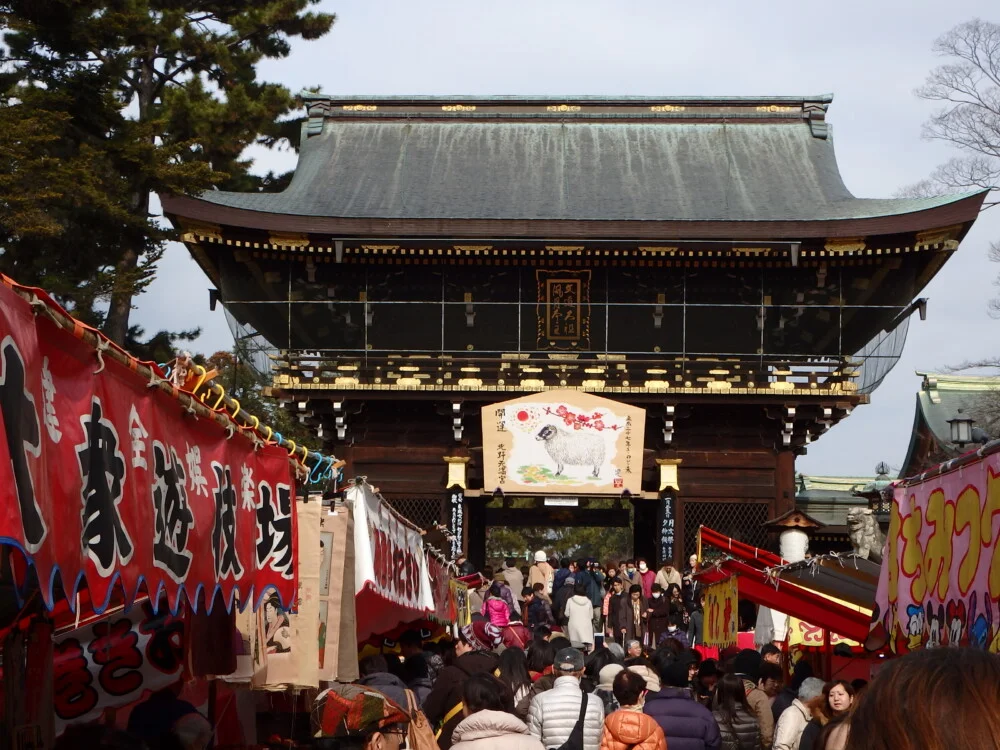
On the 25th of every month, the death anniversary day of Sugawara no Michizane, a market called Tenjin-ichi is held in and around Kitano Tenmangu Shrine, and it gets very lively.
It’s a good place to look for unique finds, and many antique lovers in Kyoto come too.
The market on January 25 is called Hatsu-Tenjin, and it is even more crowded than usual.
Conclusion
Kitano Tenmangu Shrine is one of Kyoto’s most famous places for plum blossoms.
If you visit Kyoto from late January to early March, you should go and see it.
It can be hard to reach by train only, so taking a taxi is recommended.
Visitor info
- Hours: 6:30–17:00 (normal)
- Office (shamusho): 9:00–16:30
- Fee: Free entry to the grounds
- Tel: 075-461-0005
- Address: Bakuro-cho, Kamigyo Ward, Kyoto (Kitano Tenmangu Shrine Office)
- Access: 5-minute walk from Randen “Kitano-Hakubaicho” Station
Kitano Tenmangu Shrine “Plum Garden”
- Open period: early Feb 2026 to late Mar 2026
- Closing day: decided by bloom conditions (in 2025, it closed on Mar 28)
- Light-up: usually from late Feb to mid Mar
- Day hours: 9:00–16:00 (last entry 15:40)
- Light-up hours: until 20:00 (last entry 19:40)
- Fee: Adults (junior high and older) 1,200 yen; Children 600 yen
For sightseeing in Kyoto, leave it to MK’s chartered sightseeing taxi.
Your private driver is a Kyoto expert who handles both transport and guiding.
