
Kyoto autumn leaves spots with a late peak time
Because of global warming, the best time to see autumn leaves in Kyoto is getting later than before.
Even after December starts, many viewing spots are still in their best season.
Here we introduce 3 spots where the peak is late and you can still see bright red leaves in December.
We especially recommend Tadasu no Mori in Shimogamo Shrine, where the leaves stay beautiful until mid-December.
In 2025, the leaves are turning red about one week later than in a normal year.
You can enjoy autumn leaves in Kyoto not only in early December, but also in the middle of December.
Tadasu no Mori (Shimogamo Shrine), Sakyo Ward
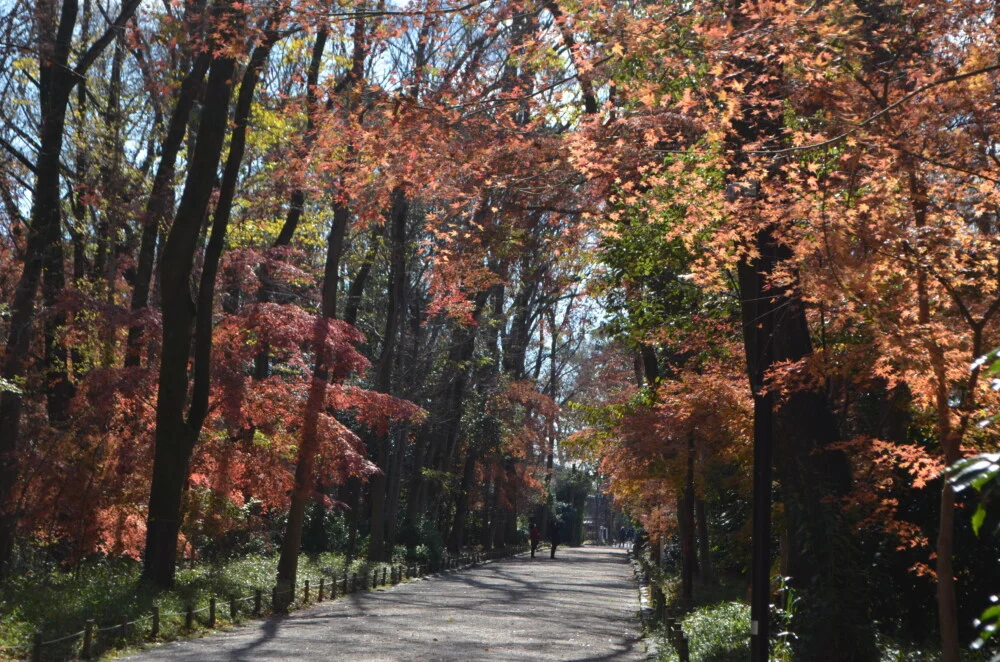
The best leaves are from early to mid-December, the latest in Kyoto
When we talk about late autumn leaves in Kyoto, we mean Tadasu no Mori in Shimogamo Shrine.
In a normal year, the best time is from early to mid-December, which is very late.
If you visit in November, which is the usual autumn leaves season in Kyoto, the trees are still mostly green.
This is a maple spot where December is better than November.
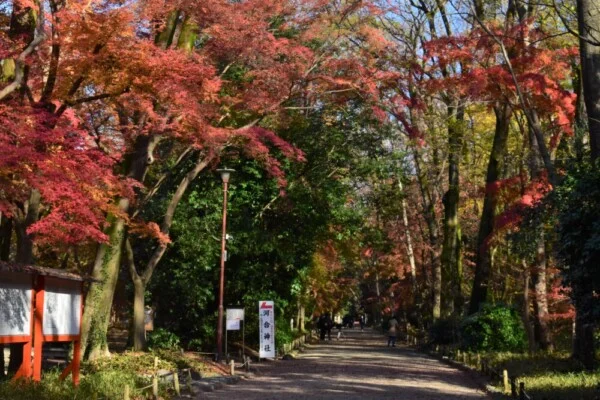
This is the sacred forest of Shimogamo Shrine, thought to be a forest where gods live, so people have changed it only very little.
Here you can enjoy autumn leaves that feel different from those at other shrines, temples, and parks in Kyoto.
The mix of green, orange, and red, like a soft gradation, is really beautiful.
You can enjoy these beautiful leaves until mid-December.
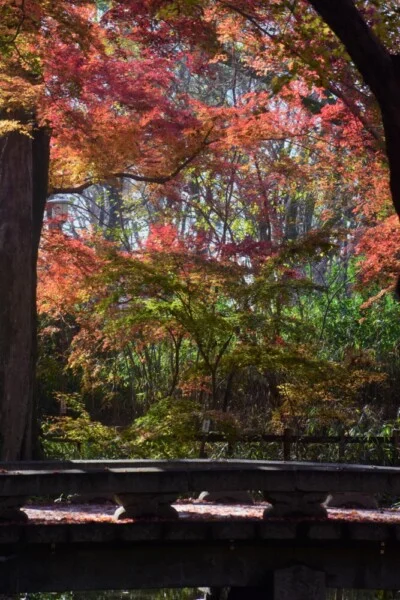
A small stream runs through Tadasu no Mori, and it feels as if you are deep in the mountains.
The charm here is not only that the peak is in December, but also that the autumn leaves are among the most beautiful in all of Kyoto.
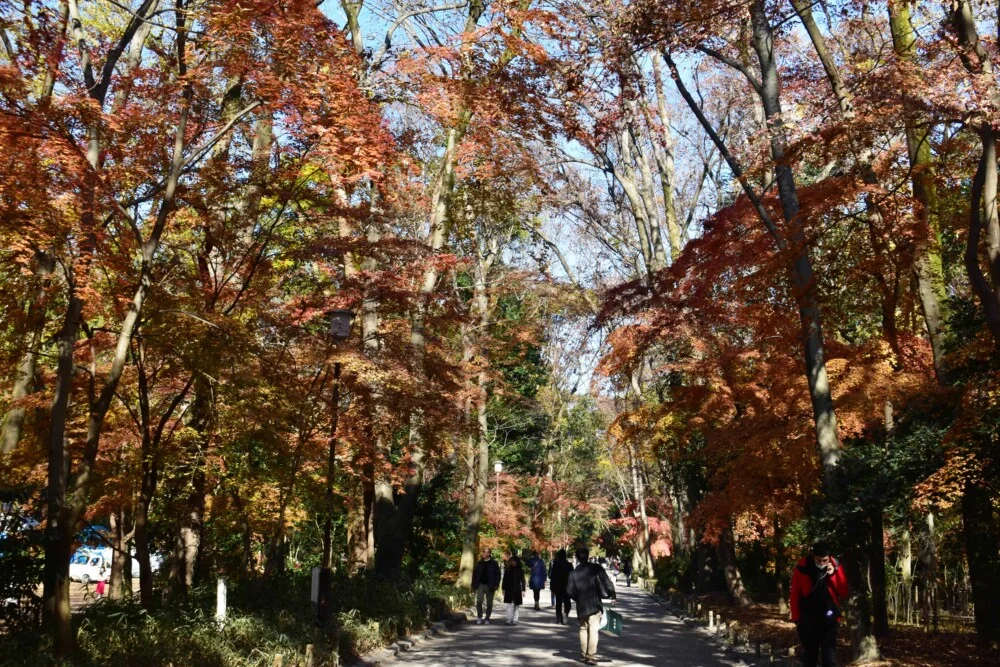
In 2023, there was a “Hikari no Kyoto” autumn leaves light-up.
At Tadasu no Mori, an autumn leaves light-up was held in 2023.
There will be no event in 2025.
It was part of JR Tokai’s “Hikari no Kyoto” campaign, but Tadasu no Mori is open to walk in and out, and you do not need any admission fee.
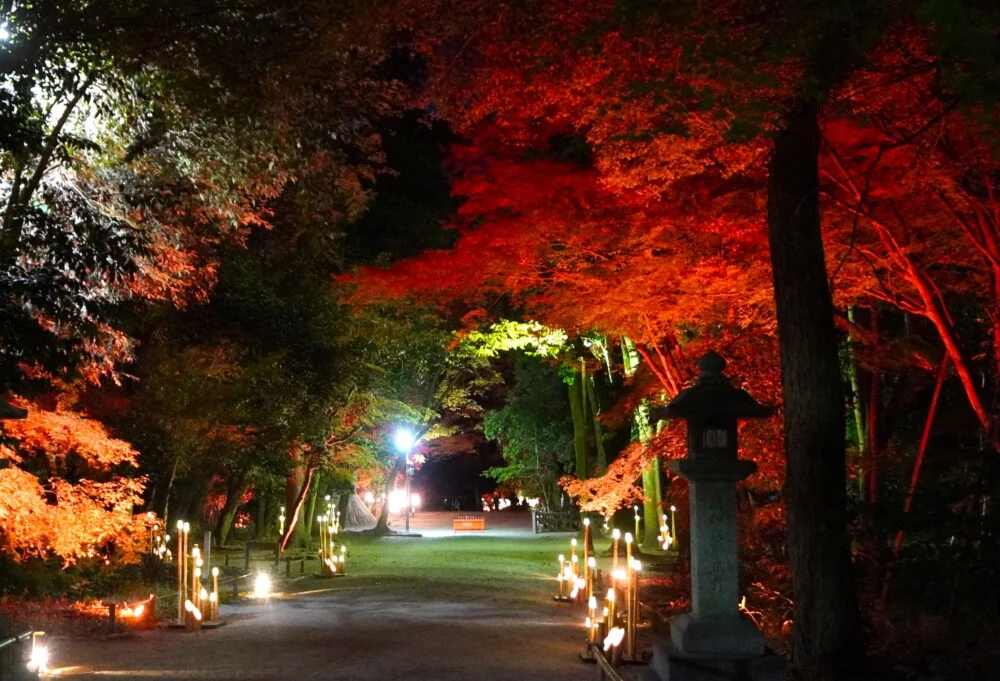
The front approach path in Tadasu no Mori is lit by warm bamboo lanterns, like lights of hope.
This is an autumn leaves light-up held inside the forest, and it feels different from other light-up events.
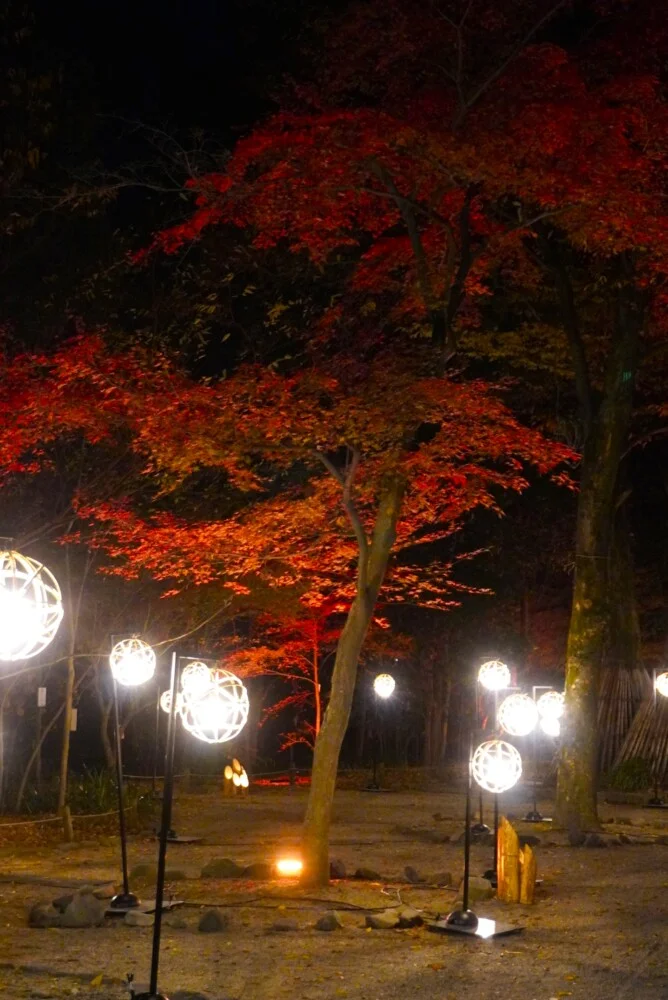
About Tadasu no Mori
Tadasu no Mori is the sacred forest of Shimogamo Shrine (Kamo Mioya Shrine), which is also a World Heritage Site.
As part of the grounds of Shimogamo Shrine, whose history goes back to the age of myths, it has been carefully protected for a very long time.
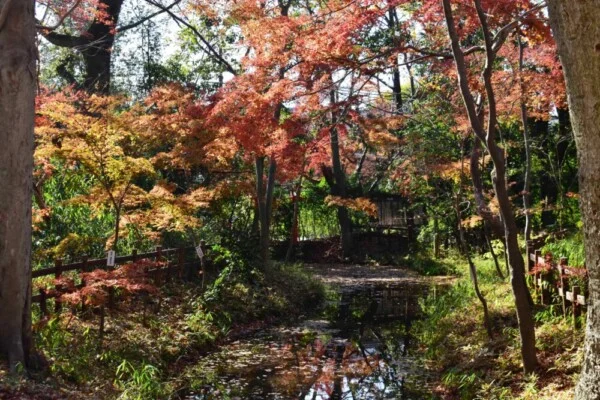
In its long history, this forest has faced many dangers.
There were many wars, floods of the Kamo River and the Takano River, and a land order in the Meiji era that all brought big crises.
Even in modern times, the Muroto Typhoon in 1934 caused damage that was almost complete destruction, and Typhoon No. 21 in 2018 also made many trees fall.
Even so, Tadasu no Mori has been carefully protected, and today it is still a precious green oasis in the city.
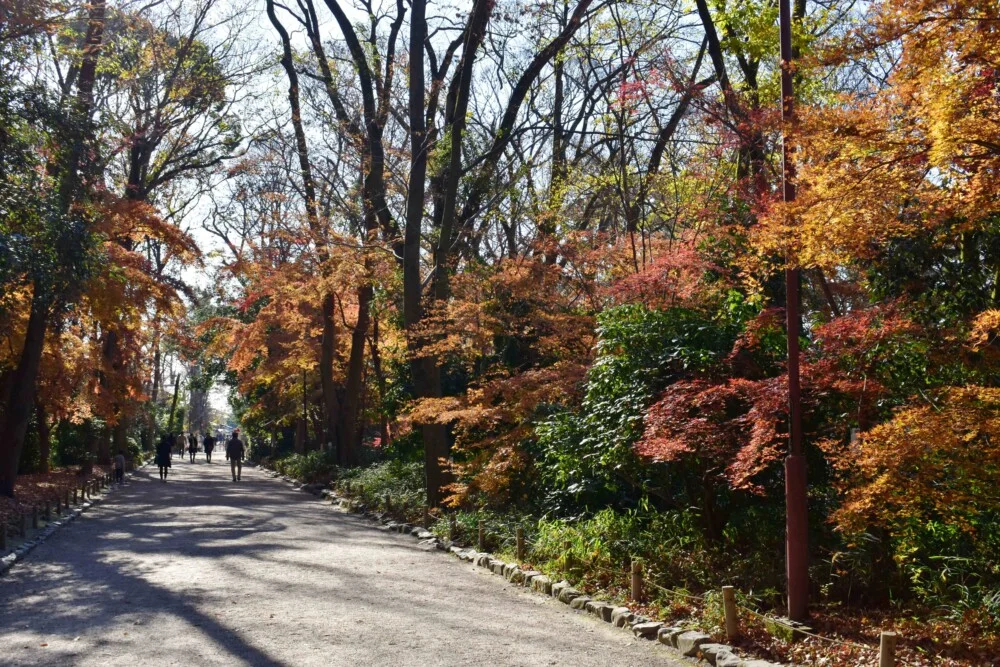
In recent years, even though it was outside the protected area, part of Tadasu no Mori was developed and turned into apartments.
It costs a huge amount of money to keep Shimogamo Shrine running, so in one way this was something they could not avoid, but it caused a lot of debate.
We truly hope this beautiful Tadasu no Mori will continue to be protected in the future.
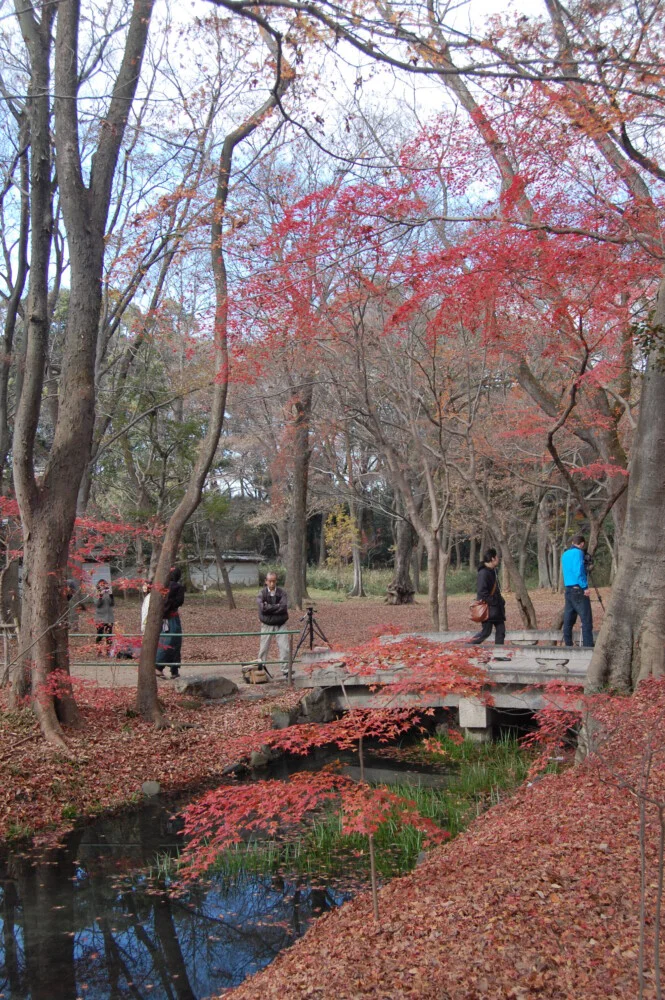
Jonangu Shrine, Fushimi Ward
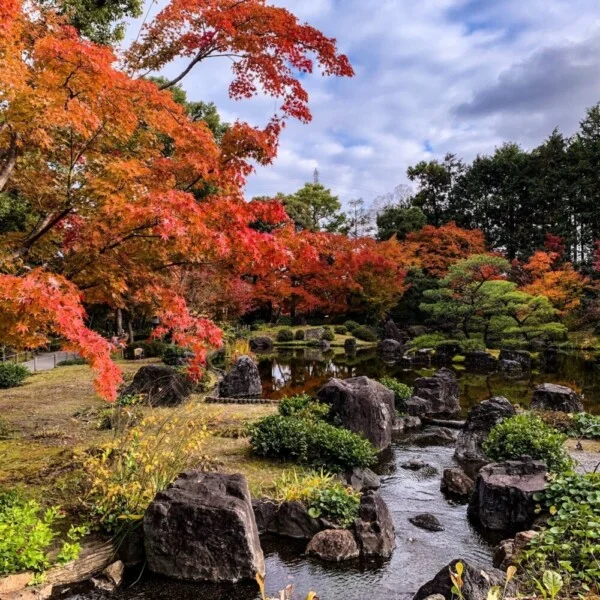
The best time for autumn leaves is from late November to early December.
The sacred garden of Jonangu Shrine is made of five gardens: “Spring Hill”, “Heian Garden”, “Muromachi Garden”, “Momoyama Garden”, and “Jonan Rikyu Garden”.
In these five gardens, the late-turning autumn leaves color the scene beautifully, and you can enjoy them until December.
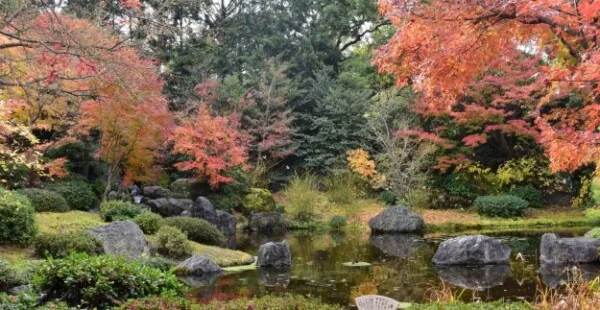
The autumn leaf reports from 2016 to 2024 are shown on the official website of Jonangu Shrine.
If we take the average of these seven years, the best time for the leaves is around November 30 to December 10, which is quite late.
The peak usually starts at the end of November, and continues until the middle of December.
From this, we can see clearly that the real autumn leaves season at Jonangu Shrine is not November, but after December begins.
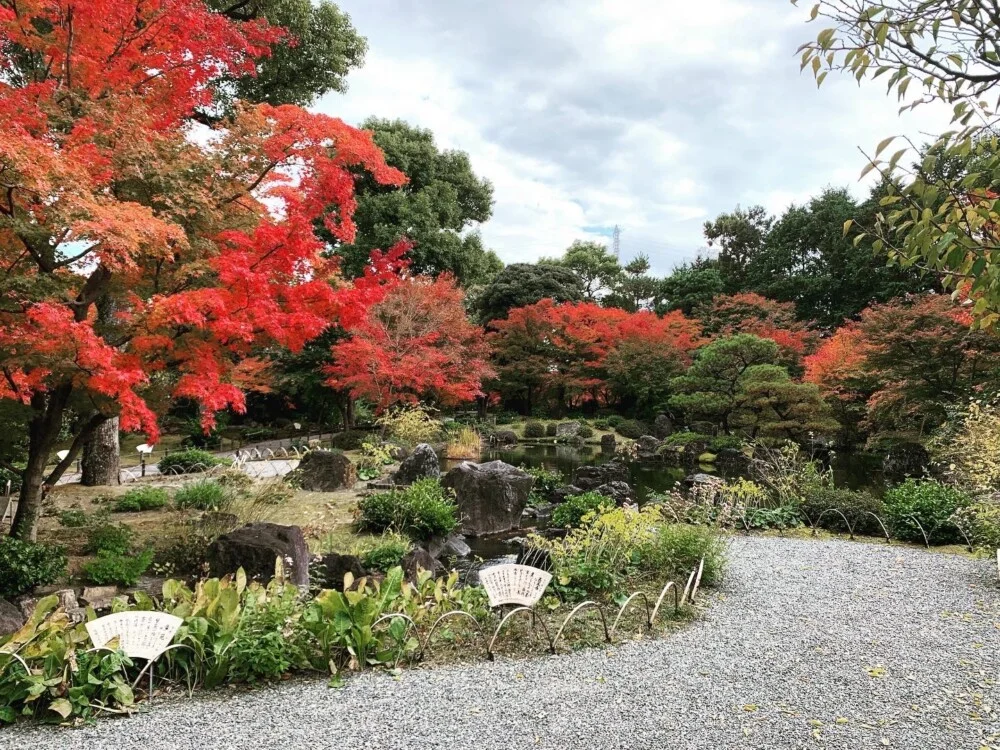
Jonangu Shrine is a place where we really hope you will come in December to enjoy the late autumn leaves.
That said, in late November the leaves are also at their best.
Famous autumn-leaf spots in Kyoto are very crowded, so we recommend visiting Jonangu Shrine as a quieter “hidden” spot.
Jonangu Shrine is quite empty, so you can enjoy the leaves calmly in late November and in December.
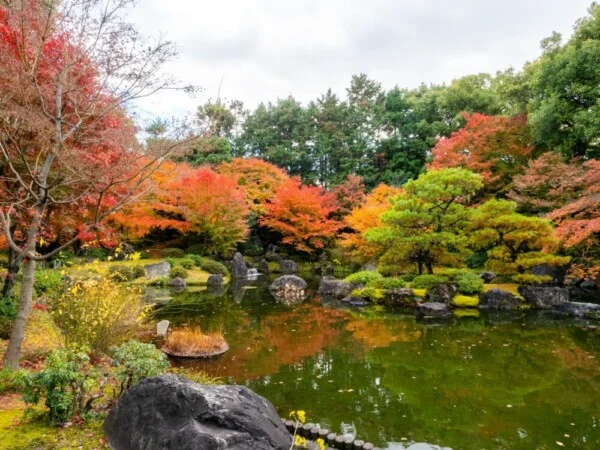
The sacred garden of Jonangu Shrine was designed by the garden designer Nakane Kinsaku, who is called the “Kobori Enshu of the Showa period.”
In the early part of his career, from 1954 to 1960, he made the “Muromachi Garden” and the “Momoyama Garden.”
After that, he created the “Heian Garden” and “Spring Hill,” and in his later years he built the “Jonan Rikyu Garden” as the great work that sums up his whole career.
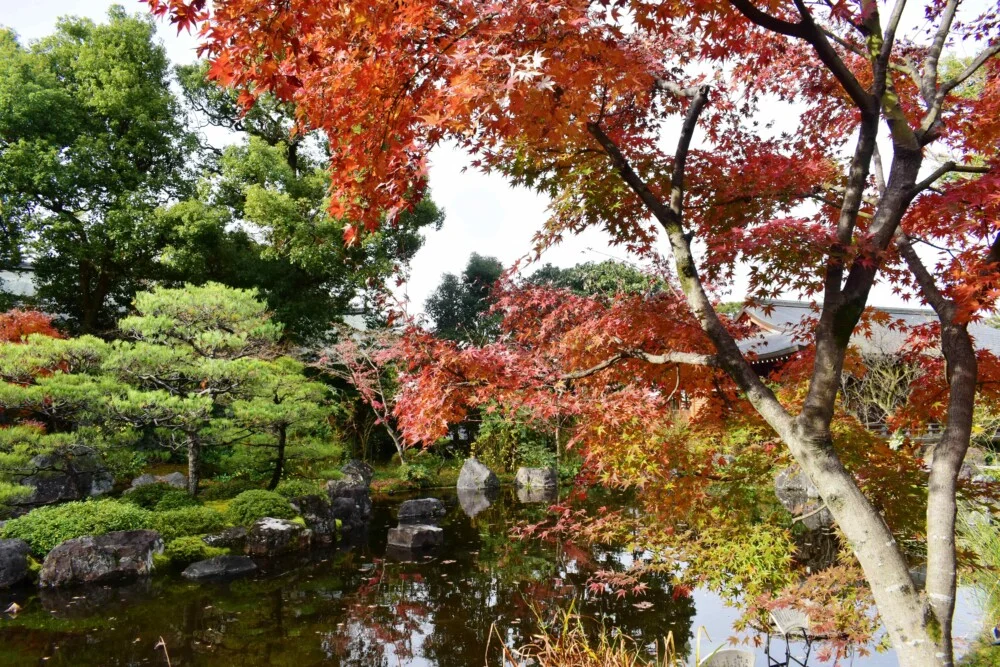
Among the five gardens, the autumn leaves are especially beautiful in the “Heian Garden” and the “Muromachi Garden,” which are pond-strolling style gardens.
Together, they have about 100 maple trees, and you can enjoy the leaves until December.
The Heian Garden is based on the gardens of nobles’ houses in the Heian period.
Many plants that appear in The Tale of Genji are also planted around the garden.
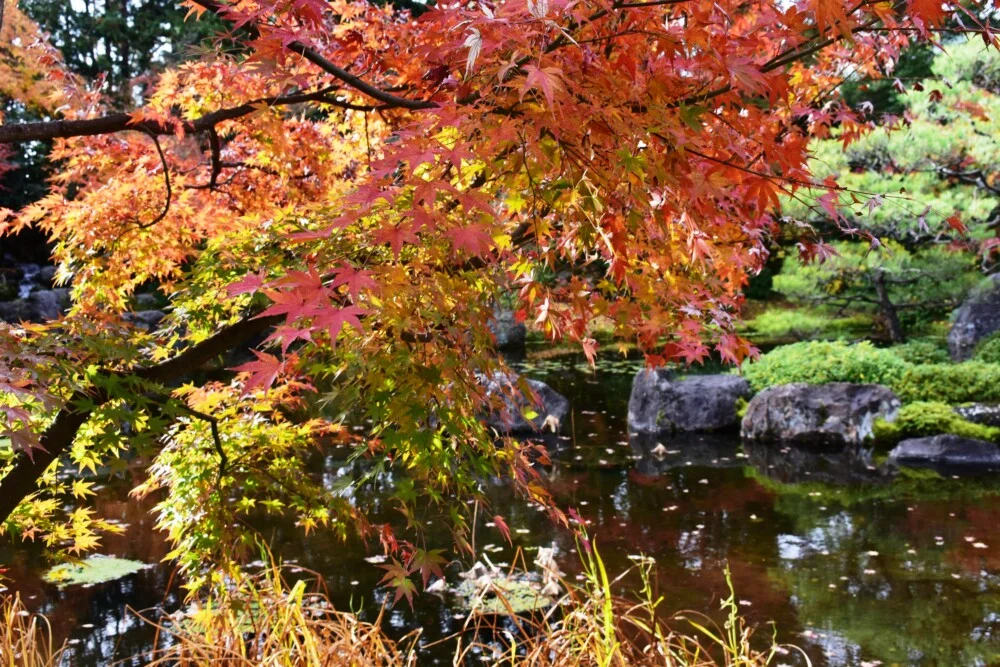
In the garden, there is a small stream that flows gently and leads to the Muromachi Garden.
On this stream, a “Kyokusui-no-en” party is held.
It is a noble game where people float sake cups on the water and make a poem before the cup reaches them.
This event is usually held on November 3, Culture Day, when the autumn leaves just start to turn red.
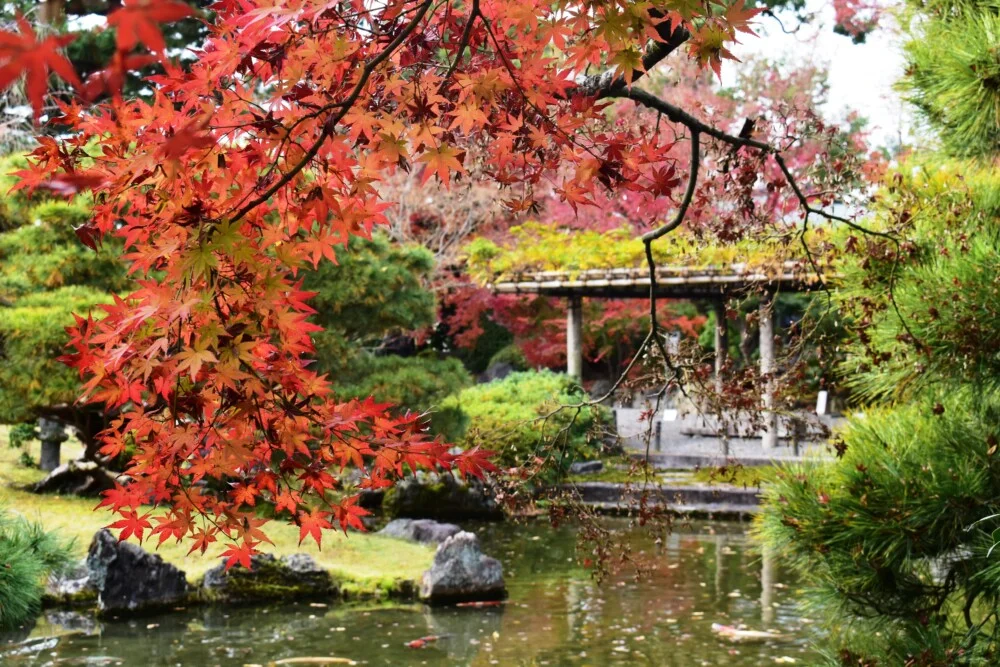
The next best place for autumn leaves after the Heian Garden is the Muromachi Garden.
From the Heian Garden, you go back to the approach path, then enter again through the viewing entrance. The Muromachi Garden is on the right side.
On the left side is the Momoyama Garden. In the center pond, there are arranged stones called Sanson-seki and Horai-seki, and also a waterfall.
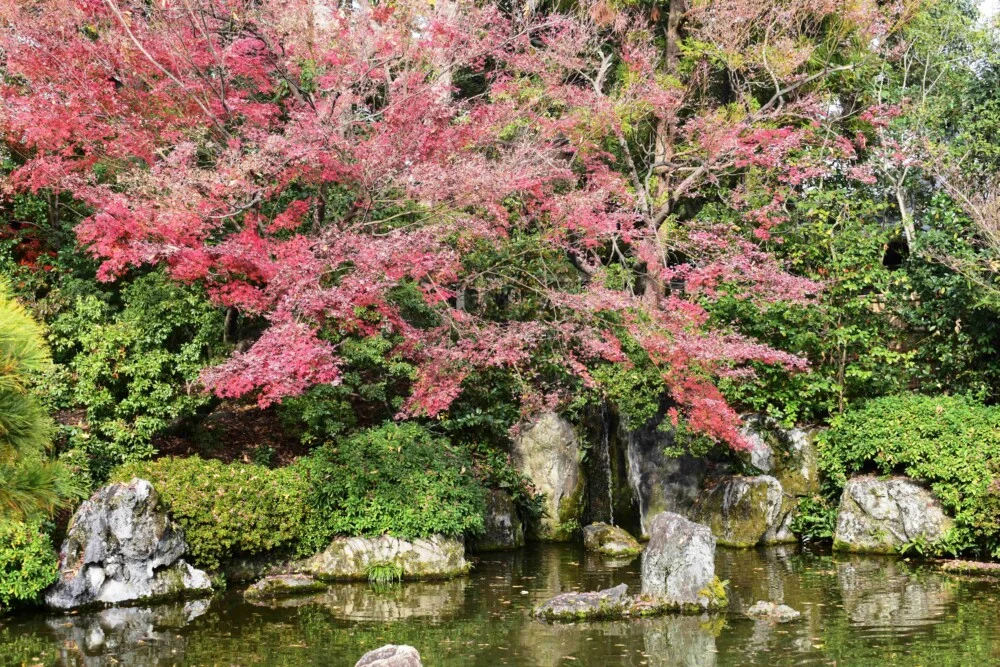
The maple leaves hanging over the “female waterfall” are really beautiful.
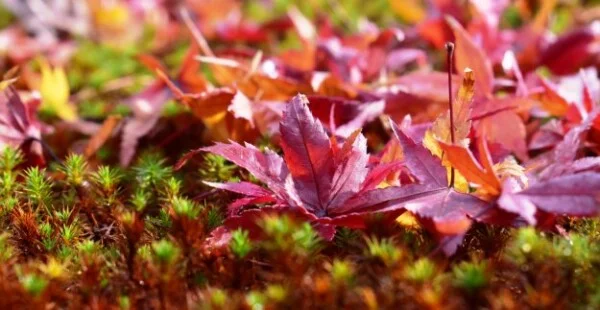
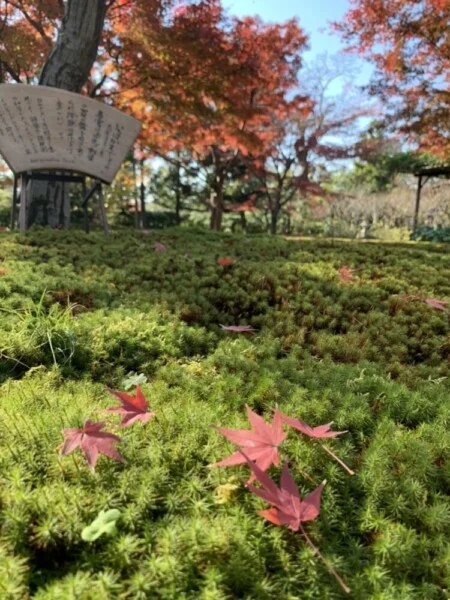
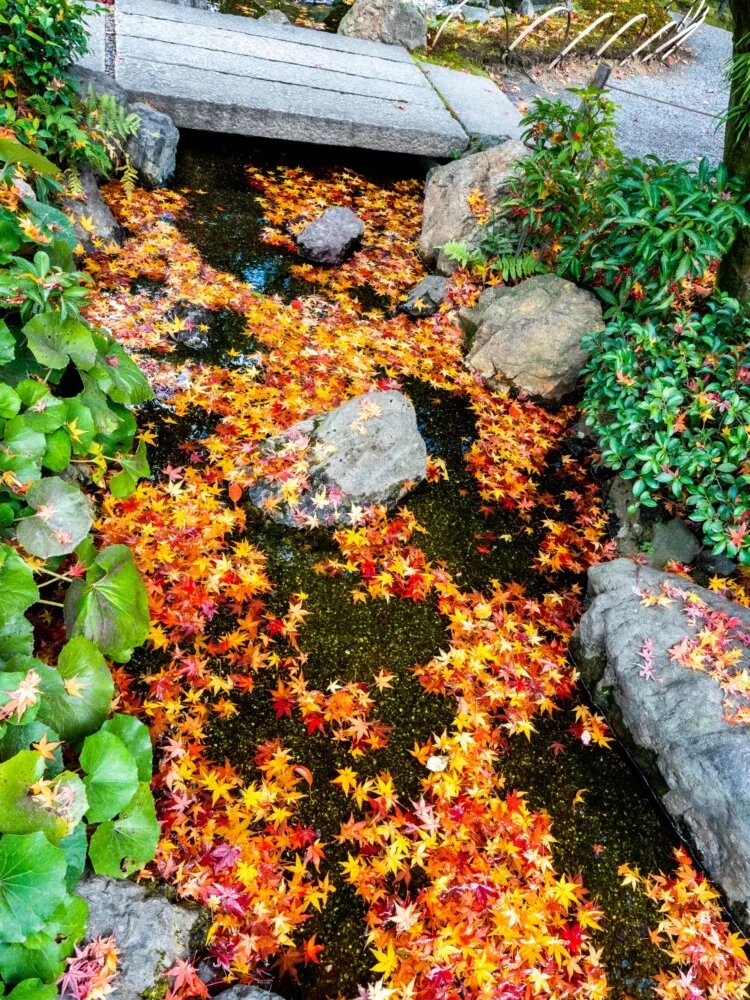
The red leaves floating on the pond, and the fallen leaves scattered on the moss, are also very charming.
About Jonangu Shrine
Jonangu Shrine is a shrine that protected the south side of Heian-kyo, and it has long been respected by the Imperial Court.
In the Kamakura period, warriors gathered troops using the shrine ritual of horseback archery (yabusame) at Jonangu Shrine, and this became the Jōkyū War.
In the 2022 NHK drama The 13 Lords of the Shogun, this war is the story’s climax, but Jonangu Shrine does not appear, because the main character, Hojo Yoshitoki, leads the battle from Kamakura.
In the late Edo period, this place also became a battlefield in the Battle of Toba–Fushimi, which was the beginning of the Boshin War.
Jonangu Shrine is just to the northeast of Koeda Bridge, where the battle started, and it was used as the camp of the Satsuma clan on the new government’s side.
This shrine has watched over battles that decided the future of the country.
Today, Jonangu Shrine is worshiped not only for warding off bad directions and bad luck, but also as a god of traffic safety.
In the streets of Kyoto, you often see cars with talismans from Jonangu Shrine on them.
Kennin-ji Temple, Higashiyama Ward
Best time for leaves: mid-November to mid-December
Kennin-ji Temple is in central Kyoto, and you can enjoy autumn leaves here even after December begins.
It is in the Gion area, with easy access from the busy Shijo-Kawaramachi crossing and from other sightseeing spots in the Higashiyama area.
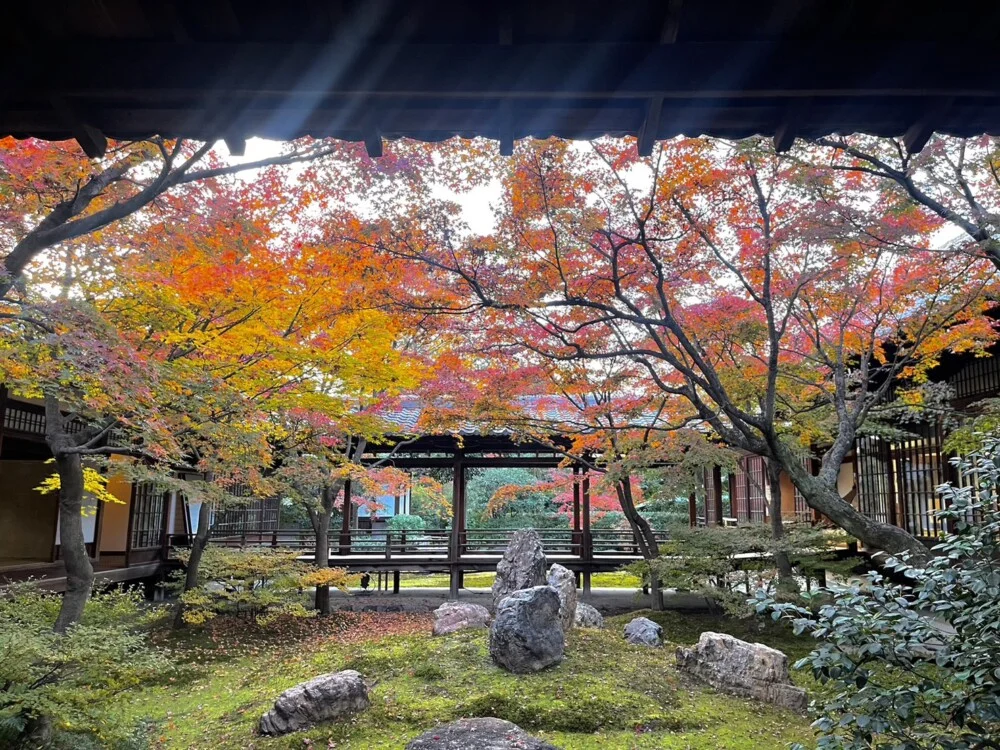
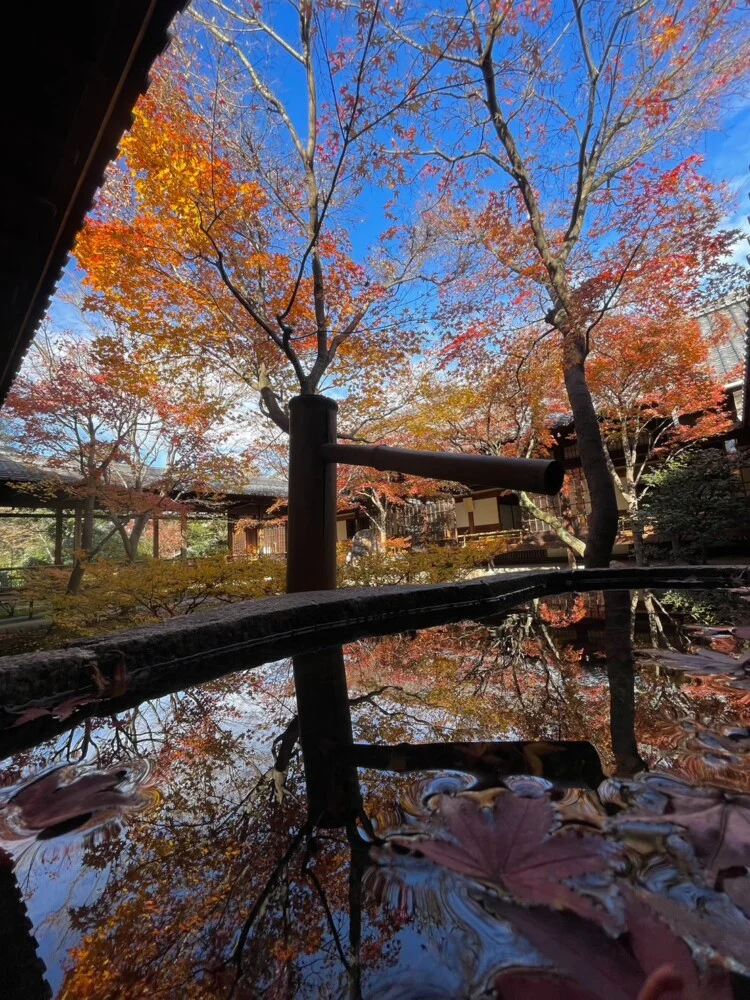
The autumn leaves in the grounds of Kennin-ji Temple start around mid-November and last until about mid-December.
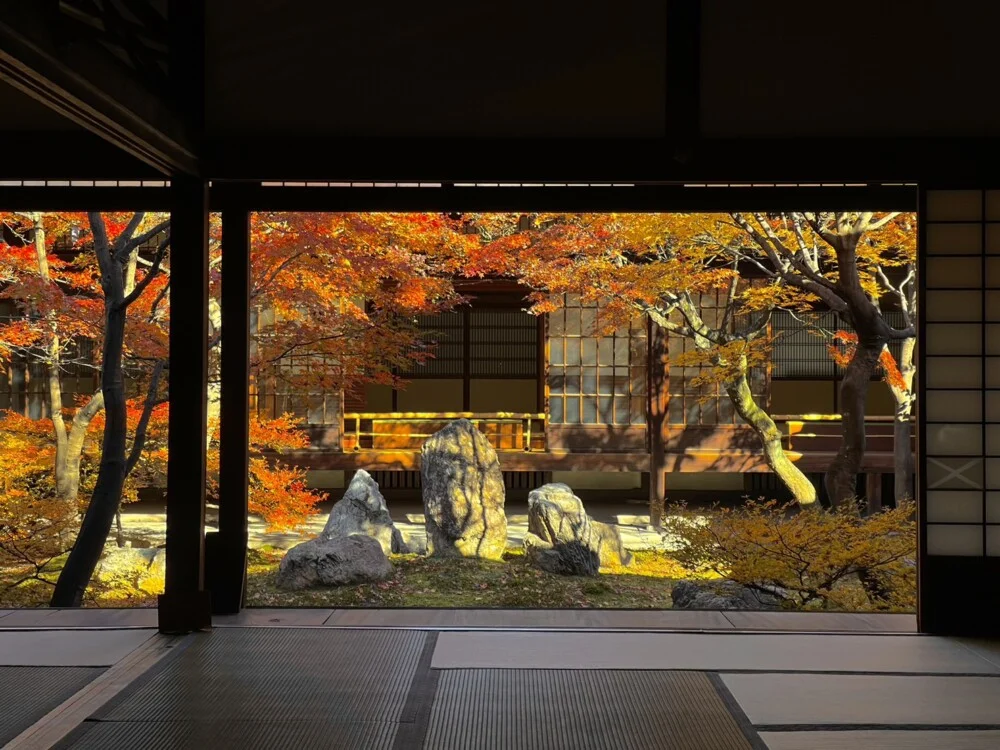
In the paid area, the Choon-tei Garden, and in the free area around the tea monument, the autumn leaves stay beautiful until late mid-December.
When you visit the Shijo area for shopping, it is a good idea to also stop by Kennin-ji Temple and enjoy the autumn leaves.
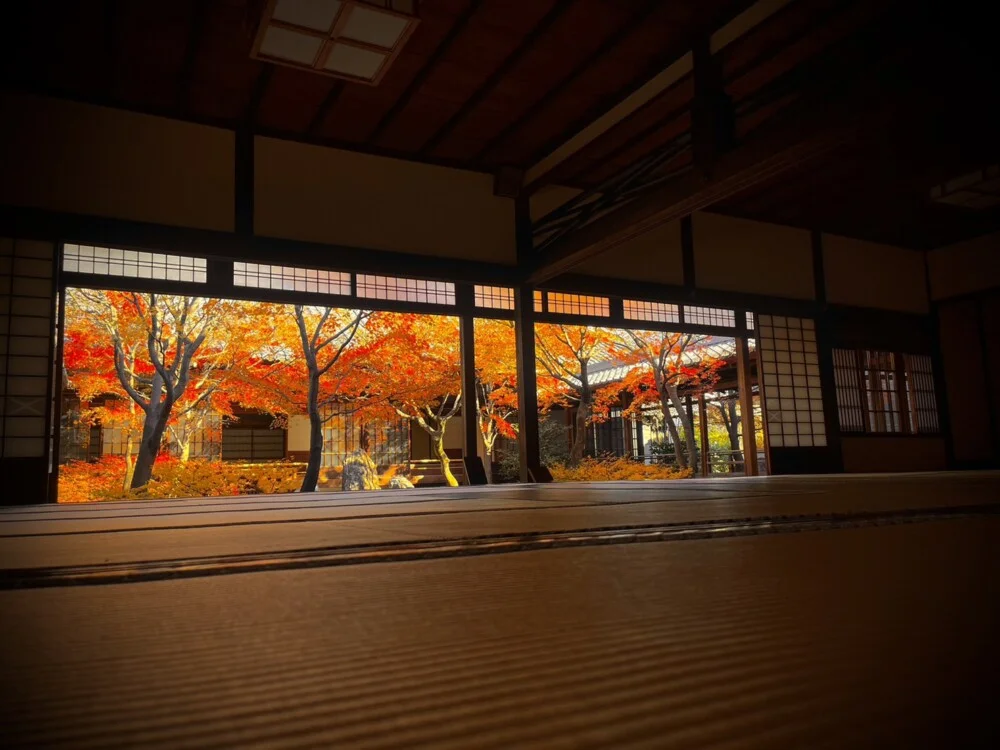
Among the places where you can see autumn leaves in December, Kennin-ji Temple has some of the best access.
In December, fewer people come only for the leaves, so this is a very good time to visit Kennin-ji Temple.
If your timing is good, you may be able to enjoy the beautiful autumn leaves in Choon-tei Garden almost all by yourself.
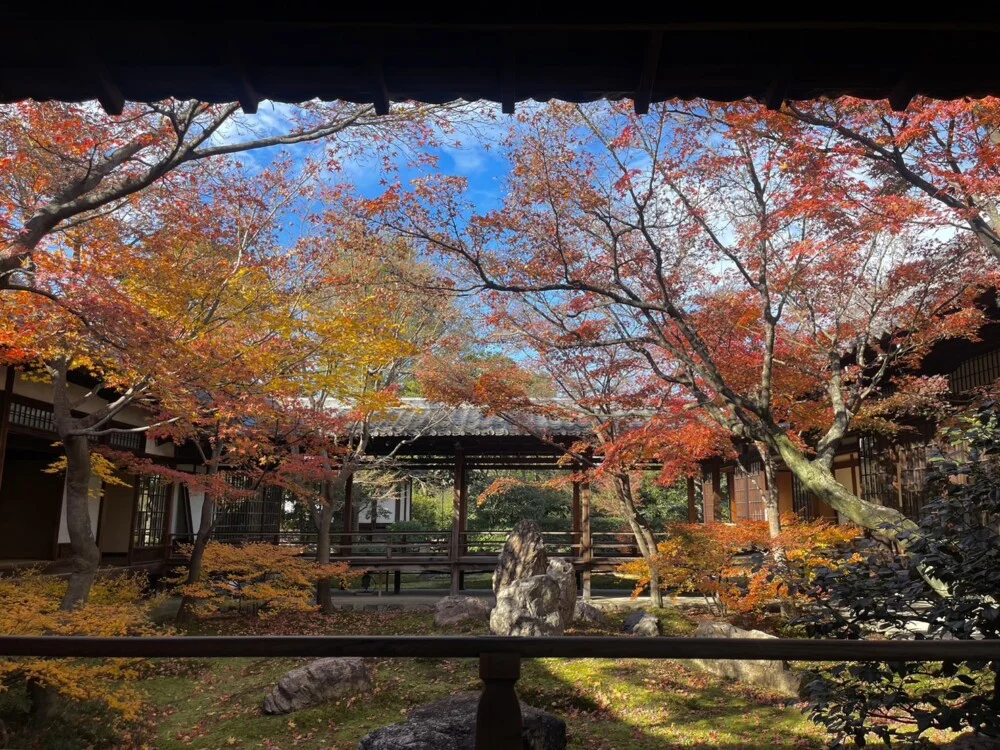
At Kennin-ji Temple in December, you can slowly enjoy the beautiful autumn leaves and spend a surprisingly rich, special time.
Please do visit if you have a chance.
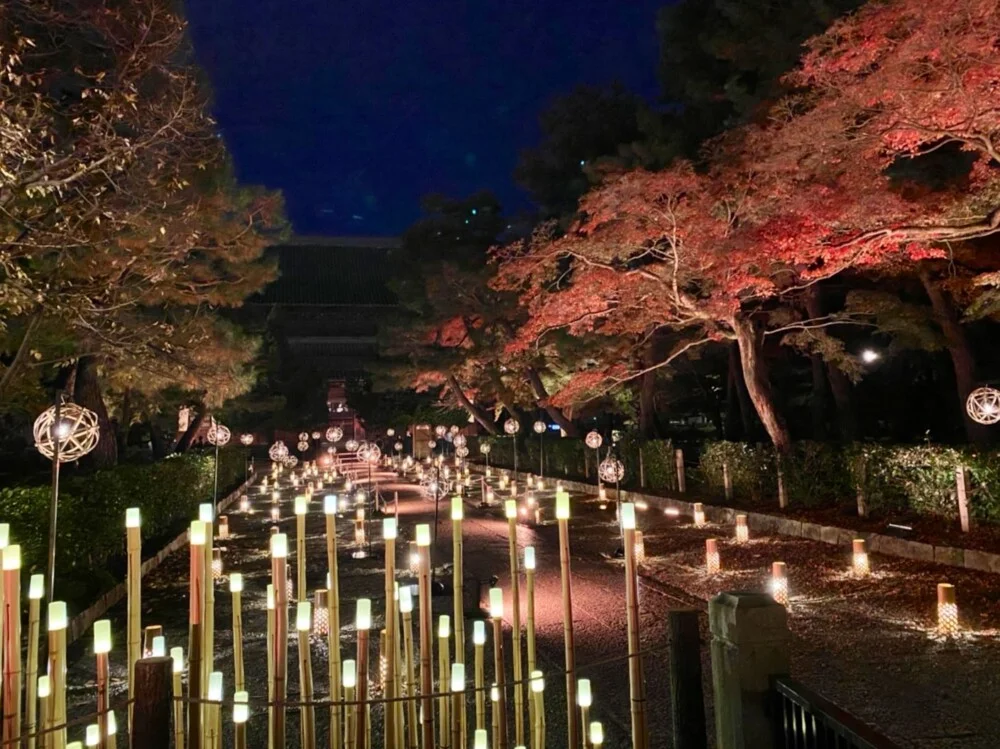
JR Tokai private special viewing in December
From Saturday, November 29 to Saturday, December 13, 2025, there will be an after-hours private special viewing by JR Tokai with an autumn leaves light-up.
Until 2023, the event was held only until December 10, but because the leaves now turn red later, it has been changed to run until mid-December.
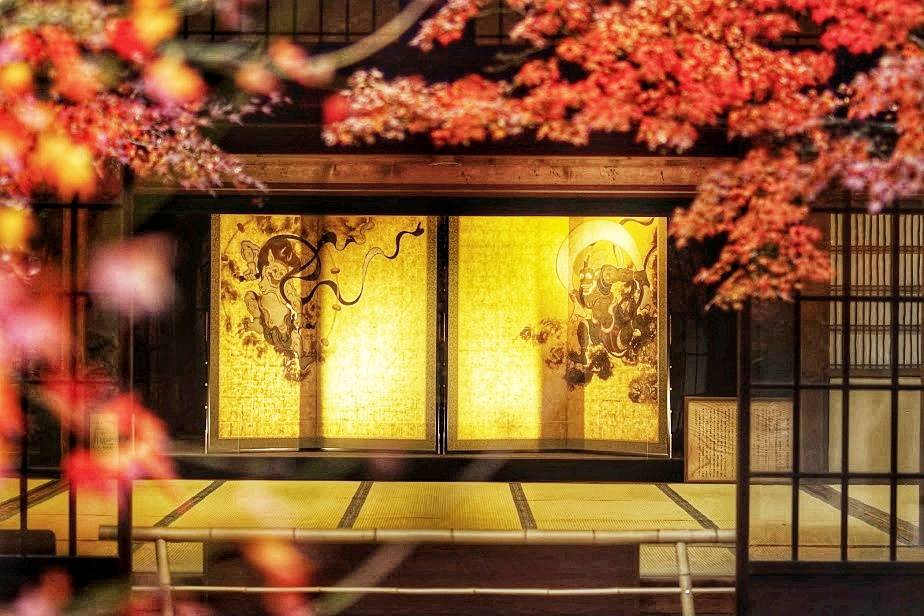
This is a rare light-up event where you can enjoy beautiful autumn leaves even in December.
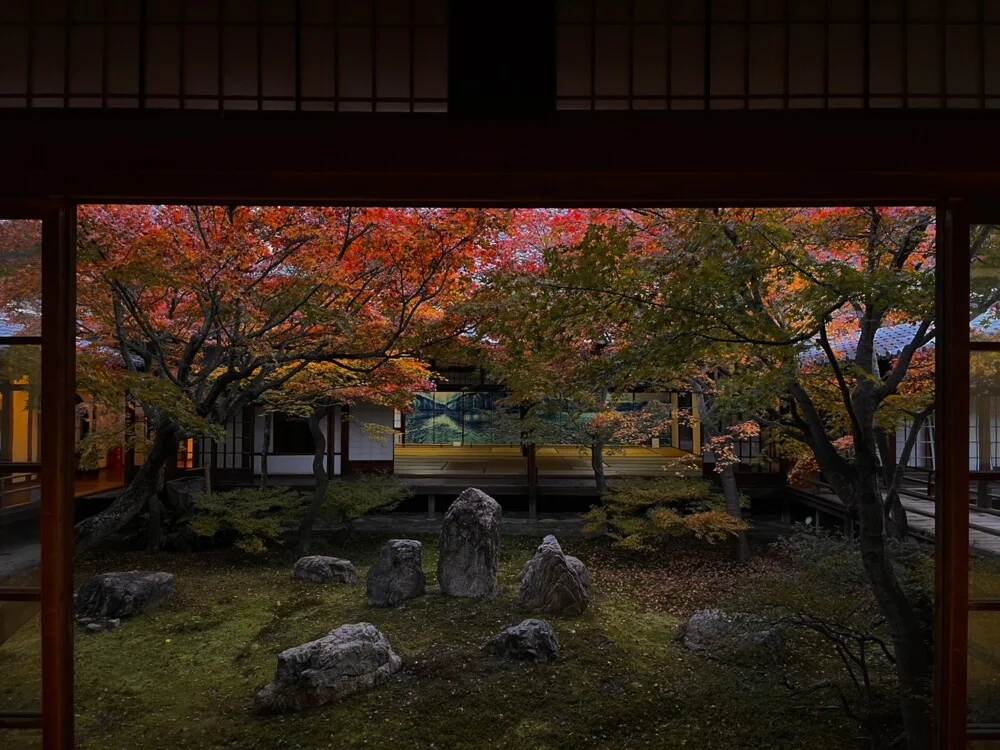
About Kennin-ji Temple
Kennin-ji Temple is one of the Five Great Zen Temples of Kyoto, and it is the first Zen temple in Kyoto.
It stands in the very center of Gion, Kyoto’s famous entertainment district, but its grounds are very large, with 14 sub-temples inside.
Some of these sub-temples are usually closed, but are sometimes opened for special viewings, so it is good to check the information before you go.
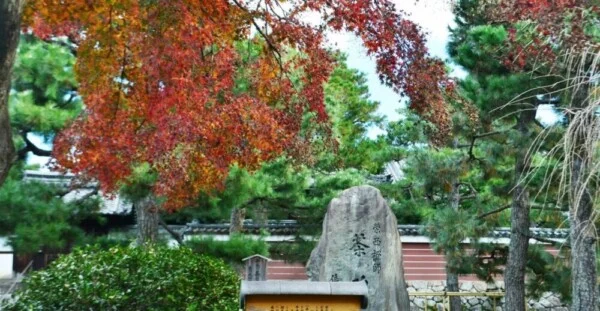
Not only Choon-tei Garden, but also Daiou-en, the dry landscape garden on the south side of the main hall, is known as a famous and beautiful garden.
For sightseeing in Kyoto, leave it to MK’s chartered sightseeing taxi.
Your private driver is a Kyoto expert who handles both transport and guiding.
