
A hidden spot for Gion Festival : Shinmachi Street
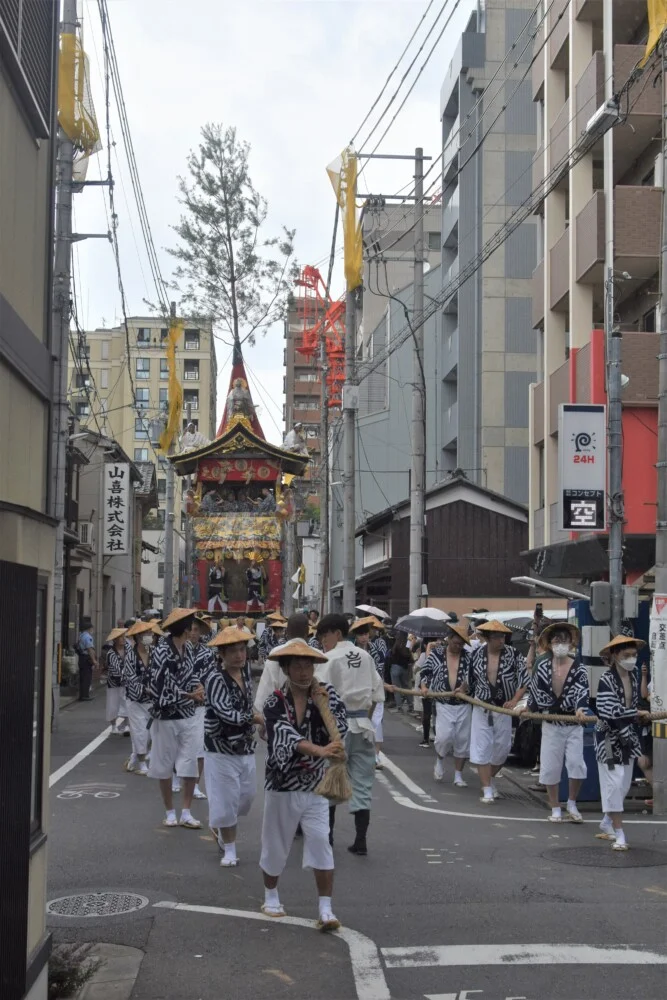
When people think of the Yamahoko Procession, they often imagine the floats moving proudly along wide streets such as Shijo Street. However, once the procession enters the lesser-known Shinmachi Street, the scene changes completely, with the floats making their way through much narrower roads.
Shinmachi Street is a hidden viewing spot where you can watch the floats skillfully pass by utility poles at very close range while enjoying the excitement and tension of the moment.
However, being so close to the floats also involves some danger. Please follow the instructions of the event staff and watch the procession with proper manners and consideration for safety.
Important Tips for Watching the Yamahoko Procession on Shinmachi Street
Watching the Yamahoko Procession on Shinmachi Street is completely different from watching it on Shijo Street, Oike Street, or Kawaramachi Street.
While those streets are major roads with four or more lanes in total, Shinmachi Street is a one-way street with only a single lane.
This allows you to enjoy a much closer and more impressive view of the procession, but it also requires extra caution.
If you plan to watch the Yamahoko Procession from this hidden viewing spot on Shinmachi Street, please make sure to follow all rules and safety guidelines.
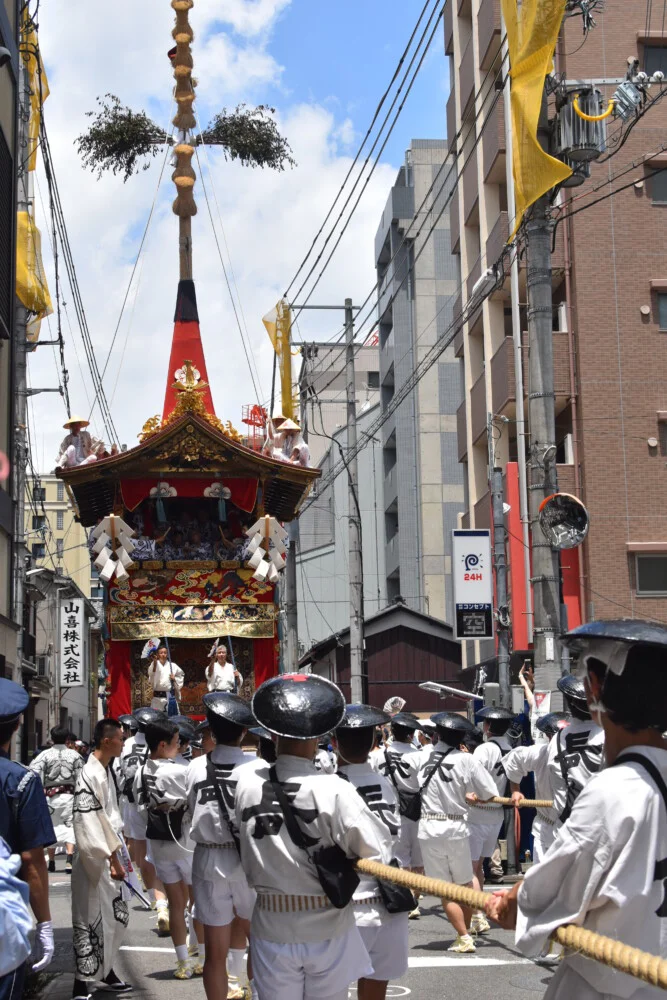
For Your Safety, Please Follow Instructions
Always Follow Instructions
This is not something limited to Shinmachi Street, but you should always follow the instructions of the police, security staff, and people involved in the Yamahoko Procession.
There are no sidewalks on Shinmachi Street, only a roadside shoulder for pedestrians. While this allows you to watch the procession from very close range—which is one of the street’s main attractions—it also makes the area more dangerous.
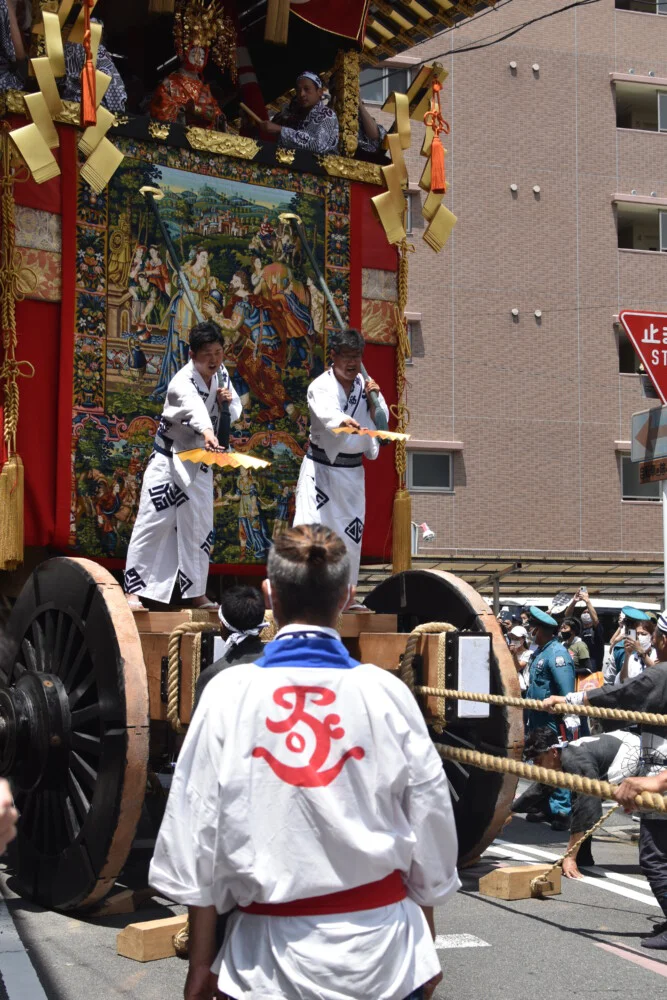
Some areas of Shinmachi Street are subject to traffic restrictions during the Yamahoko Procession.
For example, the section of Shinmachi Street between Oike Street and Aneyakoji Street is closed to entry during the procession.
There are also many places where entry is blocked off with ropes, or where pedestrian traffic is limited to one direction.
Please be very careful.
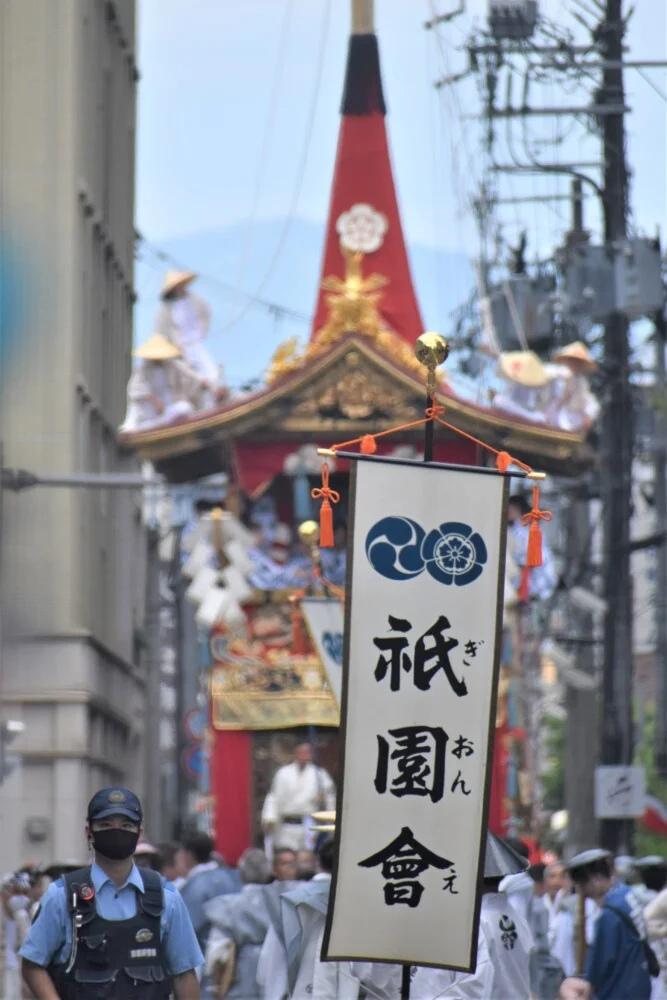
In a Complicated Situation, Personal Judgment Is Also Necessary
One difficulty is that the police, security staff, and people involved in the Yamahoko Procession may sometimes give conflicting instructions.
It can be hard to decide whether to follow the police, who have official authority, the procession staff who know the movements of the floats in detail, or the experienced security guards who have worked on Shinmachi Street for many years.
Because Shinmachi Street is very narrow, the situation on site can easily become confusing and chaotic. As a result, deciding which instruction to follow may sometimes require your own judgment.
When watching the Yamahoko Procession on Shinmachi Street, please keep in mind that the area requires a certain degree of personal responsibility and situational awareness.
Be Mindful of Viewing and Space-Saving Etiquette
On Shinmachi Street, spectators watch the Yamahoko Procession from the roadside shoulder, which is not separated from the roadway
On streets such as Shijo Street, there is usually a pedestrian passage behind the rows of spectators.
As a result, people who arrive later naturally join the viewing crowd from the back. If you reserve a spot early, you can secure a position at the front with the best view of the procession.
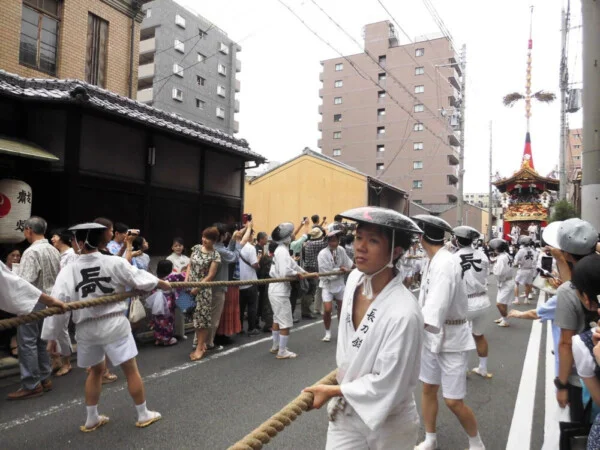
On the other hand, the viewing area on Shinmachi Street is located on the roadside shoulder. Unlike some other locations, there is often no rope separating the shoulder from the roadway. Spectators stand near the front, while pedestrians pass behind them.
As a result, people who arrive later and try to join the crowd without paying attention may unintentionally end up standing in the very front row on Shinmachi Street.
Although there is usually no bad intention behind this behavior, it is considered very poor etiquette and can cause considerable annoyance to other spectators when watching the Yamahoko Procession on Shinmachi Street.
Follow Proper Etiquette and Join the Crowd from the Back
Even on Shinmachi Street, the best viewing spots are often claimed by people who arrive one or two hours before the floats pass by.
If someone arrives later and takes a place in the front row where the view is best, it is likely to upset other spectators. Even if there is no bad intention, it is still considered a very rude form of cutting in line.
When joining a group of spectators on Shinmachi Street, please ask those in the front to make a little room and enter from the back, taking a position at the end of the line.
It is common to see people accidentally step into the front row because they are unaware of the situation, only to receive complaints from those around them. Even if nobody says anything directly, they may still be met with cold and disapproving looks.
If there is no space available at the back, it is best to give up watching the procession from Shinmachi Street and choose another viewing location instead.
When watching the Yamahoko Procession on Shinmachi Street, always remember to be considerate of others and show a spirit of courtesy and cooperation.
Entry Prohibited Between Oike Street and Ayanokoji Street
On Shinmachi Street, the northernmost section between Oike Street and Ayanokoji Street is closed to the general public, including the roadside shoulder.
This is because the floats need to make delicate directional adjustments near Shinmachi-Ayanokoji, where slight alignment differences require careful maneuvering, making the area more hazardous.
At the same time, this location is also popular because it offers a view of the tsuji-mawashi turning maneuver on Oike Street.
For safety reasons, police officers and security staff completely block public access to this area.
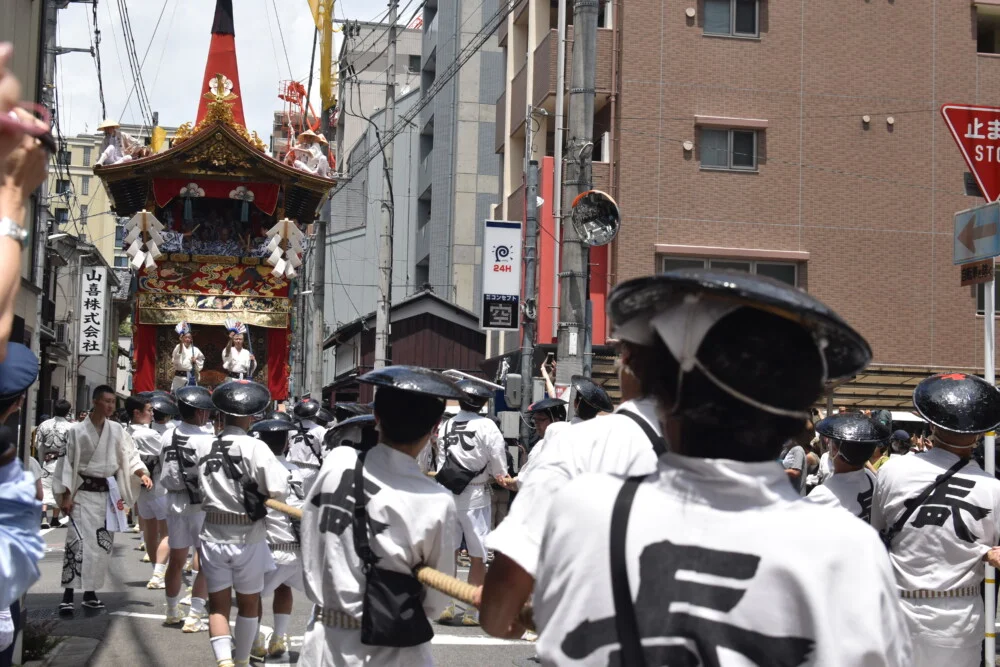
The History of Shinmachi Street and the Yamahoko Procession
As is well known, the route of the Yamahoko Procession has changed many times over the years.
In the past, only a limited number of floats passed through Shinmachi Street.
The procession routes in each period were as follows:
Until 1955
Early Festival
Route: Shijo Street → Teramachi Street → Matsubara Street
The Naginatahoko, Tsukihoko, Hoka-hoko, Kikusuihoko, Iwatoyama, and Funeboko traveled north along Shinmachi Street between Matsubara and Shijo.
Later Festival
Route: Sanjo Street → Teramachi Street → Shijo Street
The Kita-Kannonyama and Minami-Kannonyama traveled north along Shinmachi Street between Shijo and Takoyakushi.
1956–1965
Early Festival
Route: Shijo Street → Teramachi Street (changed to Kawaramachi Street in 1961) → Oike Street
All hoko floats and hikiyama floats traveled south along Shinmachi Street between Oike and Shijo.
Later Festival
No change.
When the route was changed from Matsubara Street to Oike Street, there was major debate over whether the Yamahoko Procession should be regarded as a religious ceremony or a tourist event.
Because public funds could not be used for religious activities under the principle of separation of religion and government, the authorities could only provide funding if it was treated as a tourist event. In the end, the Yamahoko Association unanimously approved the route change.
Revenue from the special viewing seats newly established on Oike Street has since become an important source of funding for the Gion Festival.
1966–2013
The Later Festival was merged with the Early Festival.
All hoko and hikiyama floats traveled south along Shinmachi Street between Oike and Shijo.
At first, the kakiyama floats did not pass through Shinmachi Street and instead traveled south along Karasuma Street. However, in 1977, subway construction made Karasuma Street unavailable, and the route was changed to Shinmachi Street.
From 2014
Early Festival
All Yamahoko floats travel south along Shinmachi Street starting from Shinmachi-Oike.
Later Festival
The Kita-Kannonyama, Minami-Kannonyama, Ofuneboko, and Takayama travel north along Shinmachi Street.
A Hidden Spot to Watch the Yamahoko Procession: Shinmachi-Sanjo
If you have already seen the famous viewing spots many times, want to watch the floats move right in front of you, experience the excitement and thrill of the procession, and avoid reserving a spot hours in advance, then Shinmachi Street around the Shinmachi-Sanjo area is a highly recommended hidden viewing location.
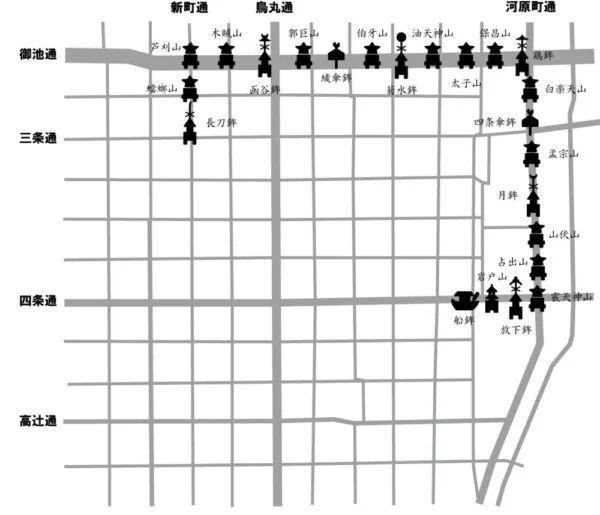
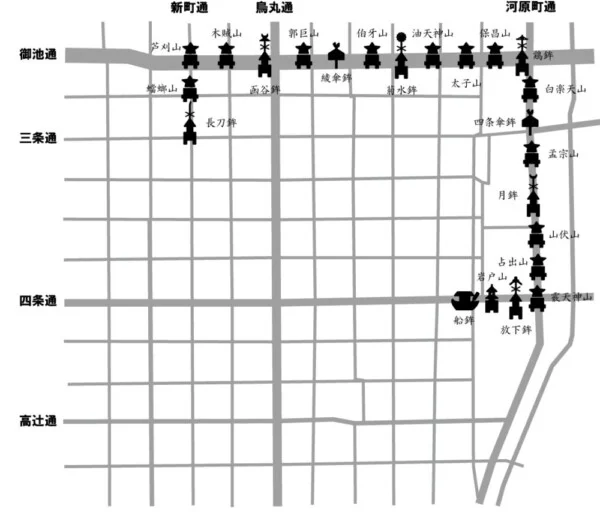
Shinmachi-dori is a lesser-known viewing spot. In the first Yamaboko parade, which starts from Shijo-dori and moves clockwise, it is near the end of the route.
Strictly speaking, the parade is treated as ending at Shinmachi-Oike. However, the festival music and other parts of the procession continue as usual on Shinmachi-dori.
The floats turn left at Oike-dori, go south along the lesser-known Shinmachi-dori, and arrive at Shijo-Shinmachi. After that, each float returns to its original place.
Some carried floats turn left to the east at places such as Aneyakoji-dori, so they do not continue south to Shijo-dori.
This southbound section on Shinmachi-dori is a hidden good spot for watching the Yamaboko parade.
In the past, Naginata Hoko and Kanko Hoko went by way of Karasuma-dori, Niwatori Hoko went by way of Muromachi-dori, and only Tsuki Hoko, Hoka Hoko, Iwato Yama, and Fune Hoko went by way of Shinmachi-dori.
However, because electric wires were installed, all floats began using Shinmachi-dori from 1897.
Also, in the later Gion Festival parade held on July 24, the Yamaboko parade moves in the opposite direction, counterclockwise.
You can watch the floats as they go from the float neighborhoods to Shinmachi-Oike, and also as they return from Shijo-Shinmachi to their neighborhoods.
Hidden viewing spot north of Shinmachi-Sanjo
This spot is on the Yamaboko parade route, but because it is not very well known, it does not get too crowded. You can still make it there after watching the floats start around Shijo-Karasuma.
Still, the Yamaboko parade seems to be getting more crowded recently, so it is better to arrive early and save a spot, even at hidden viewing areas.
Moso Yama, Yamabushi Yama, and Urade Yama are carried floats. They turn left at Aneyakoji and return by way of Muromachi-dori, so they do not appear at Shinmachi-Sanjo during the parade.
To see all the floats on Shinmachi-dori, you need to watch from Shinmachi-Aneyakoji. The section between Oike-dori and Aneyakoji-dori is closed to visitors.
On Shinmachi-dori, the floats do not arrive in the official parade order because of their return routes.
Sometimes carried floats and umbrella floats arrive before the larger floats that take more time to turn at intersections.
Also, because of where the floats return, Hoka Hoko becomes the last float to appear in the parade.
Naginata Hoko, the Lead Float of the Yamaboko Procession
Weight: 11.10 tons※
※This total includes not only the float itself, but also the decorative hangings and the people responsible for the festival music and rooftop operations.
The weight was measured on-site at Kawaramachi-Oike in 2008 as part of the procedures for UNESCO Intangible Cultural Heritage registration.
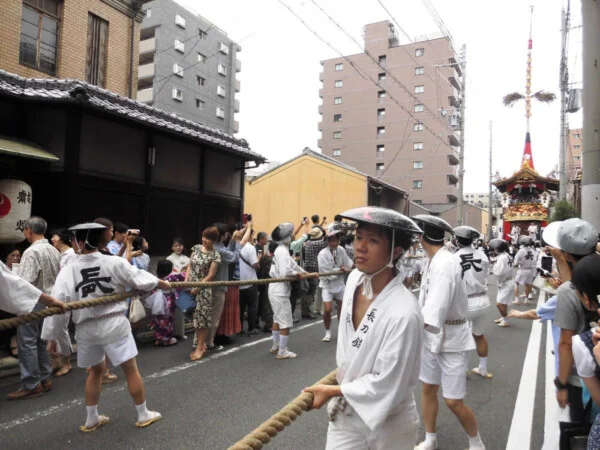
The Naginata Hoko, a float that does not participate in the lottery system and always leads the Yamaboko Procession, is now approaching the lesser-known viewing area on Shinmachi-dori.
Naginata Hoko always goes first not only because it is considered the most prestigious float, but also because it is simply located farthest to the east among the floats.
Shijo-dori, the street used for the procession, was not as wide in the past as it is today.
Because of this, it would have been difficult for the large floats and yama coming from behind to move ahead of Naginata Hoko.
In fact, the next lottery-exempt float is Kanko Hoko, which is permanently assigned to the fifth position in the procession. It is also the float located closest to Naginata Hoko on the eastern side.
However, Iwato Yama and Fune Hoko, which are also lottery-exempt and fixed in the 22nd and 23rd positions respectively, are arranged in the opposite order geographically. As a result, one must overtake the other somewhere during the procession.
Today, Iwato Yama passes Fune Hoko at Shijo-Shinmachi on the outbound route.
In the later festival procession, Ofune Hoko is also fixed at the very end of the parade. Likewise, the traditional place for Fune Hoko is the last position.
Spectators are instructed to stand one step farther back from the white line along Shinmachi-dori.
Because Shinmachi-dori is a narrow one-way street, stepping even slightly forward could put people in the path of those pulling the floats.
Although Shinmachi-dori is considered a hidden viewing spot and is usually less crowded than the major viewing areas, the street itself is narrow and can accommodate only a limited number of people.
Therefore, if you arrive just before the procession reaches the area, you may be stopped at an intersection and prevented from entering Shinmachi-dori. It is best to arrive early.
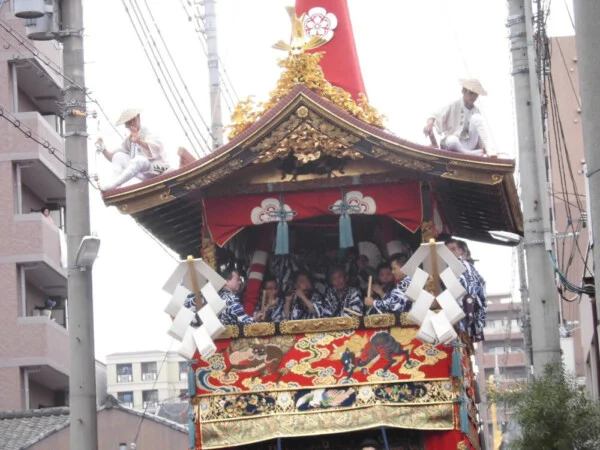
The floats pass through Shinmachi-dori with only a very small clearance from the utility poles on both sides of the street.
There is a reason why the placement of the poles was not designed specifically for the Yamaboko Procession.
It may be surprising, but all floats have been using Shinmachi-dori only since 1977, when the official end point of the procession was changed to Shinmachi-Oike.
Even for the sake of the procession, moving existing utility poles would not have been easy. At the time, removing the overhead wires crossing the street was probably the most that could realistically be done.
As a result, the unique close-up viewing experience on Shinmachi-dori—and its reputation as a hidden viewing spot—was created almost by accident.
In earlier times, the procession traveled through streets such as Teramachi-dori and Matsubara-dori, which were about as narrow as Shinmachi-dori. This suggests that the techniques needed to guide the floats through tight spaces have been handed down for generations.
Although the Yamaboko Procession of the Gion Festival has a very long history, the practice of moving through wide streets like those used today is actually only a few decades old.
When the route change was proposed, it sparked major debate over whether religious tradition or tourism should take priority.
However, as visitor numbers continued to increase, safety concerns reached their limit, and the route was gradually changed to its present form.
The new route made the procession much easier to manage. Even though the distance became slightly longer, the total procession time was reduced by two to three hours.
In the past, a lunch break was even scheduled during the procession. Today, the entire route is completed without a break.
It is hard to imagine now, but large turning maneuvers were once performed at the Teramachi–Matsubara intersection.
In that sense, Shinmachi-dori may be one of the best places to appreciate the true skills involved in the Yamaboko Procession.
Back then, however, the floats had to perform many turning maneuvers in order to change direction, making the procession take much longer than it does today.
Shinmachi-dori is currently being considered for the underground installation of utility lines.
If that happens, the unique sight of floats squeezing past utility poles may eventually disappear.
For that reason, Shinmachi-dori’s status as a hidden viewing spot for the Yamaboko Procession may be something that can only be enjoyed while it still exists in its current form.
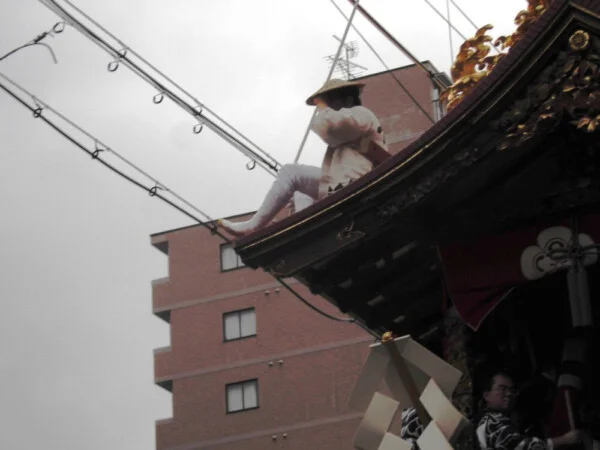
During the Yamaboko Procession along the lesser-known Shinmachi-dori viewing area, the roof crew skillfully pushes overhead wires aside with the soles of their feet.
No matter how skillfully the floats are guided, they could not pass through the narrow Shinmachi-dori without doing this.
In the past, this demanding task had to be performed not only on Shinmachi-dori but also on streets such as Matsubara-dori and Teramachi-dori.
The roof crew belongs to the group known as the carpentry team. When assembling the floats, they are responsible for building structures such as the ceiling and floor sections. Their regular profession is generally that of carpenter.
Together with the carpentry team, the workers responsible for constructing and operating the floats are known as the construction crew.
These people are not residents of the float neighborhoods.
Most of them work professionally as carpenters, scaffolders, or in similar trades, and participate in the festival as contractors hired by the float preservation associations.
Even for such highly skilled professionals, opportunities to perform work like that required during the Yamaboko Procession are extremely rare in their everyday careers.
The procession is therefore a special chance for them to demonstrate their skills, once a year.
For that reason, 2022—when the Yamaboko Procession returned after a three-year suspension—must have been a particularly challenging year for these craftsmen and specialists.
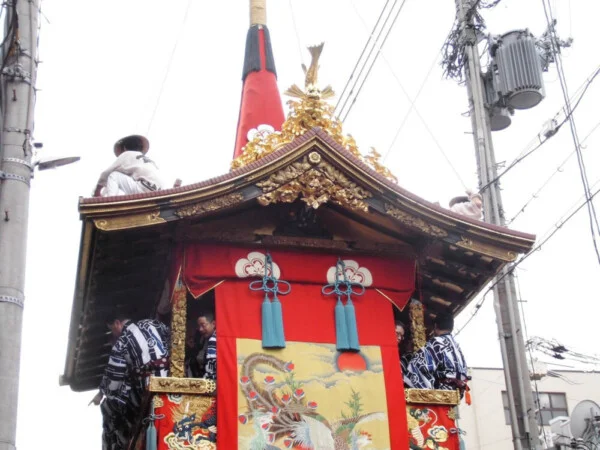
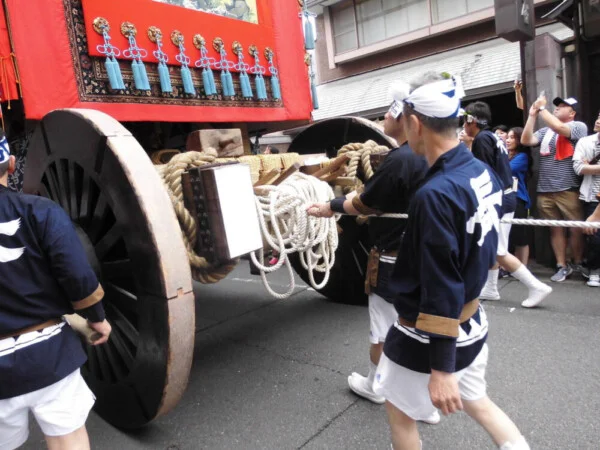
As described later, during the Yamahoko procession, the wheel handlers use their skilled techniques and adjust the direction and strength of the ropes to control the route. As a result, the floats move forward by repeatedly stopping and starting.
The Naginata Hoko, which leads the Yamahoko procession, safely passed through Shinmachi Street, a lesser-known viewing spot.
The elegant passing of the Kanko Hoko float
Weight: 11.39 tons
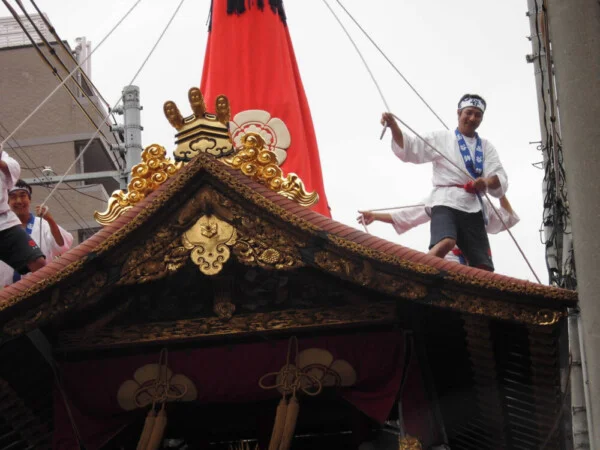
After the carried floats Yamabushiyama, Hakurakutenyama, and Mosoyama, Kankoboko takes the 5th position in the float procession without drawing lots.
The order of the early festival float procession is fixed in this pattern: hoko float, yama float, yama float, yama float, hoko float, yama float, yama float, yama float, hoko float, yama float, yama float, yama float, hoko float, yama float, yama float, yama float, hoko float, yama float, yama float, yama float, hoko float, hoko float, hoko float.
Also, the hoko floats mentioned above include the pulling float Iwatoyama, and the yama floats include umbrella floats.
It passed beautifully, only a few centimeters away from the utility pole.
The most difficult float to pass through, and the heaviest of all the floats: Tsukihoko
Weight: 11.88 tons
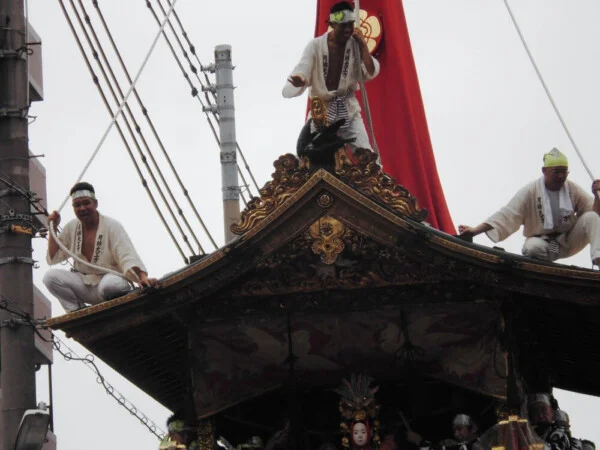
Following Taishiyama, Shijo Kasahoko, and Uradeyama, it is now Tsukihoko’s turn to appear.
Tsukihoko, the heaviest float among all the Yamahoko floats, provides one of the biggest highlights of the Yamahoko procession along Shinmachi Street.
The larger the float, the more difficult it is to pass through, and the precise handling required must be even more challenging.
So, how will it make its way through Shinmachi Street? This is one of the lesser-known but fascinating highlights of the Yamahoko procession.
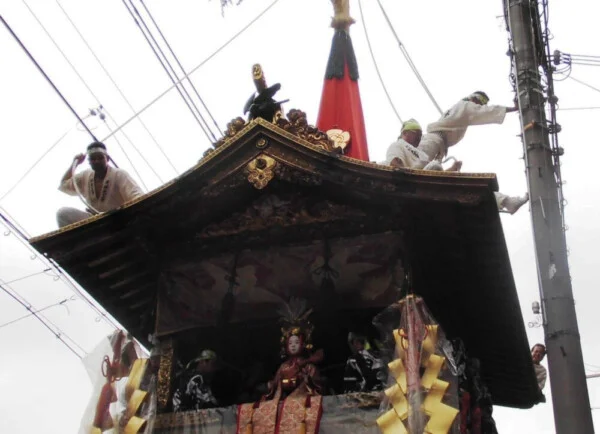
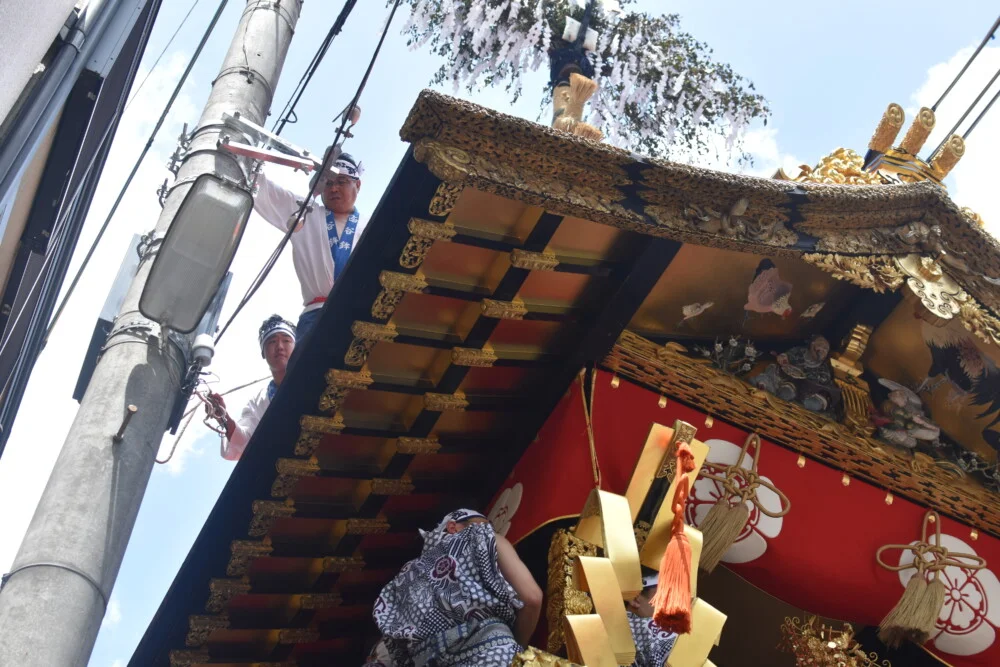
The Yamahoko procession passes through Shinmachi Street, a lesser-known viewing spot. The roof attendants are desperately using their hands and feet to push against the utility poles on both sides of the street.
Two people struggle with the utility poles along Shinmachi Street, one person checks the clearance from behind and directs the procession’s path to them, while another gives instructions to the pullers. It is a coordinated team effort involving four people.
Looking at a massive Yamahoko weighing 11.88 tons, you might wonder how much difference the hands and feet of just two roof attendants can really make.
In fact, the roof section is designed to rotate to a certain extent, allowing fine adjustments by pushing or pulling it during the procession.
Once the Yamahoko enters Shinmachi Street, which is generally considered a hidden viewing spot, the roof attendants suddenly face a series of demanding tasks without a break.
From 1910 until the revival of Kikusui Hoko in 1953, Tsuki Hoko and Niwatori Hoko did not participate in the lottery draw for procession order. Instead, they alternated their positions, moving ahead of or behind each other every other year.
The relaxed “Niwatori Hoko”
Weight: 9.24 tons
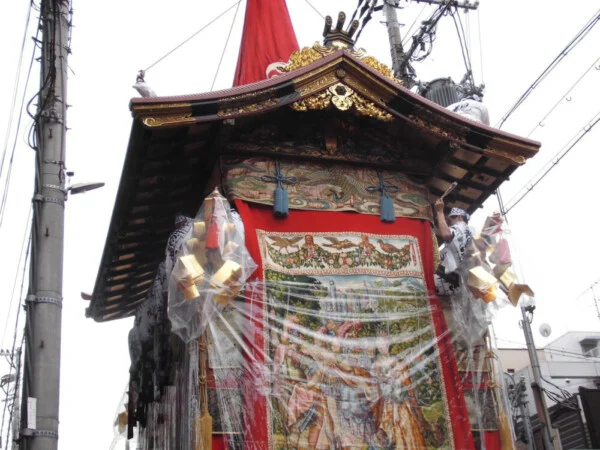
Following Ashikari Yama, Kanko Yama, and Hosho Yama, the next float to appear is Niwatori Hoko.
Since Niwatori Hoko is slightly smaller in size, it is able to pass through the narrow section of Shinmachi Street, a hidden gem for watching the Yamahoko procession, with relative ease and plenty of clearance.
By the time the procession reaches Shinmachi Street near the end of the long route, everyone involved has probably accumulated a great deal of fatigue.
Spending several hours outdoors under Kyoto’s intense summer sun is exhausting, even if you are standing still.
In 2018, the Hanagasa Procession was cancelled because of the extreme heat. While it is unlikely that the Yamahoko Procession would be cancelled for that reason, its starting time could be moved even earlier in the future. It is said that before the Edo period, the procession began at daybreak and was already finished by around 11 a.m.
The slightly smaller Iwato Yama float
Weight: 8.24 tons
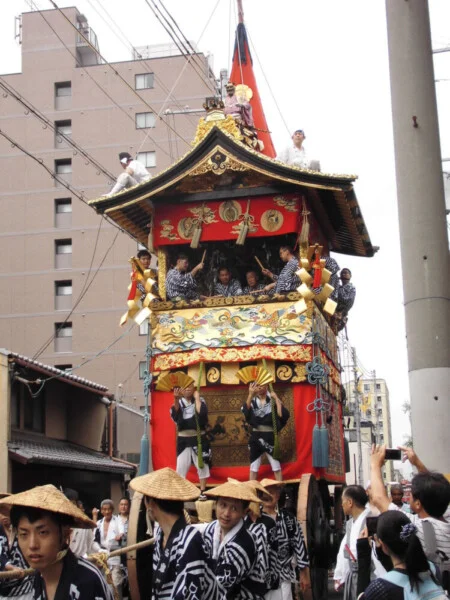
Following Hakuga Yama, Aya-gasa Hoko, Arare Tenjin Yama, Kikusui Hoko, Tokusa Yama, Kakyo Yama, and Abura Tenjin Yama, the next float is Iwato Yama.
Iwato Yama is one of the non-lottery floats, meaning it has a fixed position in the procession. In the Saki Matsuri Yamahoko Procession, it travels second from the end.
However, as will be explained later, the procession order changes on Shinmachi Street, so Iwato Yama becomes third from the end there.
Since it is a hikiyama (pulled float) rather than a hoko (large spear float), it can pass through Shinmachi Street, a hidden gem for viewing the procession, with relative ease.
The duties of the roof attendants here also seem quite different from those of the attendants on large hoko floats such as Tsuki Hoko.
Fune Hoko making its way through a sea of people
Weight: 8.41 tons
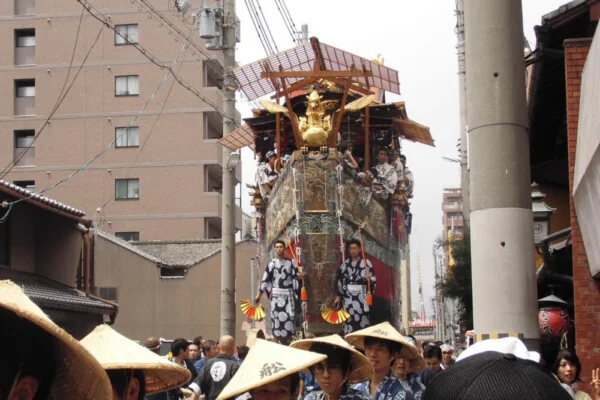
As a non-lottery float, Fune Hoko takes the final position in the Yamahoko Procession.
However, on Shinmachi Street, it travels in the second-to-last position.
Because the float is relatively slender, it passes through Shinmachi Street with ease.
At last, the Yamahoko Procession is approaching its conclusion.
Hoka Hoko – The Final Float in the Yamahoko Procession
Weight: 10.32 tons
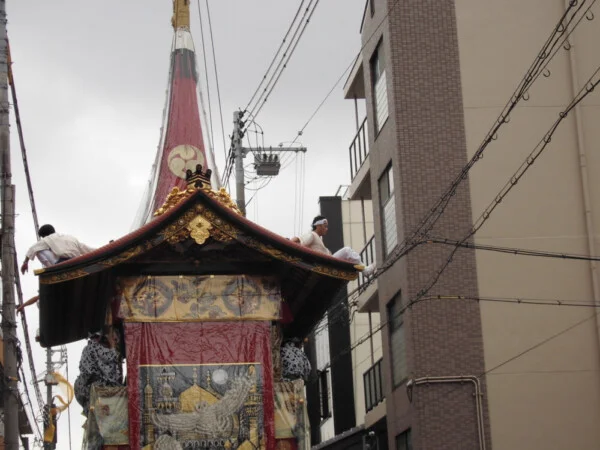
The final float to pass through Shinmachi Street is Hoka Hoko.
Originally, Hoka Hoko is a non-lottery float and is scheduled to travel third from the end. However, the procession order is changed at Shinmachi-Oike, allowing Hoka Hoko to take the very last position.
The reason for changing the order is quite simple.
Since Hoka Hoko belongs to the neighborhood around Shijo-Shinmachi Agaru, if it proceeded ahead of the others, the floats behind it would have difficulty continuing forward.
For that reason, at Shinmachi-Oike, Iwato Yama and Fune Hoko, which are behind it in the original order, move ahead first, while Hoka Hoko becomes the final float in the procession.
A similar change of order also takes place during the Ato Matsuri procession, where Minami Kannon Yama and Kita Kannon Yama switch positions.
Although there is about a 30-centimeter gap between the float and the utility pole on the left, the overhead wire on the right side becomes an obstacle. As a result, a roof attendant on Hoka Hoko forcefully pushes the wire aside with his foot.
Since the soles of jikatabi boots are made of rubber, there is likely little concern about electric shock.
After the route shifts slightly to the left, attention turns to dealing with the wires on the opposite side of Shinmachi Street.
The Yamahoko Procession along Shinmachi Street requires extremely delicate maneuvering and close coordination between the people above and below the float.
Simply touching a power line rarely causes electrocution, and wood is a very poor conductor of electricity, making the risk of electric shock extremely low.
It is also possible that the relevant lines are temporarily de-energized during the procession as a safety precaution.
With the passage of Hoka Hoko, every hoko and hikiyama has successfully completed its journey through Shinmachi Street.
Each float then returns to its original location, and dismantling work begins almost immediately.
The decision to once again separate the Saki Matsuri and Ato Matsuri processions has long been a subject of debate.
A major issue remains unresolved: the Ato Matsuri Yoiyama attracts fewer visitors and does not generate enough revenue to support the preservation and maintenance of the floats.
However, when it comes to the procession itself, the separation has been a success.
In the past, the procession lasted so long that many spectators either grew tired of watching or were worn down by the summer heat. As a result, the latter part of the procession often became noticeably quiet and sparsely attended.
Kikusui Hoko narrowly avoiding a collision on Shijo Muromachi Agaru Street.
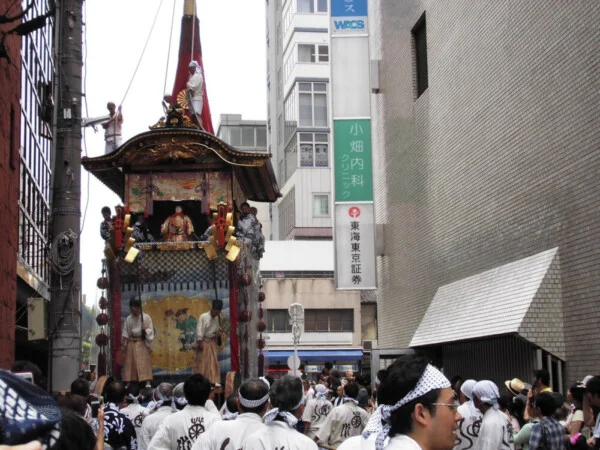
Kikusui Hoko, having completed the Yamahoko Procession, has returned from Shinmachi Street.
It is now attempting to make a left turn from Shijo Street onto Muromachi Street, heading north.
However, at its current angle, a collision with a utility pole seems almost inevitable.
Even experienced pullers can be heard murmuring, “I’ve never seen an angle like this before.”
The situation quickly becomes tense.
How will they get out of this predicament? Even the spectators watching the procession begin to feel uneasy.
In fact, a similar incident occurred in 1927, when the tip of Tsuki Hoko’s central mast broke during a turn at Shijo-Shinmachi.
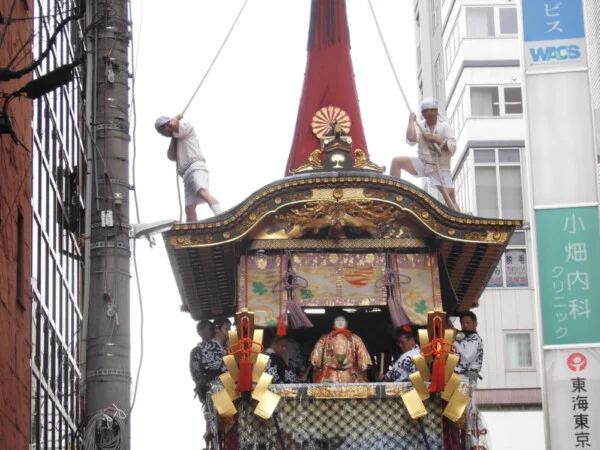
At that point, they used their secret technique: backing up.
Some of the rope pullers move behind the float and pull the rope from the rear.
Just like driving a car, they finally made it through after reversing and adjusting the direction twice.
As you can see, there was almost no room on either side. The roof passed just below the streetlight that sticks out on the left.
For the Kikusui Float, this is an even more difficult spot than Shinmachi Street, and the toughest part of the Yamahoko Procession.
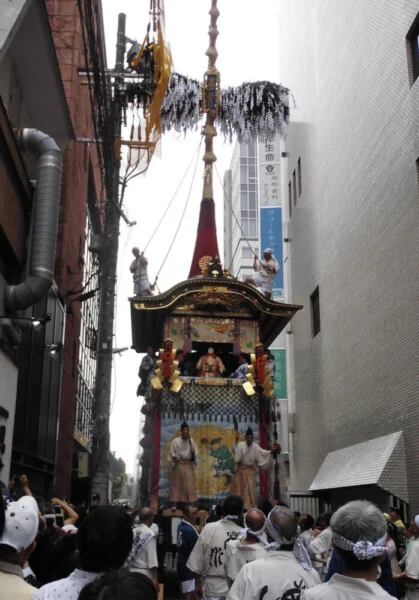
Just when it seemed they had made it through safely, an unexpected problem happened. The sacred sakaki branches on top hit the transformer on the utility pole quite hard.
So what would they do? …They simply pushed through it.
This is probably a spot where it always gets caught, so it seems to be a normal part of the procession.
It may not be as famous as Shinmachi Street, but it is still a hidden gem for watching the Yamahoko Procession.
You do need to arrive at the right time, but it usually isn’t very crowded.
The Yamahoko Procession Skillfully Passes Through the Hidden Spot of Shinmachi Anekoji
Anekoji Street is the northernmost place where you can watch the Yamahoko Procession along the hidden viewing spot on Shinmachi Street.
Like the Shinmachi-Sanjo area, Shinmachi Anekoji is also a great hidden spot to enjoy the Yamahoko Procession.
A Hidden Viewing Spot at Shinmachi Anekoji
The 2022 Yamahoko Procession was held for the first time in three years. It also took place on the middle Sunday of a three-day holiday weekend, with excellent weather, so even Shinmachi Street, a hidden viewing spot, was expected to be quite crowded.
I first watched all the floats depart from Shijo Muromachi, from Kankoboko to the last float, Funeboko, and then moved to Shinmachi Street.
Because of that, I did not see the procession at the popular viewing spots on Kawaramachi Street or Oike Street.
I arrived at Shinmachi Anekoji at 10:30 a.m., about an hour and a half before the procession reached the area. Arriving that early meant there were still relatively few people saving places, so I could choose my viewing spot freely.
Compared with Shinmachi Sanjo, another hidden viewing spot mentioned in the previous section, Shinmachi Anekoji has three advantages.
You can see every float
Some of the carrying floats turn left and head east at Anekoji Street. This makes Shinmachi Anekoji the last place where you can see every float in the procession.
It is a challenging section of the route
Shinmachi Anekoji is not a simple four-way intersection. The east-west streets are slightly offset.
Because the floats need to make several careful adjustments, it is one of the most difficult parts of the route and a great place to appreciate the skill of the procession teams.
You can see the tsuji-mawashi from a distance
From here, you can see the tsuji-mawashi (turning of the floats) at the Shinmachi–Oike intersection about 200 meters away.
Since the tsuji-mawashi cannot be seen from most of Shinmachi Street, Shinmachi Anekoji is the only place where you can watch it from a distance.
However, you can only see the tsuji-mawashi from the west side of Shinmachi Street. Because the intersection is offset, it is completely hidden from the east side.
The Floats Continue Passing Along Shinmachi Street
Naginatahoko Float
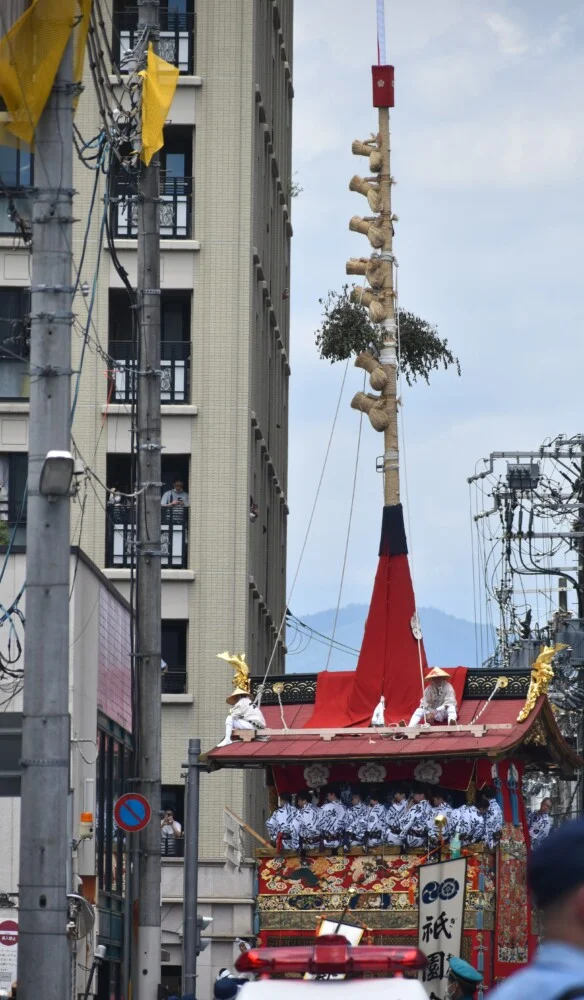
At exactly 12:00 noon, the Naginatahoko Float, leading the Yamahoko Procession, appeared at the Shinmachi–Oike intersection about 200 meters away.
Although it was some distance away, you could still see it performing the tsuji-mawashi several times to the rhythm of the chants, gradually turning to face this direction.
Until 2022, the Naginatahoko Float, which always leads the procession without taking part in the lottery, was also the first float to enter Shinmachi Street.
However, starting in 2023, to help prevent heatstroke and minimize the waiting time at the Shinmachi–Oike intersection, the Yamabushiyama Float, which draws the first position in the lottery, is scheduled to lead the procession instead.
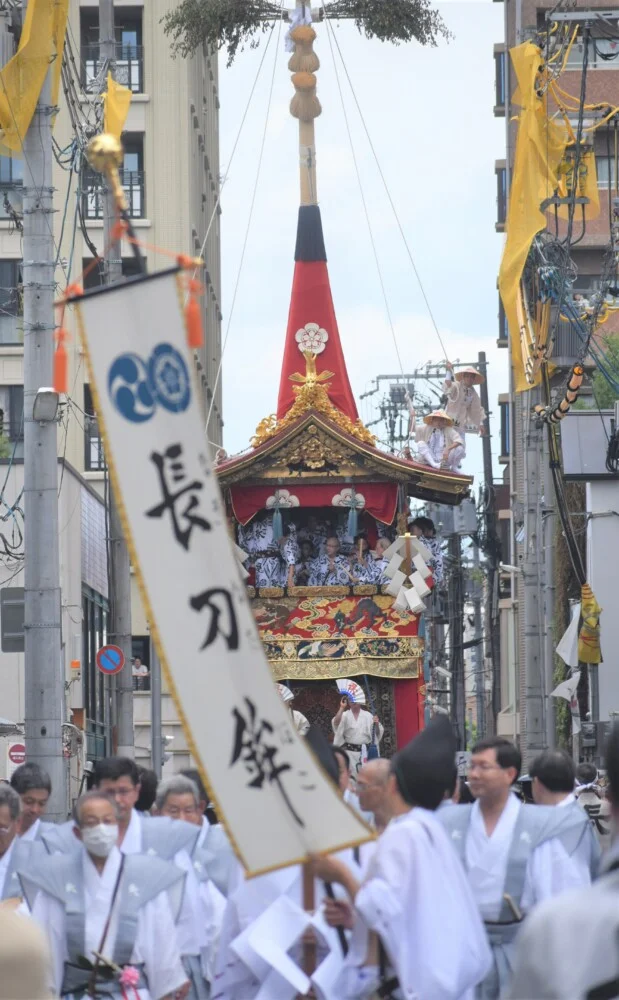
After completing the tsuji-mawashi, the Naginatahoko Float continues south along Shinmachi Street toward this hidden viewing spot.
The section of Shinmachi Street between Oike Street and Anekoji Street is completely closed to the general public.
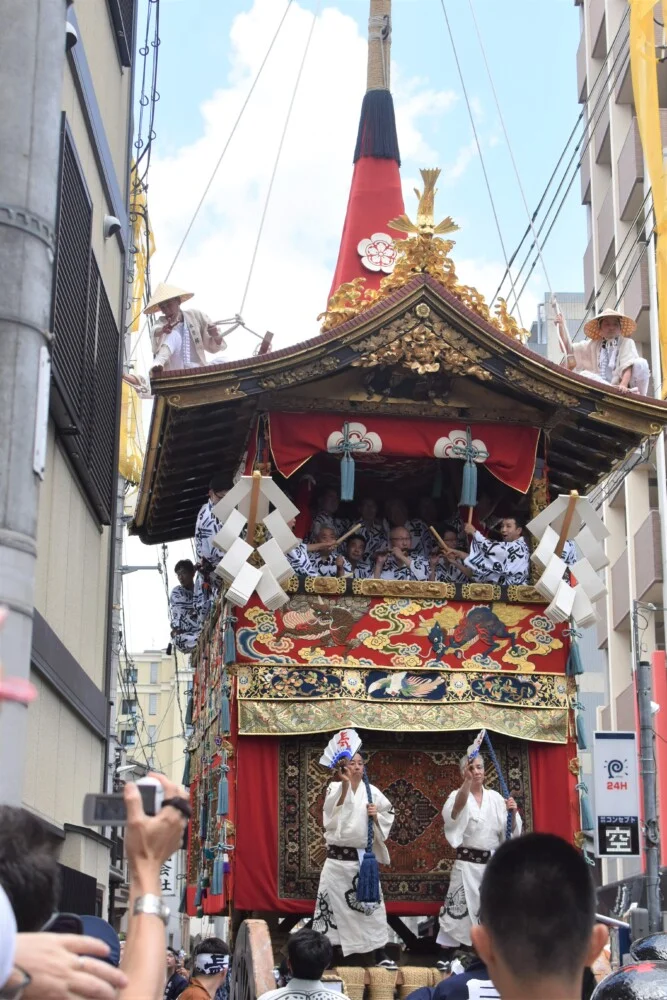
At the intersection of Shinmachi Street and Anekoji Street, the roads are offset by about 3 meters.
Until 1956, when the Yamahoko Parade route changed from Matsubara Street to a route through Oike Street, no floats passed through the Shinmachi–Anekoji intersection.
Because of the route change about 70 years ago, this became a new challenging section of the parade.
The Naginata Float moves slowly along Shinmachi Street while using a kaburadeko to make small and careful adjustments to its direction.
There is only a very small gap between the float and the building on the left. Shinmachi Street is a great place to watch the experts make these precise adjustments up close.
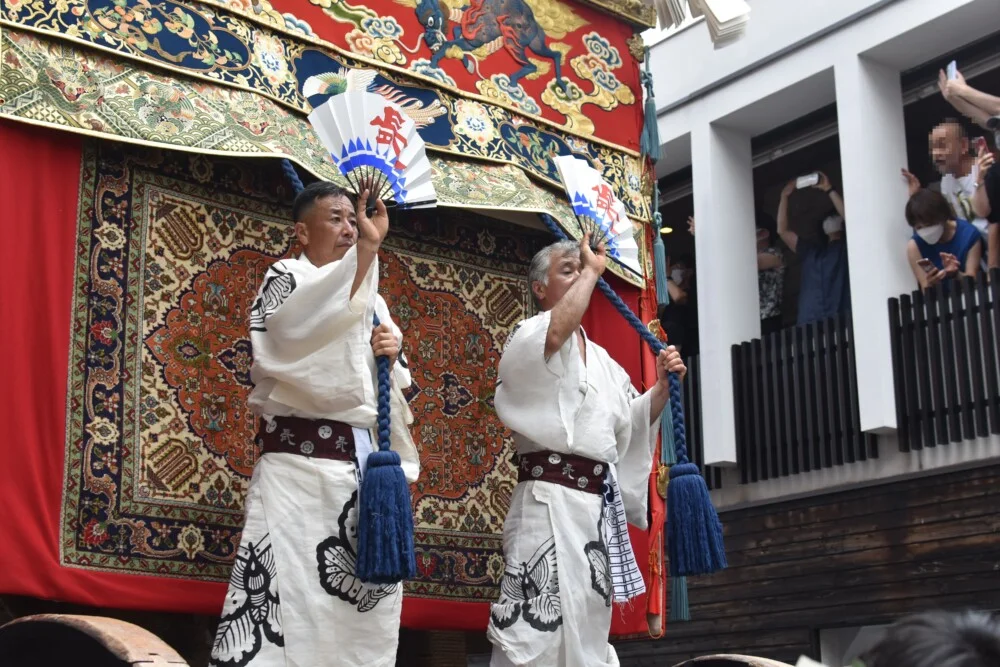
The Naginata Float passes right in front of you to the chant of “Enyaraya!”
Seeing it from such a close distance is a special experience that you can enjoy only on the hidden viewing spot of Shinmachi Street.
People living along Shinmachi Street watch the parade comfortably from inside their air-conditioned buildings.
Because they are so close, you can even hear their conversations. It seems that many of them invite friends over every year to watch the Yamahoko Parade together.
It’s easy to be envious. Some hotels along Shinmachi Street also offer special plans that let guests watch the parade from right in front of them.
On the other hand, the crowds and traffic restrictions during the Gion Festival probably cause considerable inconvenience for the local residents.
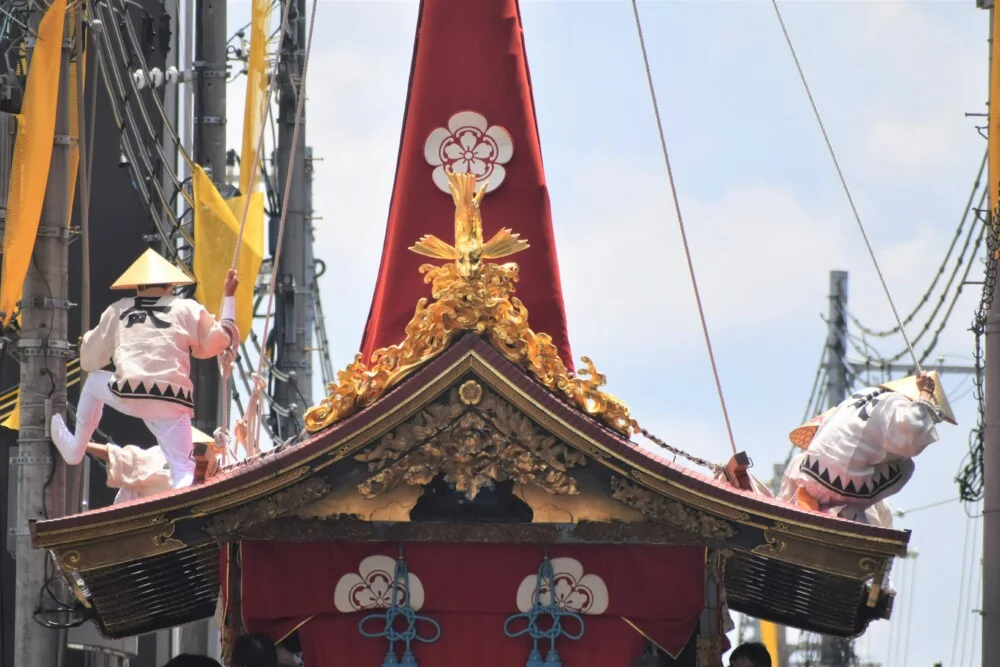
The Naginata Float continues south along Shinmachi Street.
It passes extremely close to a utility pole. Looking at the photo again, the gap seems to be only about the width of a fist.
It’s truly an impressive display of skill.
Moso-yama
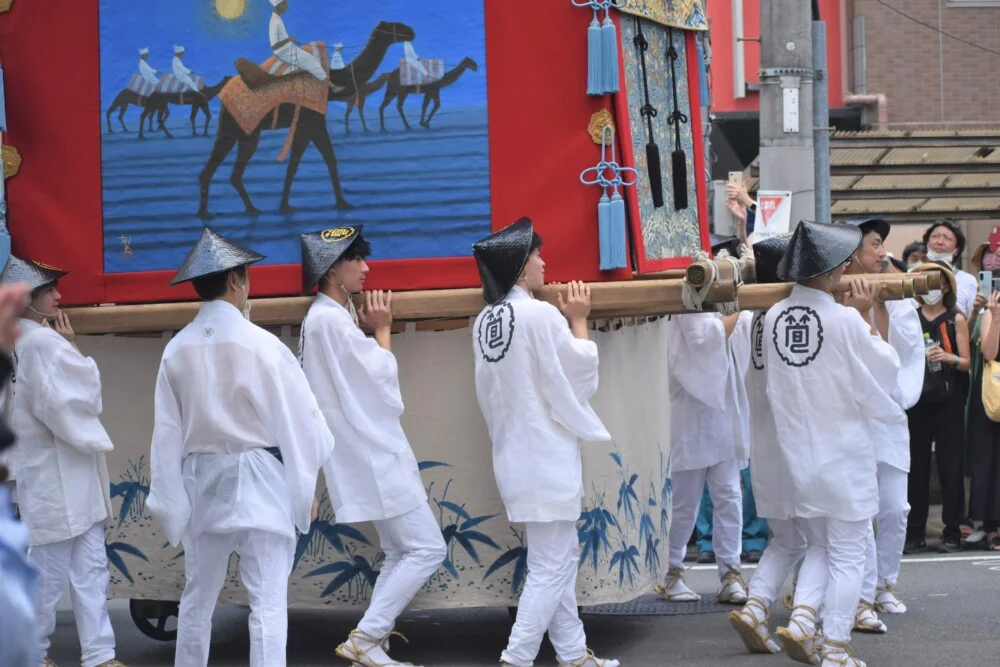
Following the Naginata Float is Moso-yama, which drew the first position among the yama floats in 2022.
At Shinmachi Street, Moso-yama turns left and heads east onto Anekoji Street.
As a result, you cannot see Moso-yama on Shinmachi Street south of Anekoji Street.
Hosho-yama
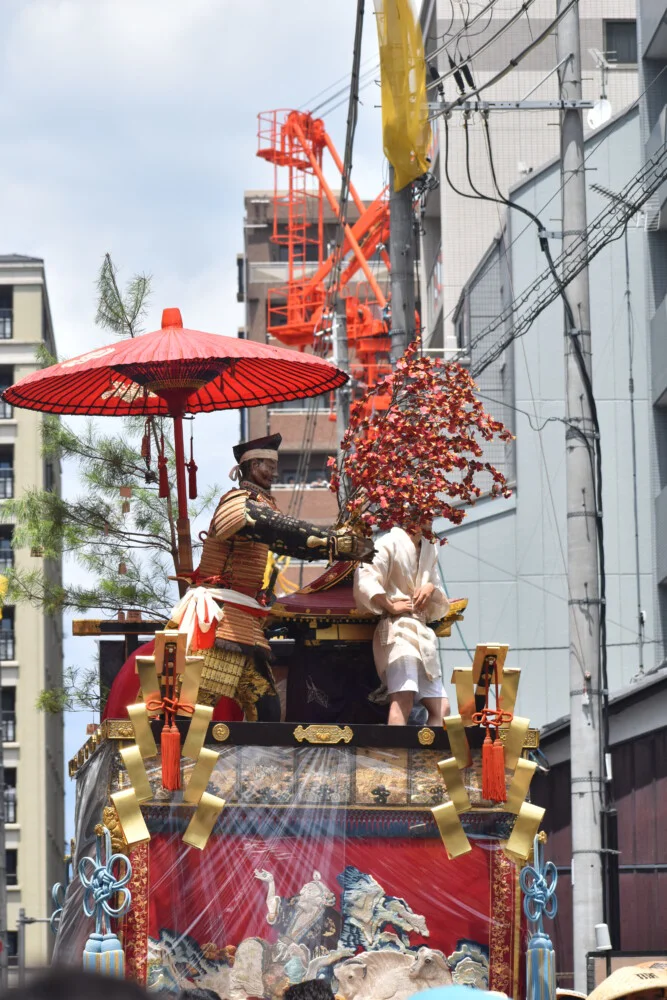
Hosho-yama is a kakiyama (a float carried by people), and one person also rides on top of it.
As it moves along Shinmachi Street, the float is carefully adjusted to keep the red plum branch and umbrella held by Hōshō from touching the overhead power lines.
Hakurakuten-yama
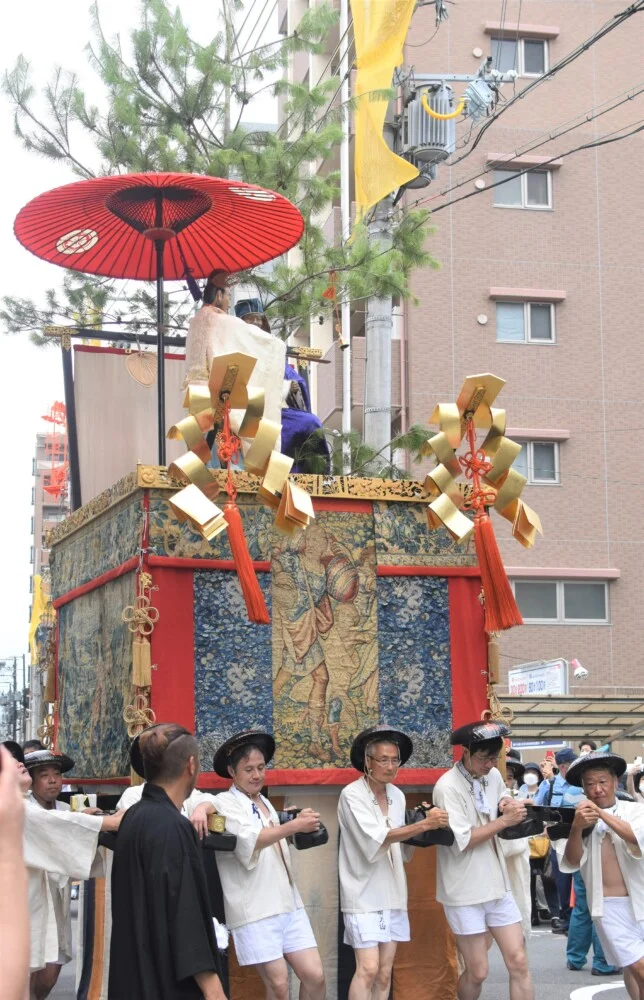
Following Kakkyo-yama, the fourth float, comes Hakurakuten-yama.
The fifth float in the original procession order is Kankoboko, whose position is fixed and does not require a lottery. However, the sixth float, Hakurakuten-yama, passed Kankoboko while it was performing its tsuji-mawashi (turning maneuver).
Since the Yamahoko Parade is officially considered to end at the Shinmachi–Oike intersection, the order of the floats may change after that point.
Kankoboko
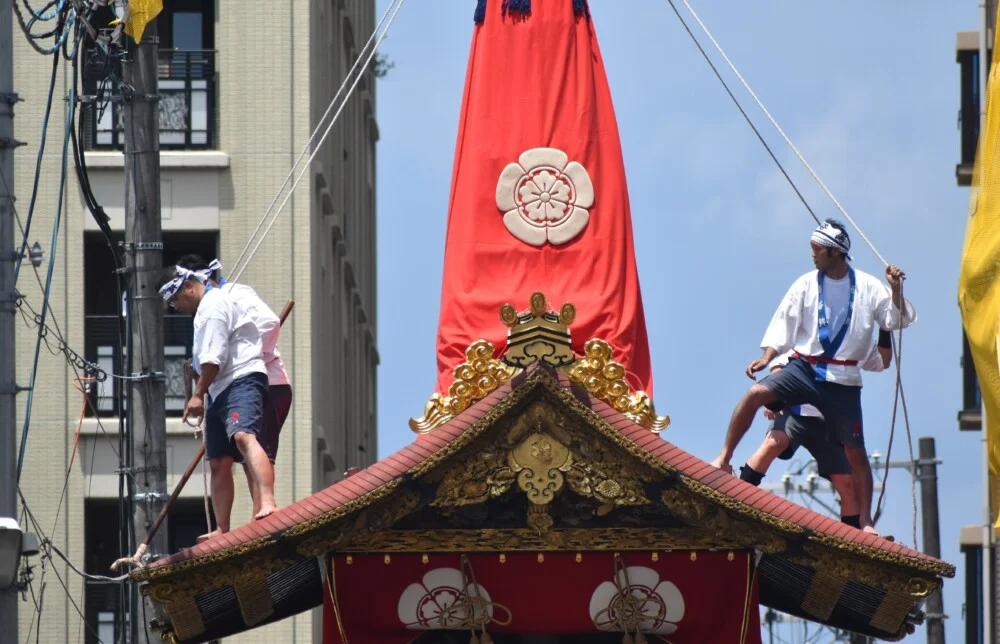
After Shijo Kasaboko and Abura Tenjin-yama pass by, it is finally time for Kankoboko to appear.
Take a look at the feet of the crew member on the roof of Kankoboko—you’ll notice that he is barefoot.
Even in the intense summer heat of the Yamahoko Parade, the roof crew of Kankoboko still preserves the tradition of going barefoot.
By contrast, the crews on the other floats generally wear jikatabi (split-toe work shoes).
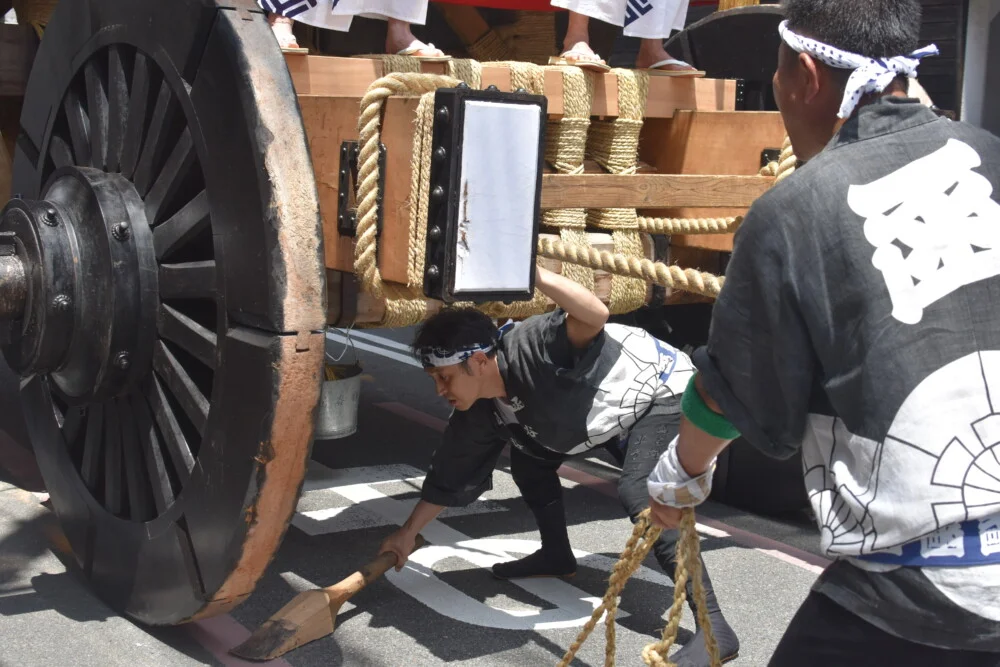
Beneath Kankoboko, the wheel crew uses kaburadeko to make precise adjustments to the float’s direction.
The intersection of Shinmachi Street and Ayanokoji Street is one of the most challenging sections of the Yamahoko Parade.
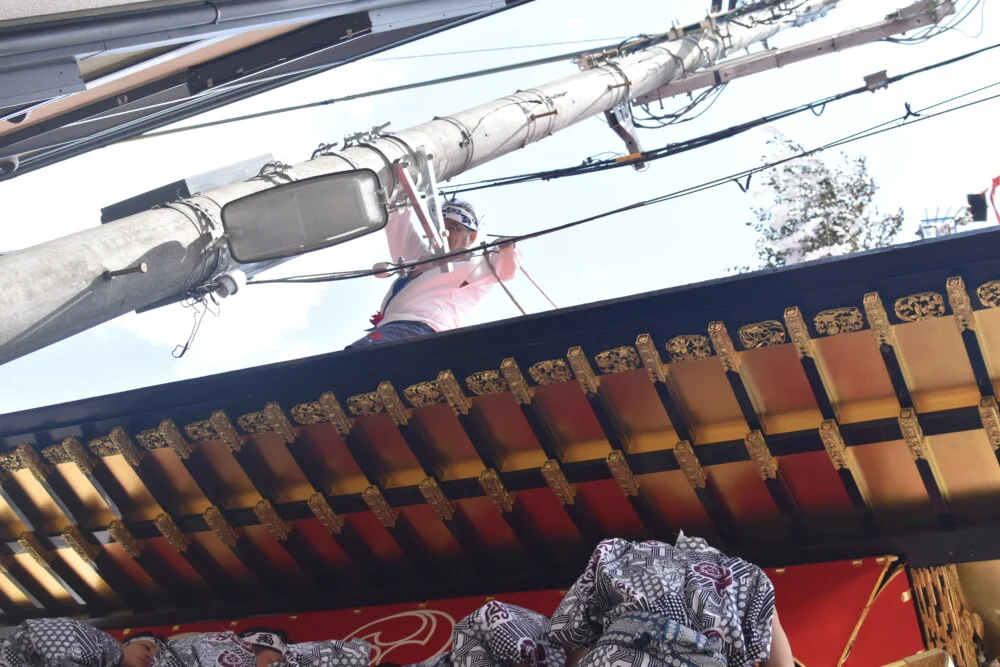
Looking up, you can see that Kankoboko passes extremely close to the utility poles along Shinmachi Street.
Even the slightest mistake could cause the float to hit a pole.
Following the conductor’s instructions, the wheel crew and the crew on the roof work together with remarkable precision and teamwork.
During the famous tsuji-mawashi (turning maneuver), coordination with the roof crew is not as critical. On Shinmachi Street, however, that close coordination is absolutely essential.
If you want to see this beautiful display of teamwork, Shinmachi Street is the best place to watch it.
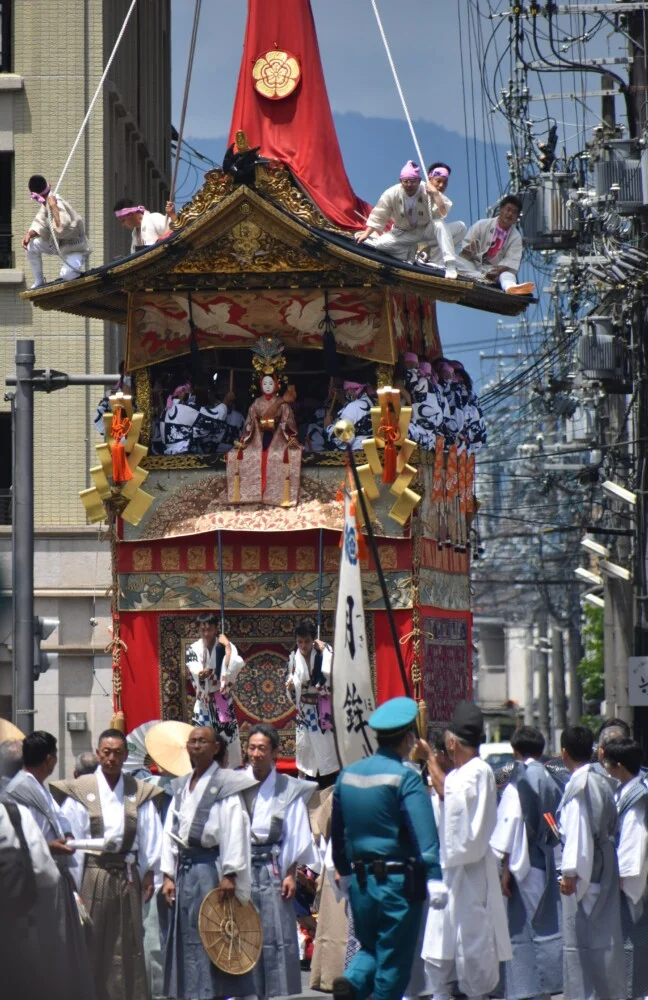
Tsukiboko
After Toro-yama and Yamabushi-yama pass by, Niwatoriboko follows.
From the intersection of Anekoji Street and Shinmachi Street, you can also see Niwatoriboko in the distance performing its tsuji-mawashi (turning maneuver) at the Shinmachi–Oike intersection.
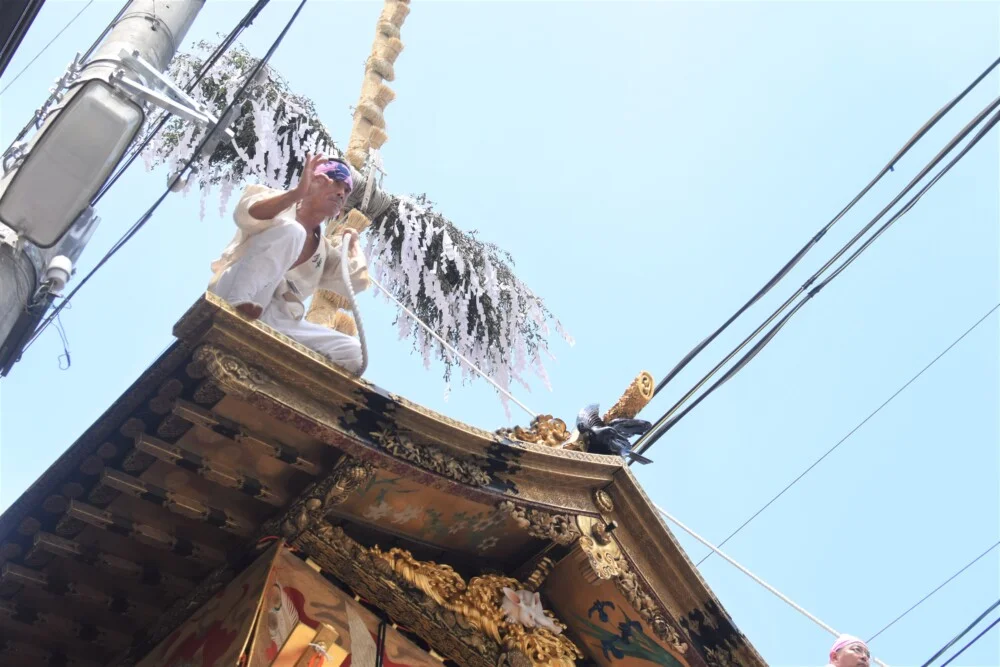
The crews above and below communicate using calls and hand signals, allowing the float to pass smoothly through the challenging Shinmachi–Ayanokoji intersection.
It is a truly impressive display of teamwork.
Ayakasaboko
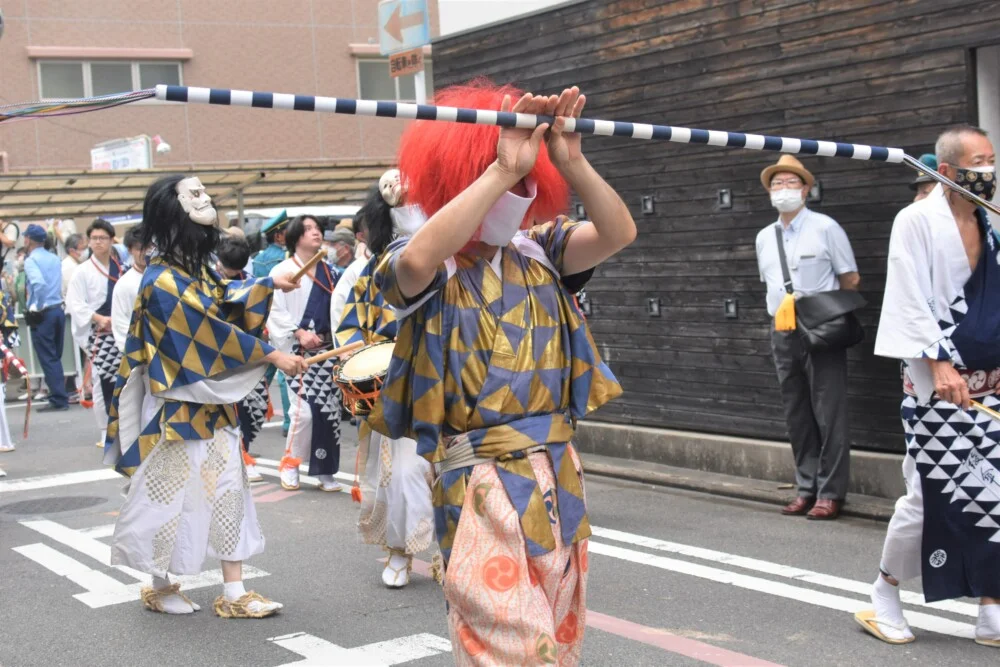
Following Arare Tenjin-yama and Tokusa-yama, Ayakasaboko makes its appearance.
Although the Yamahoko Parade officially ends at the Shinmachi–Oike intersection, Ayakasaboko still performs the Bofuri Bayashi (stick-twirling musical performance) on Shinmachi Street.
Niwatoriboko
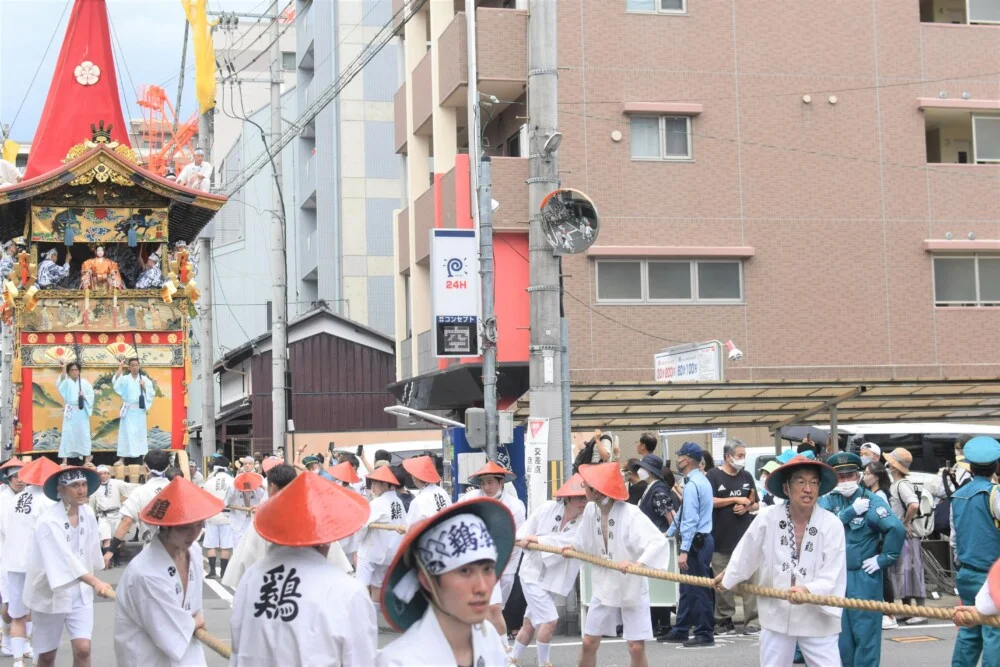
Following Urade-yama comes Niwatoriboko.
Among all the hoko floats, Niwatoriboko is the lightest except for Funeboko, allowing it to pass through the challenging Shinmachi–Ayanokoji intersection with ease.
Kikusuiboko
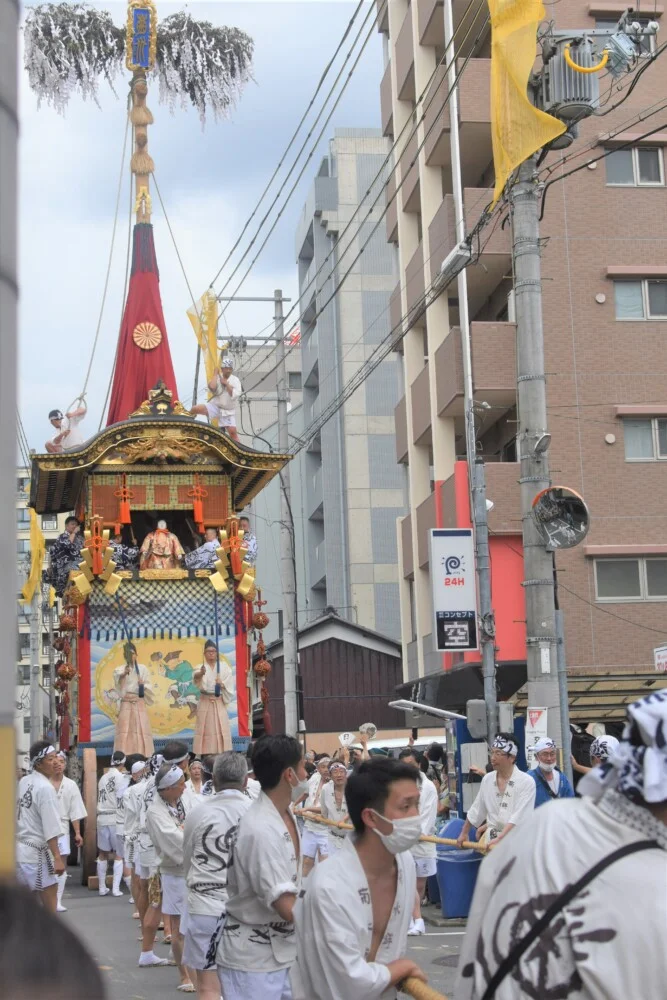
After Ashikariyama, Hakugayama, Taishiyama, and all the other portable festival floats had finished passing through Shinmachi Street, Kikusuihoko finally appeared.
By that point, I had been standing for three hours since saving my spot, so I was getting quite tired.
Iwatoyama Festival Float
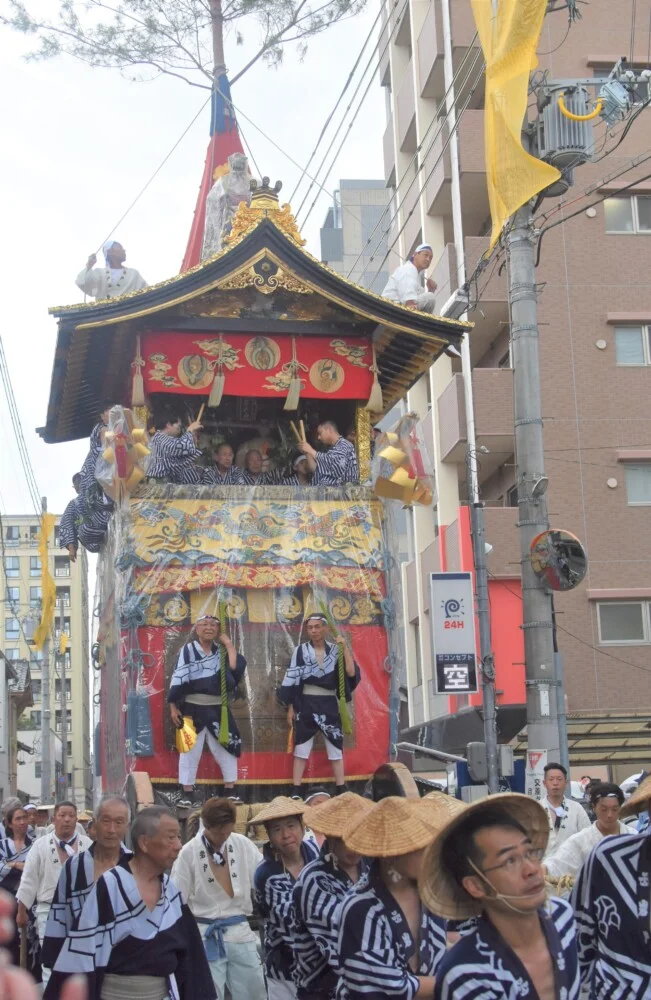
Only Iwatoyama and Funeboko were left.
However, since all the portable festival floats had already passed, there was going to be a long wait.
Twenty-five minutes after Kikusuihoko passed by, Iwatoyama finally arrived.
After that, only Funeboko remained, but it had not yet appeared at Shinmachi Oike.
Since it looked like there would be another long wait, I finished watching the Yamahoko Procession on Shinmachi Street and headed toward Shijo Street.
Iwatoyama passed by at 2:00 p.m. By then, I had waited for an hour and a half since saving my spot, and had spent two hours watching the Yamahoko Procession.
How Are the Massive Floats Controlled?
So, how are the enormous festival floats, weighing more than 10 tons, actually controlled during the Yamahoko Procession?
The festival floats have neither a steering wheel nor any steering mechanism to change direction.
In other words, they should only be able to move straight ahead.
Fine-Tuning the Direction with Kaburadeko
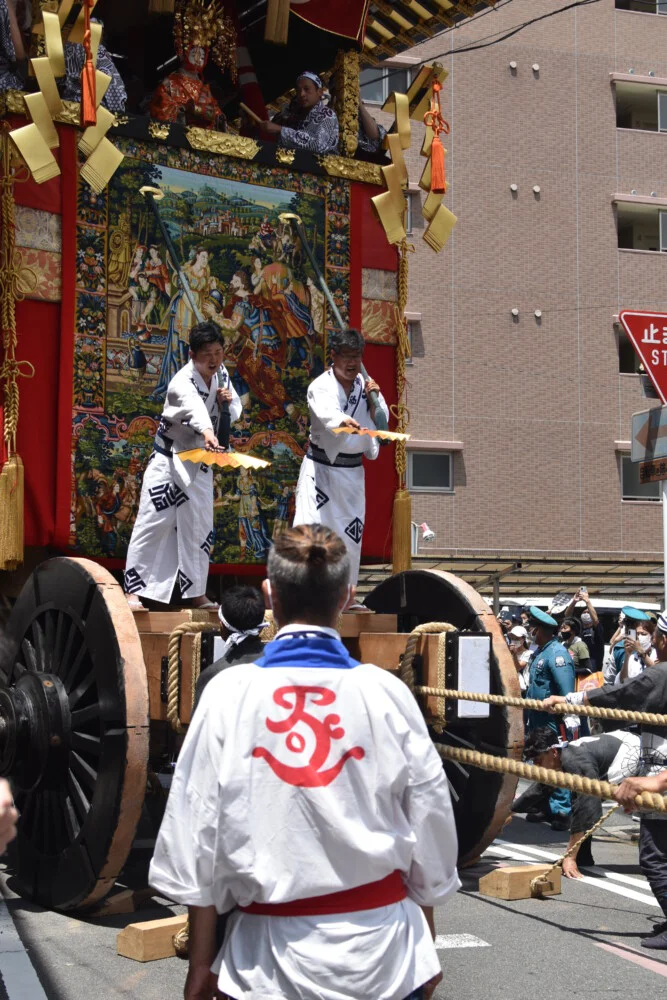
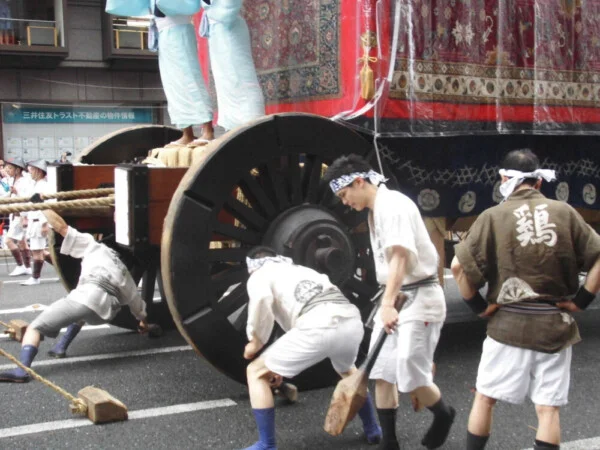
As many people know, the festival floats make turns using the famous Tsujimawashi maneuver. However, while traveling along the route, their direction is fine-tuned using a unique tool called a kaburadeko, which is inserted under the wheels.
The person in the center of the photo is holding the kaburadeko.
The object on the left is a wheel chock called a kakeya, which is used as a brake. It is always dragged just in front of the wheels so the float can be stopped quickly in an emergency.
When the float needs to turn right, the kaburadeko is placed on the outside of the left front wheel and the inside of the right front wheel, as shown in the photo.
This technique allows the float to continue moving straight even on narrow streets like Shinmachi Street.
Even on roads such as Shijo Street, where no steering adjustment seems necessary, the slight slope of the road means constant corrections are required to keep the float moving straight.
The direction is adjusted by letting the wheels climb slightly onto the kaburadeko. Each time this happens, the float jolts heavily with a loud thud.
Fortunately, because the float is built with a flexible structure held together by rope lashings, much of the shock is absorbed before it reaches the upper part of the float.
By changing how deeply the kaburadeko is inserted and how often it is used, the float can gradually change direction.
There are also several types of kaburadeko with different angles, and the crew selects the appropriate one during the procession.
Each wheel has its own unique characteristics, and even small bumps or slight slopes in the road affect how the float moves.
The handling also changes significantly between dry and wet road surfaces, making the procession especially challenging on rainy days.
Understanding the subtle behavior of each wheel and controlling the float exactly as intended is much more difficult than it appears.
The people responsible for steering the wheels are the Kurumakata, one of the construction crews (Sakujikata). Working in teams of seven to nine, they skillfully guide the float throughout the procession.
Along with the Daikukata and Tetsudaikata , the Kurumakata are responsible for building and operating the floats.
Most of them are professional carpenters rather than residents of the float’s neighborhood.
Because a single mistake could result in being caught under the wheels during the procession, this dangerous job requires experienced professionals with years of training.
New members of the Kurumakata usually begin by performing a task called mizutsuke, in which they sprinkle water on the road.
By watching experienced crew members handle the kaburadeko up close, they gradually learn the skills needed to become expert Kurumakata.
Skilled Braking and Acceleration Control
Conclusion
On Shinmachi Street, a lesser-known viewing spot, you can experience a side of the Yamahoko Procession that is quite different from what you usually see on television.
The procession has only followed today’s wider streets since the postwar period.
In fact, the route through Shinmachi Street represents the traditional style of the procession that has continued for centuries.
Watching the floats pass so close to utility poles that they seem about to collide, while the rooftop crew and wheel crew skillfully work together to avoid obstacles, is one of the greatest highlights of viewing the procession on Shinmachi Street.
In recent years, however, this once-hidden viewing spot has also become increasingly crowded. It may not remain a secret place to watch the Yamahoko Procession for much longer.
Heading to the Gion Festival? Take an MK Taxi! Get Information and Store Your Luggage at the MK VIP Station at Kyoto Station Hachijo Exit
If you’re traveling from Kyoto Station to the Gion Festival, MK Taxi is by far the most convenient choice.
From the MK Taxi exclusive taxi stand at Kyoto Station’s Hachijo Exit, you can travel smoothly and comfortably to the festival venue.
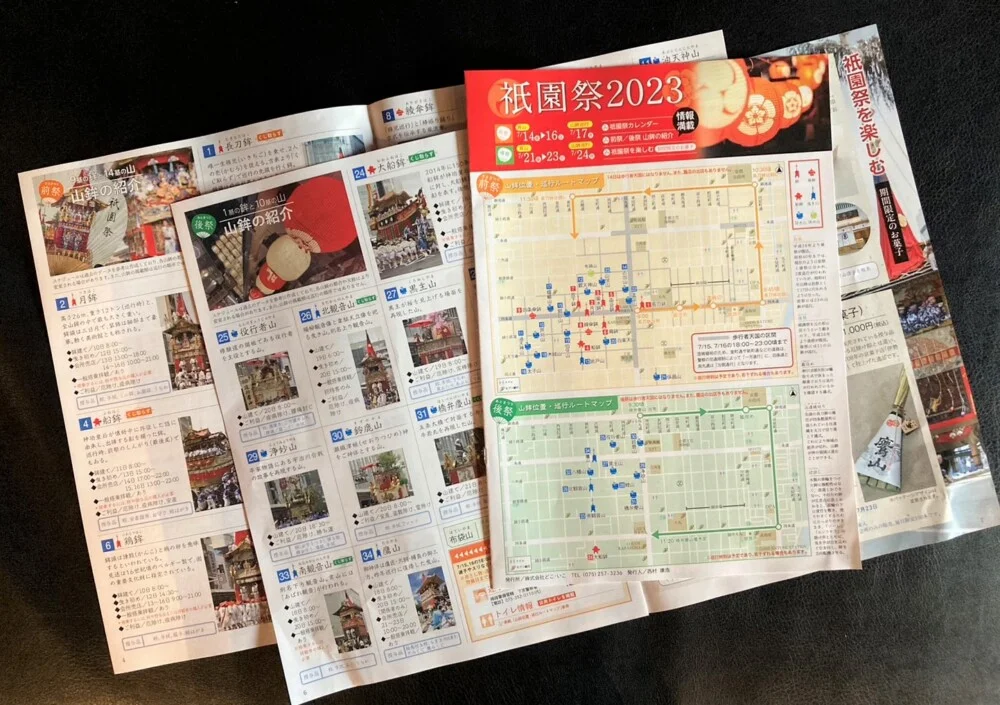
In addition, the MK VIP Station offers free Gion Festival maps and brochures.
Even if you’re not taking an MK Taxi, feel free to stop by.
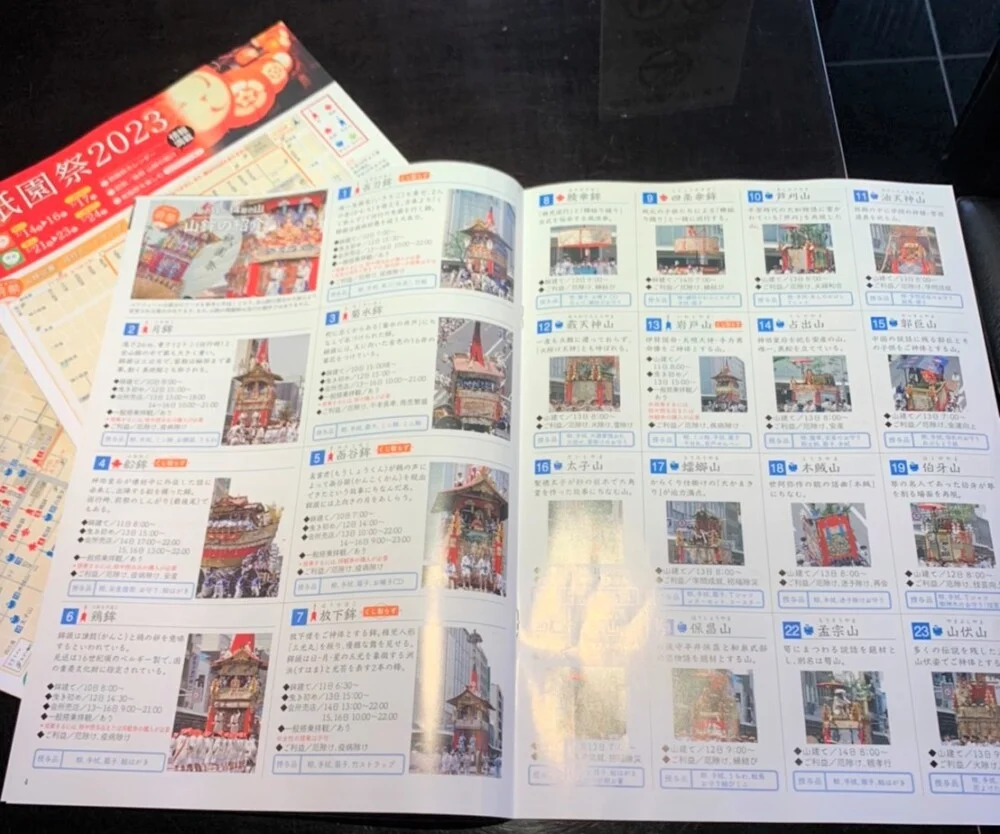
In addition to information about the Gion Festival, you’ll also find plenty of useful tips for sightseeing in Kyoto.
Paid luggage storage and stroller rental services are also available, so you can enjoy the Gion Festival without carrying extra baggage.
For sightseeing in Kyoto, leave it to MK’s chartered sightseeing taxi.
Your private driver is a Kyoto expert who handles both transport and guiding.

Gion Festival Feature Articles